
India’s office market continues to stay resilient despite global headwinds — and Mumbai is one of the clear winners. According to Vestian’s Q3 2025 Office Market Report, India recorded a total absorption of 19.7 million sq ft, marking a 6% annual and 5% quarterly growth, led by southern and western cities.
Mumbai alone absorbed 2.98 million sq ft of Grade-A office space during the quarter — a 32% jump year-on-year, cementing its position as one of India’s most active commercial real estate markets.
📊 India’s Office Market Snapshot (Q3 2025 Highlights)
- Total Pan-India absorption: 19.7 million sq ft (up 6% year-on-year)
- Top performers: Bengaluru, NCR, and Mumbai contributed nearly 60% of total demand
- New completions: 16.1 million sq ft (up 26% year-on-year)
- Southern cities – Bengaluru, Chennai, Hyderabad – accounted for half of total absorption
- Mumbai’s new office supply surged by 64% over the previous quarter, driven by project completions in the BKC–Andheri–Powai belt
🌆 Mumbai Leads India’s Comeback Story
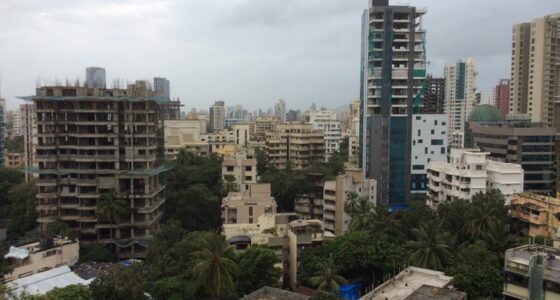
After a sluggish phase in 2023, Mumbai’s office market has bounced back strongly. The financial capital’s absorption reached 2.98 million sq ft this quarter, supported by strong demand from BFSI (Banking & Financial Services) companies, Global Capability Centres (GCCs), and co-working operators.
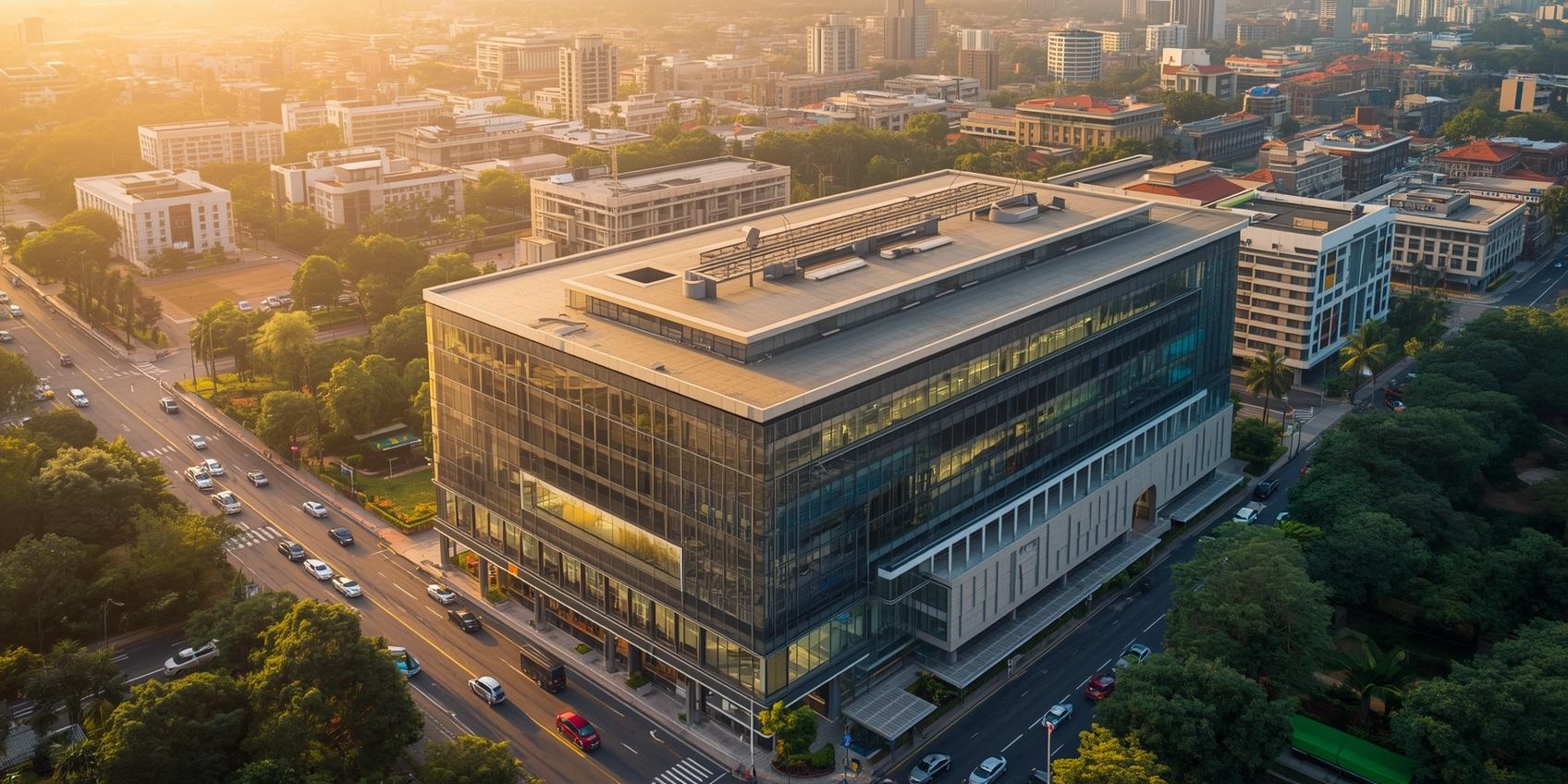
The city also witnessed one of the highest jumps in new supply, with 1.8 million sq ft of new Grade-A space added in just one quarter. Most of this supply was concentrated in BKC, Powai, and Navi Mumbai, reflecting Mumbai’s shift toward high-quality, efficient office environments.
💼 What’s Driving the Momentum?
According to Shrinivas Rao, FRICS, CEO, Vestian,
“The third quarter of 2025 reported the highest absorption of the year, primarily driven by GCCs. Robust demand, healthy supply, and a diversified occupier base are expected to drive the next wave of growth.”
Several factors have strengthened the office segment across Indian metros:
- Expanding GCC footprint as global firms shift operations to India amid H-1B visa constraints.
- BFSI sector’s growing share, which doubled from 6% to 15% in a single quarter.
- Rising demand for flexible workspaces, which continue to account for around 14% of total leasing.
- Infrastructure-led expansion, including the Mumbai Trans Harbour Link (MTHL), Coastal Road, and Metro corridors, improving accessibility to suburban business districts.
🌍 Diversification Beyond Traditional Hubs
While major business districts continue to dominate, emerging micro-markets are gaining traction. Vestian’s analysis showed that the top 10 micro-markets accounted for 70% of total absorption — down from 82% last year — a clear sign that companies are exploring new, cost-effective locations.
This diversification is driven by:
- Improved intracity connectivity
- Availability of sustainable, Grade-A office space
- Competitive rentals in emerging zones like Thane, Navi Mumbai, and Kanjurmarg
🔎 The Big Picture
India’s total office absorption in Q3 2025 was the second-highest ever recorded, just behind the Q4 2024 peak of 21.6 million sq ft. Southern cities remained powerhouses, but Mumbai’s consistent performance positions it as the western anchor of India’s expanding office landscape.
With the IT-ITeS sector contributing 31% of total leasing and GCCs leading large deals, the outlook for 2026 remains strong.
As new projects come online and corporate occupiers diversify across regions, Mumbai’s well-connected micro-markets — from Powai to Navi Mumbai — are expected to see sustained leasing activity and stable rental growth.
Also Read: 📰 Working in Mumbai Just Got Costlier: Office Rents Jump 11%