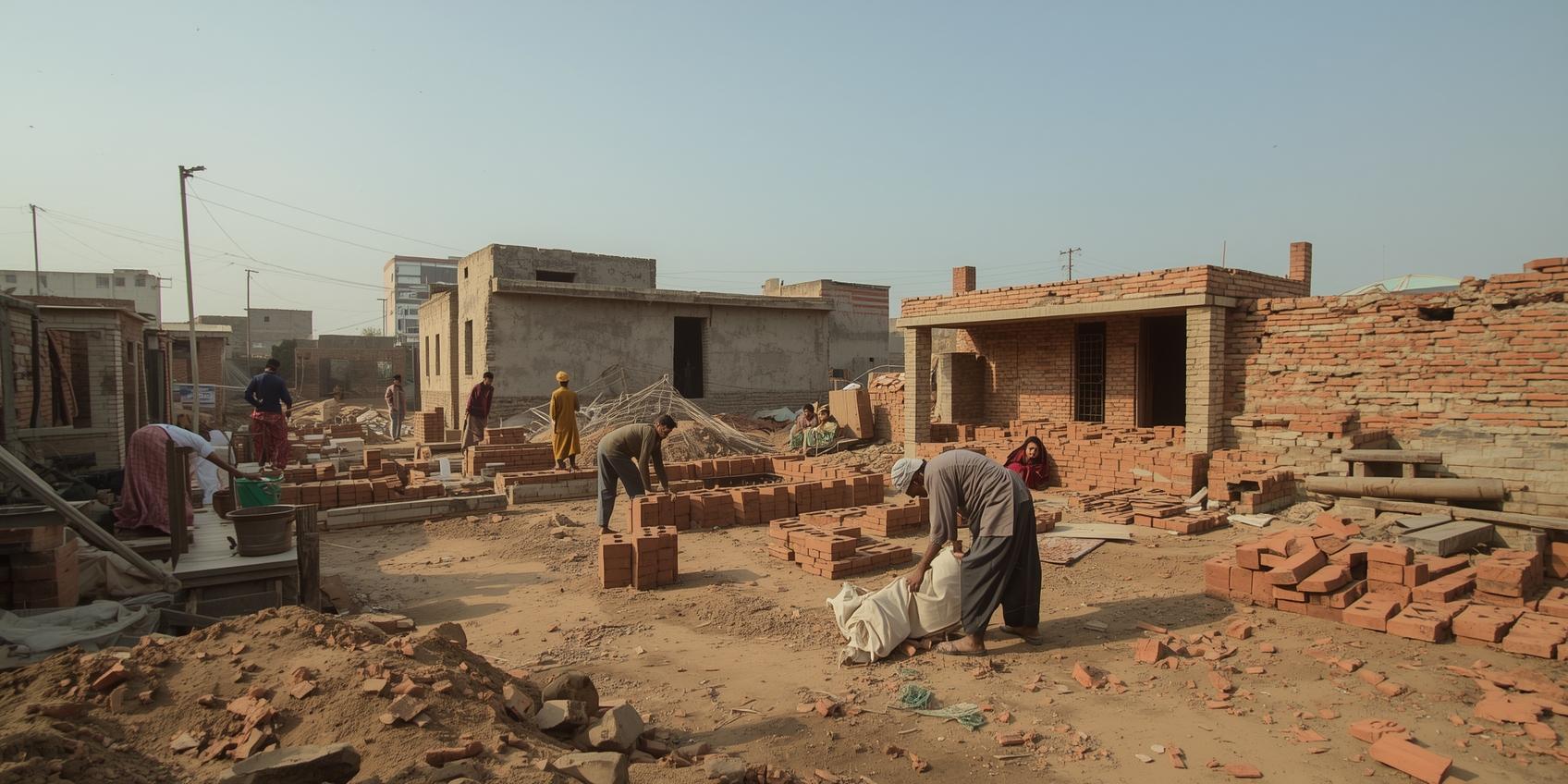

Move aims to free government plots, allow leasing for development, and boost municipal revenue
The Maharashtra Urban Development Department has issued a significant Government Resolution (GR) on 19 November 2025, outlining a uniform process for removal or regularisation of encroachments on government-owned land across the state’s small and medium cities.
The new GR, issued follows a review meeting chaired by the Chief Minister on 9 January 2025, where the 100-day action plan for the Urban Development Department was approved. One key agenda in that plan was:
“To remove or regularise encroachments on government land in smaller towns, lease such land for planned city development, and increase municipal revenues through development charges and property tax.”
What the GR Orders
1. Uniform Policy for All Departments on Encroachment Handling
The government has now clarified that all encroachments on government-owned land must be handled strictly as per existing policies, and where such policies do not exist, the Revenue & Forest Department’s 1999 and 2002 policies will apply.
Departments with their own policies
Some departments already have their own rules for removal/regularisation of encroachments, such as:
- Rural Development
- Agriculture and Animal Husbandry
- Public Health
- Public Works
- Water Supply and Sanitation
- Co-operation & Textiles
These departments will continue following their own rules for their land parcels.
Where no policy exists
For all other departments and all municipal bodies, the Revenue & Forest Department’s policy becomes the default binding rule.
2. Urban Local Bodies Must Now Act on Their Own Land
Municipal corporations, municipal councils and nagar panchayats must:
- Study applicable policies
- Identify encroached government lands within their boundaries
- Either remove or regularise encroachments strictly as per the policy
- Take steps to lease such lands for planned development
- Use property tax & development charges to increase municipal revenue
This is the first time the state has formally instructed all ULBs to adopt a uniform approach instead of the current fragmented system.
3. Other Government Departments Must Also Clear Encroachments Quickly
Departments such as:
- Revenue & Forest
- Urban Development
- Rural Development
- Housing
- Water Supply
- Agriculture
- Health
- Co-operation
…must identify and act on encroachments on their land using their approved policies — and do so “immediately” (तातडीने)”, according to the GR.
4. Aim: Unlock Government Land for Development Projects
The GR stresses that freeing government land is essential to:
- Kickstart new developmental projects
- Facilitate planned urban growth
- Support infrastructure creation
- Increase local government revenue
Municipal bodies have been specifically told to actively participate in this land-cleaning exercise.
What This Means for Small & Medium Cities
1. Large-Scale Removal of Encroachments Likely
Many smaller cities have large tracts of government land under informal use or encroachment.
The GR now gives municipalities clear authority and responsibility to act.
Expect:
- Notices to unauthorized occupants
- Surveys and mapping of government land
- Demarcation of encroached plots
- Evictions where regularisation is not possible
2. Some Encroachments May Get Regularised
Where policies allow — especially under schemes that permit regularisation based on cut-off dates — some encroachments may be:
- Legalised
- Given leases
- Subjected to fees, charges, or penalties
This may particularly benefit long-settled households or small businesses, depending on departmental policies.
3. More Government Land Will Enter the Development Pipeline
By leasing freed land, cities can use it for:
- Housing projects
- Commercial development
- Infrastructure expansion
- Public utility zones
This aligns with the CM-approved 100-day plan to “boost city development through proper land utilisation.”
4. Municipal Revenues Expected to Rise
Municipal bodies will earn additional income through:
- Property tax
- Development charges
- Lease rentals
This will strengthen financially weaker municipal councils.
5. Policy Uniformity Will End Confusion
Till now, every department had different norms.
ULBs were unsure whose rules to follow.
This GR brings clarity and consistency.
Conclusion
The new GR marks a major shift in how Maharashtra intends to use its government land bank in small and medium cities.
With clear accountability for all departments and local bodies, the order is expected to trigger:
- systematic encroachment removal
- selective regularisation
- more land availability for development
- higher municipal revenue
The long-term impact could reshape the development trajectory of Tier-2 and Tier-3 cities across Maharashtra.