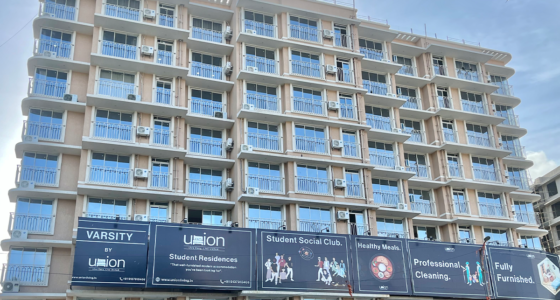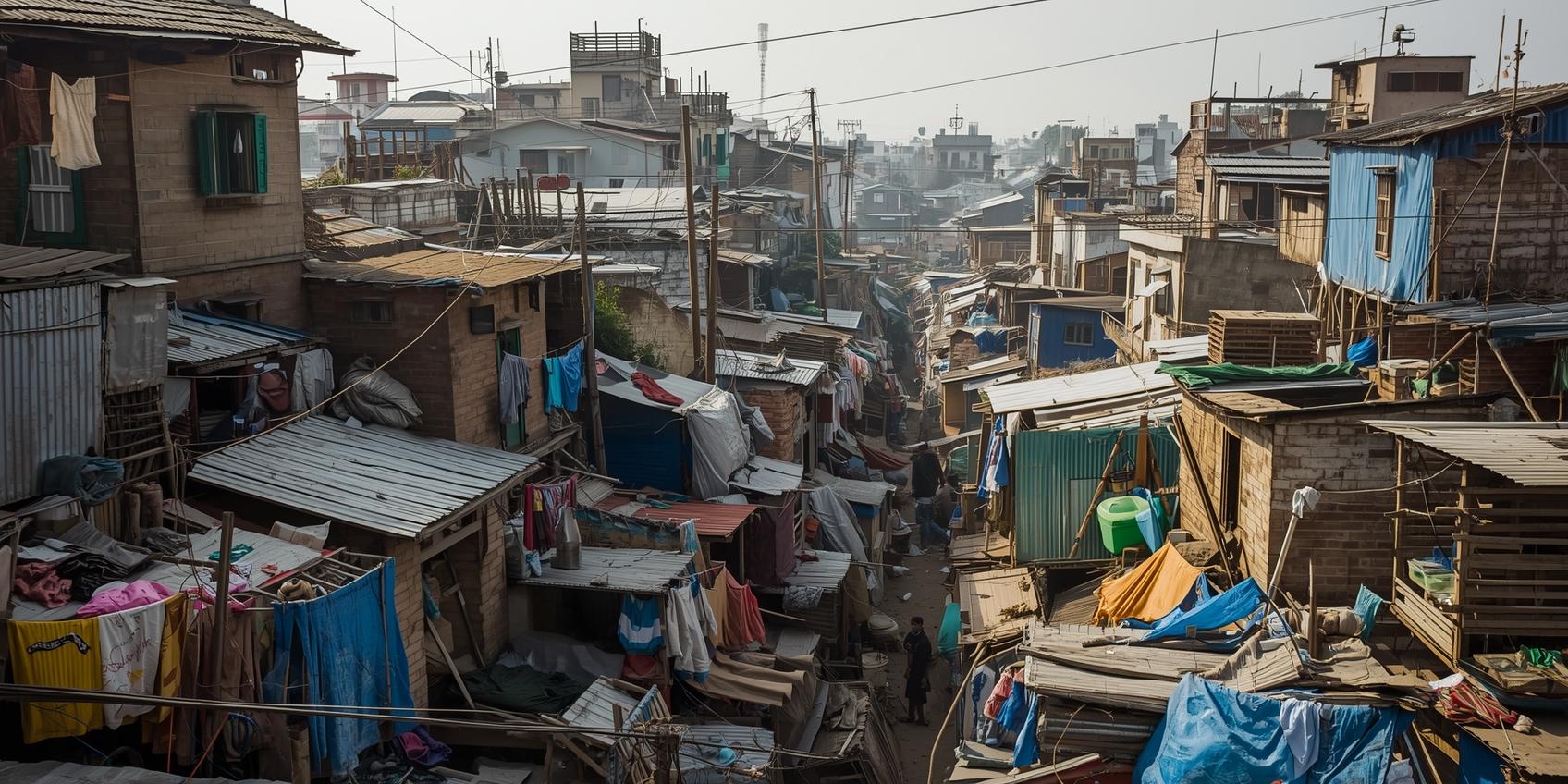

In a significant policy move, the Maharashtra government has increased maintenance charges for rehab (SRA) flats, with costs now going up to ₹3 lakh per unit, depending on building height.
The decision comes as part of the Balasaheb Thackeray Urban Welfare Mission GR (April 1, 2026), and reflects a shift towards high-rise slum redevelopment projects in Mumbai.
What Has Changed?
Earlier, developers were required to pay a fixed maintenance charge of ₹40,000 per rehab unit.
Now, the charges have been revised sharply:
- Up to 70 meters: ₹1,00,000 per flat
- 70 to 120 meters: ₹2,00,000 per flat
- Above 120 meters: ₹3,00,000 per flat
This marks a 2.5x to 7.5x increase, depending on the project.
Why This Hike?
The government notes that:
- SRA buildings are increasingly becoming high-rise towers
- Existing maintenance provisions were too low to sustain long-term upkeep
- Higher charges are needed to ensure better building quality and maintenance standards
Big Question: Who Will Pay?
Officially, the developer bears this cost upfront.
However, in reality:
- Developers may factor this into project costing
- This could impact:
- Profit margins
- Free-sale component pricing
- Project viability in smaller layouts
👉 In simple terms:
Even if slum residents don’t pay directly, the market may absorb the cost indirectly.
Impact on Redevelopment Projects
This move could have mixed consequences:
Positive
- Better maintenance funding for rehab societies
- Improved living standards in SRA buildings
- More sustainable high-rise redevelopment
Concerns
- Increased financial burden on developers
- Possible slowdown in marginal projects
- Higher prices in the free-sale segment
Part of a Larger Policy Push
The maintenance hike is just one part of a broader plan:
Key Objective: Slum-Free Mumbai
The government stated that transforming Mumbai into a slum-free city would be a fitting tribute to Balasaheb Thackeray during his birth centenary year.
The campaign will be implemented across urban local bodies, with Mumbai as the primary focus.
1. Push for Large-Scale Cluster Redevelopment
- The government will fast-track the Slum Cluster Redevelopment Scheme under SRA
- Applicable to land parcels:
- Minimum 50 acres
- More than 51% slum area
Key actions:
- Demarcation and measurement of slum clusters
- Biometric surveys of residents
- NOCs from government/semi-government land-owning authorities
- Approval of proposals by a high-level committee
Authorities like BMC, MMRDA, and MHADA may be involved via MoUs.
2. Major Increase in Maintenance Charges
To reflect rising building heights and costs, maintenance charges per flat will be revised:
- Up to 70 meters: ₹1 lakh per unit
- 70–120 meters: ₹2 lakh per unit
- Above 120 meters: ₹3 lakh per unit
This is a significant jump from the current ₹40,000 per unit, indicating a shift toward high-rise redevelopment.
3. Bigger Homes for Slum Dwellers (300 sq ft Standard)
A major reform under the mission:
- Earlier SRA homes: 180–269 sq ft
- Now: Minimum 300 sq ft homes
Even older rehab buildings can be redeveloped again (with consent) to upgrade residents to 300 sq ft units.
This aligns with DCPR 2034 and PMAY standards.
4. Tech-Driven Monitoring to Stop New Slums
The government will deploy advanced technology under the NETRAM system (Network for Encroachment Tracking and Reporting for Mumbai):
Key features:
- GIS-based real-time slum tracking
- High-resolution satellite imagery
- Change-detection technology to identify new encroachments
A dedicated web portal developed with BISAG-N will track new slums across Mumbai.
Enforcement:
- Separate monitoring cells by:
- BMC
- MHADA
- Collector offices
- Satellite data will be updated 3 times a year
- Immediate action will be taken to remove new illegal constructions
What This Means for Mumbai Real Estate
This mission signals a massive policy push with long-term implications:
- Faster slum redevelopment approvals
- Shift towards large cluster projects
- Better housing standards (300 sq ft homes)
- Increased costs for developers
- Stronger enforcement against new slums
Bottom Line
The Maharashtra government’s new mission combines policy reform, technology, and execution focus to tackle one of Mumbai’s biggest challenges.
If implemented effectively, it could reshape the city’s housing landscape and bring it closer to the long-standing goal of becoming slum-free.