After three years of strong expansion, India’s land acquisition market has entered a phase of moderation. Developers are becoming more selective on parcel size, location and project feasibility, with partnership-led models — especially joint development arrangements (JDAs) — gaining a larger share of the pie, according to the latest data from Anarock Research & Advisory.
In the first nine months of 2026, the country recorded 76 land deals covering approximately 1,445 acres. This is a clear slowdown from the same period last year, when 99 deals spanned nearly 3,292 acres. Large transactions of 50 acres or more fell sharply — from 12 deals in 9M 2025 to just five in 9M 2026 — with their combined acreage dropping from about 2,398 acres to 588 acres.
JDAs Now One in Every Four Deals
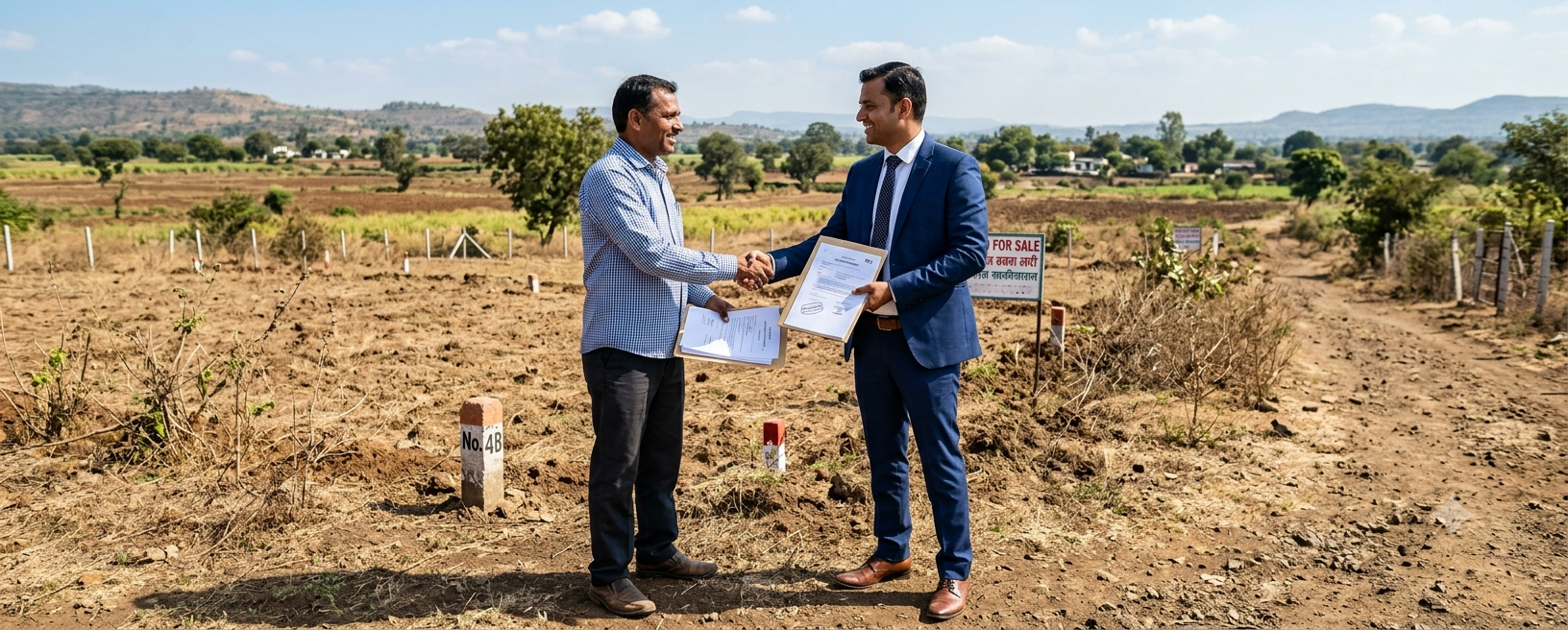
The most notable structural shift is the rising preference for JDAs. Of the 76 deals closed in 9M 2026, at least 19 were joint development arrangements, taking the JDA share to 25%.
The trend has been building steadily:
- 2022: 10 JDAs out of 83 deals (12%)
- 2023: 11 out of 98 (11%)
- 2024: 23 out of 133 (17%)
- 2025: 30 out of 126 (24%)
- 9M 2026: 19 out of 76 (25%)
“With project economics becoming more important, developers are increasingly turning to JDAs with existing landowners,” said Mayank Saksena, MD & CEO – Land Services, Anarock Group. “These are distinct from joint ventures or JVs, where developers partner with other developers. Under a JDA, a developer can access land and build projects via a partnership rather than via an outright purchase.”
Cumulative Picture: 516 Deals, Nearly 13,000 Acres
Between 2022 and 9M 2026, a total of 516 land deals spanning 12,958 acres were closed across the country. 2024 saw the highest number of deals (133), while 2025 recorded the highest acreage (3,772 acres over 126 deals). The 9M 2026 numbers indicate a deliberate recalibration after this three-year expansion phase.
MMR Still Leads, But Big Parcels Shift to Smaller Cities
On cumulative acreage between 2022 and 9M 2026, the Mumbai Metropolitan Region (MMR) led with approximately 2,798 acres, followed by the National Capital Region (2,012 acres) and Bengaluru (1,679 acres). Ahmedabad stood out as an outlier — just five large transactions of 50 acres or more accounted for nearly 93% of the city’s tracked acreage.
The seven established metros (MMR, NCR, Bengaluru, Hyderabad, Pune, Chennai and Kolkata) accounted for about 86% of the 516 deals but only about 57% of the total acreage. In other words, smaller and mid-sized deals remain concentrated in the big cities, while the largest land parcels are increasingly being acquired in Tier 2 and 3 markets.
Gujarat emerged as the strongest market for big-ticket deals, with Ahmedabad, Surat and Vadodara together accounting for roughly 2,020 acres. Other cities that featured prominently on cumulative acreage despite fewer deals included Coimbatore (about 770 acres), Amritsar, Nagpur, Panipat and Ludhiana. The single largest transactions in the period were a 714-acre deal in Coimbatore, a 600-acre deal in Hyderabad, and two Ahmedabad deals of 500 and 440 acres.
What It Means for the Market
The data points to a more disciplined acquisition strategy. With land costs elevated and project viability under sharper scrutiny, developers are opting for capital-light partnerships through JDAs rather than locking up large sums in outright purchases. For homebuyers, this selective approach could help keep project launches more measured and reduce the risk of oversupply in certain micro-markets, though land cost pressures are unlikely to ease quickly in core locations of MMR and other metros.
As Saksena noted, “Developers continue to buy land in the established metros, but the biggest parcels are increasingly being acquired in tier 2 and 3 markets.” The pattern of 2026 so far suggests this selective, partnership-heavy phase is likely to continue as long as project economics remain the overriding concern.
Also Read: Mumbai’s Real Estate Market Healing: Property Registrations Catch Steam in February 2026