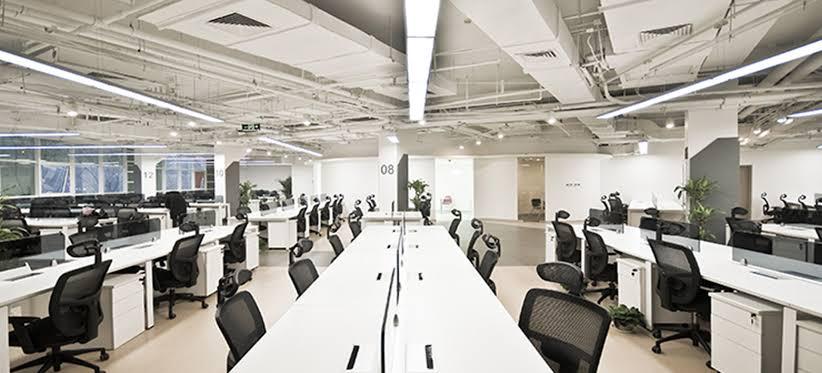

Hybrid working continues to be the most preferred workspace strategy, with 63% of the firms currently embracing the same, as per a survey of large, mid-sized and small firms conducted by Colliers. Firms from the Consulting, BFSI, and engineering sectors are at the forefront of adopting hybrid working.
About 63% of the firms adopting hybrid working
Three days a week in the office is the most popular hybrid working style for India Inc, with 26% of the firms preferring the same. The survey indicated that this hybrid pattern allows businesses to pursue business goals without hindrances while offering better work-life balance to employees.
| Key statistics |
| 63% of the firms are currently embracing a hybrid model with a varying number of days in the office, while 28% work all days from the office |
| 38% of the organizations are looking to lease new office spaces in next 6-18 months, while another 35% would like to retain their existing portfolios |
| Half of the organizations who are planning portfolio expansion in the next 6-18 months belong to the Technology sector |
| About 53% of the firms feel that productivity has increased since remote work started |
| About 28% of the firms feel that discrepancy in a workplace environment is the biggest challenge in Hybrid working, followed by communication barriers and lack of collaboration. |
About 38% of the organizations indicated that they are planning portfolio expansion in the next 6-18 months, by leasing traditional as well as flex spaces. A majority of the businesses implement hybrid working in varying degrees, 35% highlighted that they would like to retain their existing portfolios, while 13% look to consolidate their office spaces.
“The tier II story is back in the market. Large firms, especially, are leading this trend as almost 70% of the large enterprises are open to exploring flex in non-metro cities, while only 27% of the smaller firms are considering the same. About half of the firms who are planning office expansion in the next 6-18 months are from the Technology sector, followed by BFSI. This is led by the massive growth these two sectors are seeing over the last two years. Interestingly, about one-third of the occupiers surveyed revealed that their productivity increased by 5-10% with hybrid working. Offices are now evolving into centers of collaboration and innovation, with the wellbeing of employees at the core. A hybrid work style needs to be supported by apt technological intervention to ensure seamless collaboration and communication”, said Ramesh Nair, Chief Executive Officer | India and Managing Director, Market Development | Asia, Colliers.
A new dawn for non-metro cities
About 35%of the firms are willing to set up flex office spaces in non-metro cities to cater to changing employee needs.
Employee convenience and higher occupancy costs in metro cities are prompting occupiers to consider non-metro cities. Since last year, flex spaces have been seeing a surge in enquiries from firms for office space in non-metro cities.
“Consulting, BFSI and Technology companies are keen on setting up offices in non-metro cities. Overall, the interest levels towards building offices in non-metro cities will help reduce the infrastructure load on metro cities, and at the same time help build a cohesive business ecosystem in the smaller cities, leading to more equitable growth,” said Vimal Nadar, Senior Director and Head of Research, Colliers India.
Also Read: Office leasing activity up 1.48X Y-o-Y at 5.8mn sq ft: