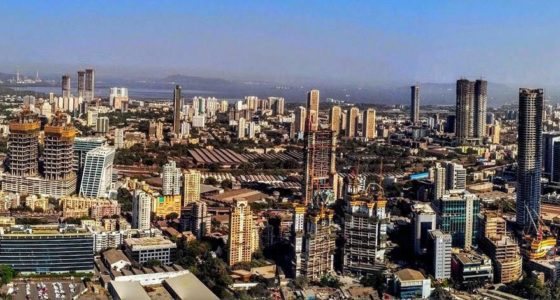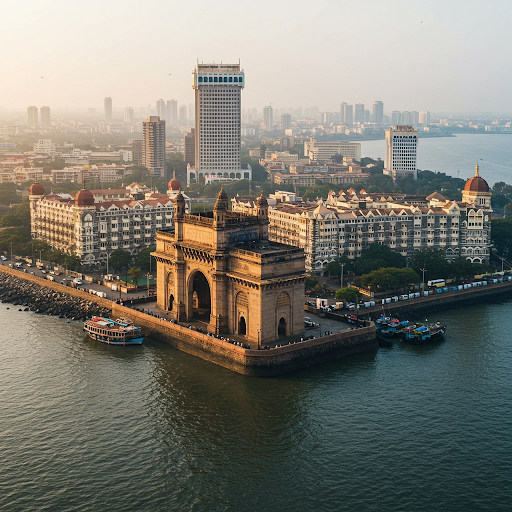

Mumbai and Pune are gearing up for one of the most ambitious housing revolutions in India. According to the newly released JLL–NAREDCO report “Towards ‘Housing for All’ in Maharashtra – The 2025 Policy Blueprint”, the two cities will see an estimated INR 70,000 crore investment to deliver 3.5 million affordable homes by 2030.
The bold initiative comes in response to rapid market “premiumisation” that has left middle and lower-income families priced out. Policymakers are targeting inclusive housing through new clusters on the peripheries of Mumbai and Pune, supported by large-scale infrastructure development.
Why This Matters
- Sales Momentum: Combined annual sales in Mumbai and Pune nearly doubled to 105,332 units (2022–H1 2025)from 46,528 units (2016–2019).
- Price Appreciation: Mumbai saw 28% price growth between 2019 and H1 2025, peaking with over 10% growth in 2023. Pune saw 20% appreciation in the same period.
- Premium vs. Affordable: Share of premium housing (₹1 crore+) launches rose from 43% to 59% between 2022 and H1 2025, while affordable housing (<₹50 lakh) fell from 15% to 12%.
Policy Blueprint: My House, My Right
The State’s “Majhe Ghar, Majhe Adhikar” (My House, My Right) policy sets a clear affordability target.
Key Highlights from the JLL–NAREDCO Report:
| Focus Area | Details |
|---|---|
| Total Investment | INR 70,000 crore |
| Affordable Homes Target | 3.5 million by 2030 |
| Target Segments | EWS & LIG (sub-₹50 lakh homes) |
| Tech Integration | AI-powered State Housing Information Portal (SHIP), linked to MahaRERA & PM Gati Shakti |
| Developer Incentives | 2.5 FSI for senior housing, 15% commercial FSI for student housing, 1% GST across all segments |
| Redevelopment Boost | Incentives for stalled cessed buildings and slums in Mumbai |
Expert Insights
Karan Singh Sodi, JLL:
“Premium housing surged to nearly 60% of launches in Mumbai and Pune, while affordable housing has dropped to just 12%. The INR 70,000 crore plan is designed to bridge this affordability gap by prioritizing inclusivity, sustainability, and transparency.”
Dr. Samantak Das, JLL:
“The Maharashtra Housing Policy 2025 creates investment-grade opportunities not just in affordable housing, but also in senior living, student housing, and rentals—while unlocking redevelopment potential of Mumbai’s cessed and slum areas.”
Prashant Sharma, NAREDCO Maharashtra:
“This policy arrives at a critical juncture. By centering on ‘Majhe Ghar, Majhe Adhikar’, Maharashtra is reshaping urban growth to make it equitable and sustainable for generations.”
Mumbai and Pune: New Growth Corridors
The report outlines four growth corridors each in Mumbai and Pune, with Navi Mumbai, Thane, Vasai–Virar, and Kalyan–Dombivli flagged as priority zones in MMR. Pune’s four-directional growth model highlights clusters in Moshi–Chakan, Wagholi–Charholi, Dhayari–Wadgaon, and Handewadi–Undri.
These corridors, backed by metro, highway, and digital infrastructure, are expected to serve as catalysts for affordable, well-planned communities while creating employment opportunities.
Looking Ahead
The JLL–NAREDCO blueprint underscores Maharashtra’s attempt to balance strong premium housing demand with the urgent need for affordability. By strategically investing in infrastructure and leveraging private participation, Mumbai and Pune could emerge as models of inclusive urban growth in India.
Also Reads: Agami Realty forays into Mumbai’s upscale Real Estate market, inks pact to redevelop MHADA Society in Bandra