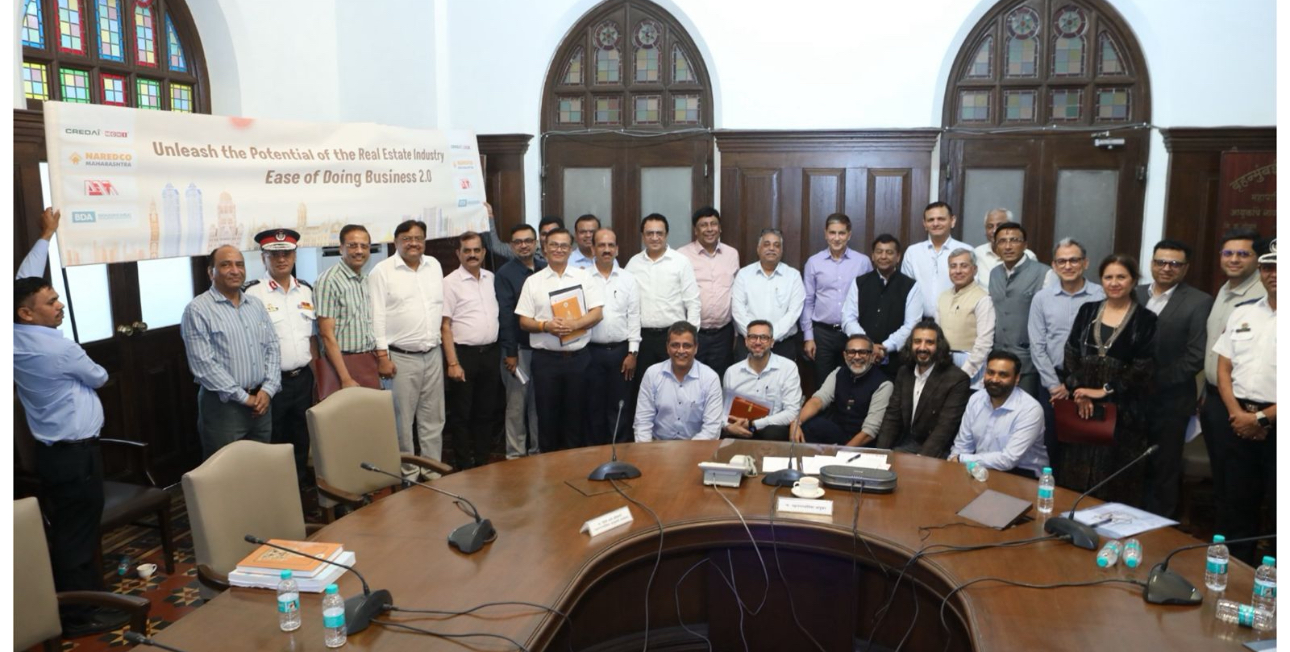

In a high-level meeting with Brihanmumbai Municipal Corporation (BMC) Commissioner Bhushan Gagrani, four leading real estate associations— CREDAI-MCHI, PEATA, NAREDCO Maharashtra, and BDA—presented a comprehensive 34-point agenda to streamline building approvals, reduce delays, and cut unnecessary costs. The proposals, if implemented, could accelerate housing projects across Mumbai, potentially stabilizing prices and improving supply for homebuyers frustrated by prolonged waits and inflated costs.
The joint submission, dated October 24, 2025, emphasizes updating outdated regulations, automating processes, and creating permanent mechanisms to avoid policy flip-flops. For the average Mumbaikar dreaming of owning a home, these changes promise quicker project completions, fairer premium structures, and fewer surprises in redevelopment timelines. The meeting was carried out after efforts of all four associations, of which Sukhraj Nahar, the President of CREDAI-MCHI took the lead.
Reviving and Updating the Ease of Doing Business Manual
The cornerstone demand is strict adherence to the 2015 Ease of Doing Business (EODB) Manual Version 1.0, which streamlined approvals but has fallen into disuse. The associations highlighted inconsistencies in scrutinizing building proposals despite repeated requests.
Key Suggestions:
- Process all proposals per the existing EODB Manual at zonal offices.
- Form a joint BMC-PEATA-NAREDCO-MCHI-BDA committee to revise the manual into Version 2.0 within 3-4 months, incorporating DCPR 2034 updates and digital systems.
This update could eliminate confusion for developers and architects, speeding up approvals and reducing project delays that often push up flat prices.
Steering Committee and Permanent Deferment Policy
To foster ongoing dialogue, the groups proposed a fortnightly steering committee chaired by the Municipal Commissioner, with signed minutes for actionable outcomes.
On premiums, they seek permanence for the 10:10:80 deferment policy (with 8% interest) and a lifecycle-based staggering of payments. Restrictions on Commencement Certificates (CC) under deferment should be removed.
Homebuyer Impact: Matching premium payments to project cash flows could prevent cost escalations, ensuring developers don’t pass burdens onto buyers.
Fire Safety, Tree NOC, and Policy Stability
Fire policies change reactively post-incidents, affecting ongoing projects. The associations want a 10-year forward-looking policy, conceptual approvals without upfront fees, and deferment applicability.
- CFO NOC: Auto-generate via AutoDCR after standardized terms.
- Tree NOC: Flat ₹10,000 fee per tree, planted via NGOs in Sanjay Gandhi National Park or ward RGs.
- 33(12)(B) Policy: Immediate clarification to continue existing SOP until new one is issued, protecting advanced PAP acquisitions.
Sudden scrapping rumors have stalled IODs; clarity here prevents financial losses rippling to redevelopment societies.
Cutting Red Tape in Fees and Approvals
Exorbitant charges like one-time pest control (OTC) for full building height during basements, or 10% annual scrutiny fee hikes, burden early-stage projects.
Proposals:
- Charge OTC once on built-up area, valid for 3-7 years.
- Scrutiny fees: Proportionate to residential/commercial areas; increase 2% yearly or every 5 years.
- Commercial premiums at residential rates, given similar sale prices.
- Extra sewerage charges (₹285/sq.m.): Pay at Building Proposal level with other fees.
Open space deficiency calculations should limit to affected rooms, not entire buildings.
Delegation, Self-Certification, and Digital Push
- Delegate concessions to Chief Engineer/zonal levels; shorten 4C reports.
- Self-certify plinth checking by architects (needs DCPR tweak).
- Ancillary structures (labor camps): Approve with main project, no 6-month revalidations.
- Issue IOA/CC under MR&TP Act only; extend CC validity to 3-5 years post-plinth.
- Remarks validity: Till project completion, not 1 year.
- Integrate all NOCs into AutoDCR for online tracking.
Ward-level issues (water connections, carriage entrances) should consolidate at Building Proposal stage.
Redevelopment Boosters
- 33(7)(B) Benefits: Grant based on 30-year building age proof, ignoring conveyance date/PRC.
- Unutilised FSI (DCR 1991): Allow balance potential under DCPR 2034 without extra TDR.
- Road Widening (<9m): Time-bound surveys and sanctions.
- RG in Open Spaces: Permit adjoining front/side/rear areas post-Supreme Court ruling.
- PAAA/CC Process: Follow 2015 EODB circular—no separate society consents if agreement exists.
Additional asks: Digitize old records, standardize remarks, shorten AutoDCR concession reports, incentive FSI on road setbacks, no hoarding charges for self-use, outsource AutoDCR to firms like TCS with AI, and crèche areas free of FSI.
A Win for Affordable Housing?
“These reforms will unleash real estate’s potential, funding BMC infrastructure while delivering homes faster and cheaper,” the associations stated. For homebuyers, especially in redevelopment hotspots, this could mean fewer stalled societies, predictable timelines, and relief from premium-driven price hikes. BMC’s response will be crucial—watch this space for updates.
Also Read: Need for Housing Stock Through PPP: BMC Commissioner