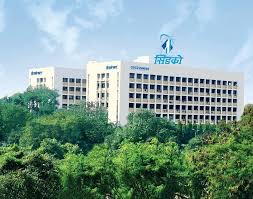

CIDCO will unveil a new housing scheme on August 27, 2024, in celebration of Krishna Janmashtami. The scheme will offer a total of 902 flats across various locations in Navi Mumbai.

The scheme includes 38 units designated for the economically weaker section and 175 units for the general category, located in the developed nodes of Kalamboli, Kharghar, and Ghansoli. Additionally, 689 units will be available from CIDCO’s ‘Swapnapurti’ and ‘Vastuvihar-Celebration’ projects at Kharghar.

CIDCO’s housing schemes aim to cater to various income groups, providing residents with the chance to own property in Navi Mumbai, known for its advanced infrastructure. The new complexes will benefit from connectivity via rail, road, and metro, and will be situated near key projects such as the Navi Mumbai International Airport. This scheme is expected to enhance the lifestyle options for residents in the region.

Also Read: CIDCO grants extension till Jan 6, for lottery

You May Also Like

Rehabilitation After Land Acquisition, Not a Fundamental Right, Says Supreme Court

In a major verdict, the Supreme Court has ruled that landowners displaced by acquisition cannot claim rehabilitation or subsidised plots as a matter of right under Article 21 of the Constitution. The judgment underscores that such benefits are governed by government policy—not by enforceable constitutional rights.

MHADA to construct 12724 flats in the coming financial year

The revised budget of Maharashtra Housing and Area Development Authority (MHADA) for…

CIDCO Files Complaint Against Dumper Owner and Driver for Illegal Dumping

CIDCO has filed a complaint against a dumper owner and driver for illegally dumping debris on CIDCO land in Navi Mumbai. The action follows a recent interception at Vashi Toll Naka, with CIDCO urging the public to report illegal dumping through their website or local police stations.

India’s Real Estate Market Shows Resilience in 2025 Despite Global Headwinds

India’s real estate market sustained its growth momentum in 2025, supported by strong office absorption, policy reforms, infrastructure spending, and steady institutional investments despite global economic uncertainties.