
Mumbai is entering a significant phase of urban transformation as large-scale infrastructure expansion converges with an accelerating redevelopment cycle across established residential neighbourhoods.
New roads, tunnels, sea links and Metro corridors are expected to improve connectivity across the Mumbai Metropolitan Region (MMR), while redevelopment is creating an opportunity to renew the city’s ageing housing stock. The convergence of these two trends could gradually change the character, accessibility and development potential of several established neighbourhoods, particularly across Mumbai’s western suburbs.
MMRDA infrastructure push could accelerate urban transformation
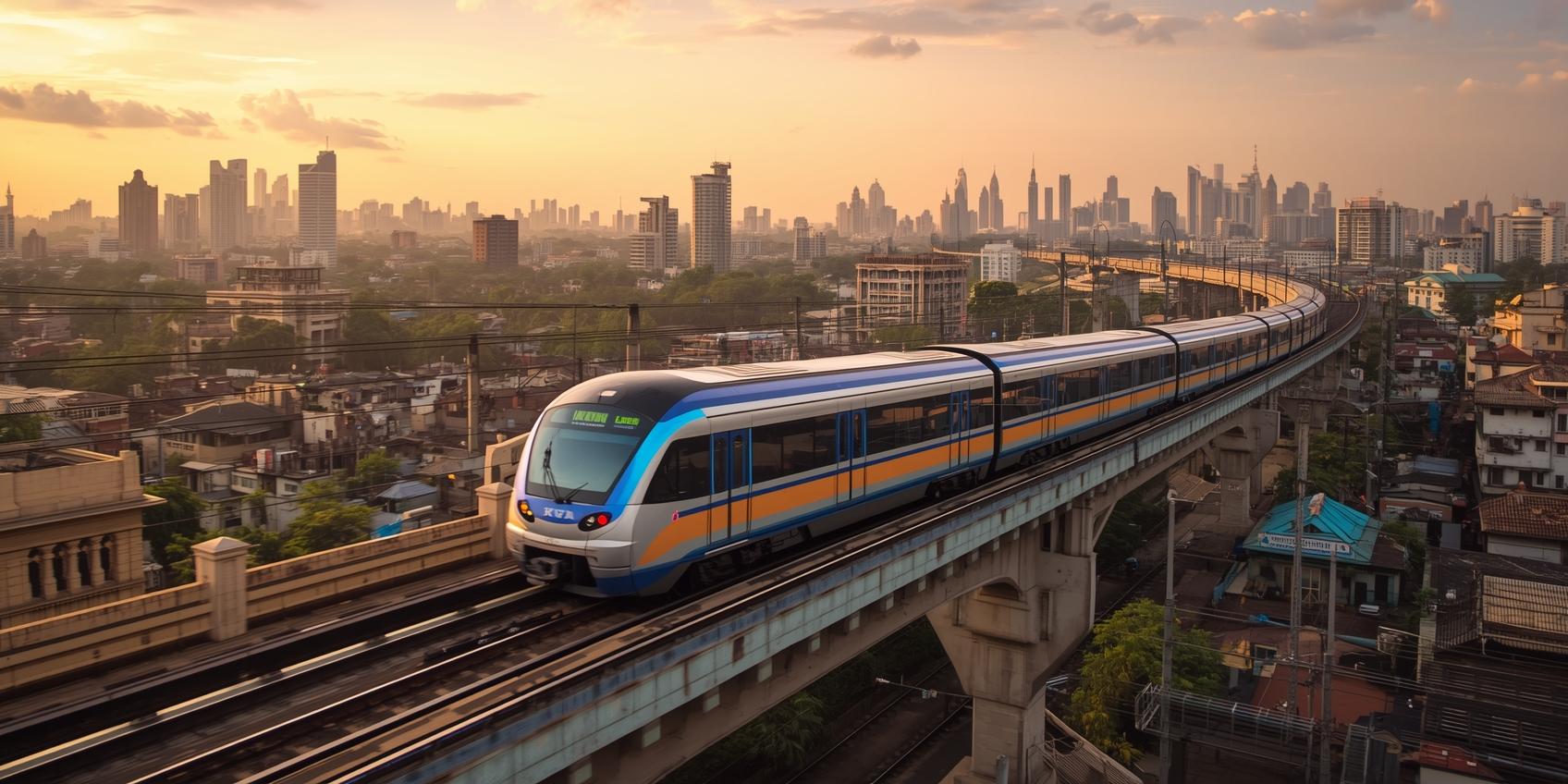
The Mumbai Metropolitan Region Development Authority (MMRDA) is advancing a multi-modal transportation network under its broader vision of ‘Mumbai in 59 Minutes’, aimed at improving connectivity between key business districts, residential clusters, airports, ports and emerging growth centres.
Metropolitan Commissioner Dr Sanjay Mukherjee recently said that ongoing MMRDA infrastructure projects are targeted for completion by December 2028, bringing forward the earlier December 2029 deadline.
The broader objective is to improve east-west as well as north-south movement across the region and reduce travel friction between residential and employment centres.
For established neighbourhoods, better connectivity can change the practical distance between a residential location and major employment, commercial and infrastructure hubs.
Western suburbs at the intersection of infrastructure and redevelopment
The western suburbs are particularly relevant to this transition because several established residential markets already have strong social infrastructure, employment linkages and access to multiple transport corridors.
Arshad Lashkaria, CEO & Managing Director, Lashkaria Group, said the western suburbs are entering a phase where redevelopment and infrastructure could increasingly reinforce each other.
“Improved connectivity changes the way people perceive distance and accessibility, while redevelopment allows established neighbourhoods to be reimagined with better-quality housing, amenities, infrastructure and more efficient use of land. The result will not simply be newer buildings; it could lead to a broader transformation of neighbourhoods and the way Mumbai’s residential landscape functions,” he said.
The significance of this transition extends beyond the replacement of individual old buildings. As connectivity improves, redevelopment can potentially bring newer housing stock into locations that already have established schools, healthcare facilities, retail markets, employment access and community networks.
773 redevelopment agreements signed in western Mumbai
The scale of redevelopment activity is already substantial.
According to Knight Frank India, 773 redevelopment agreements were signed across western Mumbai between January 2020 and March 15, 2026, covering approximately 321.2 acres.
Established suburban locations including Andheri, Jogeshwari and Goregaon are particularly relevant because of their mature residential base and connectivity to employment centres and multiple transportation corridors.
The redevelopment of individual buildings can modernise housing stock. However, a larger transformation could occur if redevelopment increasingly takes place across adjoining parcels or clusters.
Nearly 59,000 homes could emerge through redevelopment
Mumbai’s redevelopment pipeline could potentially unlock nearly 59,000 homes by 2031, with suburban markets accounting for the overwhelming majority of the activity.
This scale indicates that redevelopment is becoming an important component of Mumbai’s future housing supply rather than simply a mechanism for replacing individual ageing buildings.
The increasing interest in cluster-led redevelopment could further change the nature of the process. Instead of planning buildings in isolation, multiple buildings or parcels can potentially be considered together, allowing land to be used more efficiently and creating opportunities for larger-scale infrastructure and amenities.
An industry expert said the scale of redevelopment underway in Mumbai reflects a structural shift in the city’s housing market.
“As redevelopment moves beyond individual buildings towards larger parcels and clusters, it can create a more diverse housing stock while also bringing greater efficiency to the use of land. In established western suburban micro markets this process could become increasingly significant as demand remains anchored to well-connected and established residential locations,” the expert said.
Infrastructure can change the value of established locations
The relationship between infrastructure and redevelopment is particularly important in a land-constrained city such as Mumbai.
New infrastructure can improve accessibility to an existing neighbourhood, while redevelopment can increase the quality and efficiency of the housing stock within that neighbourhood.
This creates a different form of urban expansion. Instead of development moving primarily towards new peripheral areas, established locations can undergo significant internal transformation.
For western suburban neighbourhoods, improved transport connections could expand their practical catchment areas, while redevelopment could create newer residential buildings without eliminating the established ecosystems that residents already depend on.
Cluster redevelopment could have a wider neighbourhood impact
One of the more important developments could be the shift from individual-building redevelopment towards cluster-led projects.
When multiple buildings and parcels are considered together, there can potentially be greater scope for more efficient land use, larger open spaces, improved internal infrastructure and coordinated amenities.
However, the actual outcome will depend on how individual redevelopment projects are planned and implemented. The existence of a large redevelopment pipeline does not by itself guarantee neighbourhood-level transformation.
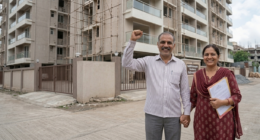
For residents, redevelopment can offer the possibility of newer and better-quality homes while allowing them to remain within familiar neighbourhoods. For the wider city, it could provide a mechanism to renew ageing housing stock in locations that already have established infrastructure and social ecosystems.
Mumbai could increasingly evolve from within
The convergence of infrastructure investment and redevelopment could gradually redraw Mumbai’s urban map.
Connectivity projects are expected to reduce travel times and improve links between different parts of the MMR, while redevelopment can renew established residential areas and make more efficient use of scarce urban land.
The western suburbs could therefore become an important example of how infrastructure and redevelopment interact. Areas such as Andheri, Jogeshwari and Goregaon are not emerging from scratch; they are established urban districts undergoing a process of renewal.
Mumbai’s next phase of growth may consequently involve not only expansion into new areas, but also substantial transformation within the city itself.
As infrastructure improves and redevelopment gathers pace, the future urban landscape could increasingly be defined by how effectively Mumbai renews its existing neighbourhoods while integrating them into a faster and more connected metropolitan region.
Also Read: Homebuyers Can Challenge Only Unfavourable RERA Parts & Recover Simultaneously