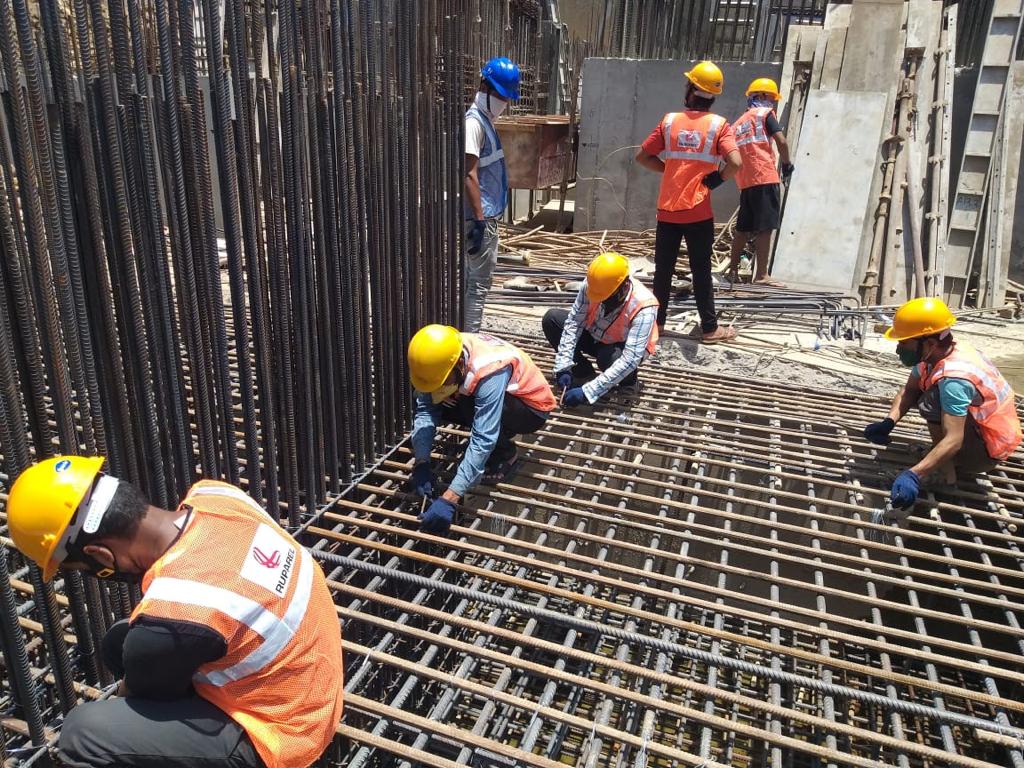

Investments across India’s renewable energy, roads, and real estate sectors are projected to grow at a robust pace of approximately 15% annually, touching ₹17.5 lakh crore cumulatively over the current and next fiscal years, according to a report by CRISIL Ratings. This marks a significant jump from the ₹13.3 lakh crore invested in the preceding two fiscal years.
Despite sector-specific challenges, CRISIL expects credit profiles of developers and projects to remain resilient, backed by strong cash flows, healthy investor interest, and a trend toward financial deleveraging.
Renewables: Hybrid Growth and Transmission Expansion
The renewable energy sector is witnessing a sharp pivot toward hybrid and storage-backed capacities to counter the intermittency of solar and wind power. Around 75 GW of new capacity is expected over FY26 and FY27, with hybrid models contributing 37% — a sharp rise from 14% in the prior two years. To support this growth, transmission infrastructure is being scaled up significantly, with ₹1 lakh crore of capex planned over the two fiscals.
However, challenges such as right-of-way issues, approval delays, and equipment shortages could pose implementation risks.
Roads: Monetisation as a Growth Lever
In the roads sector, asset monetisation is becoming a key funding strategy for the National Highways Authority of India (NHAI), with its share of funding expected to rise to 18% from 14% earlier. NHAI has a monetisable asset base of ₹3.5–4 lakh crore. However, past challenges — including delays in approvals and low bidder turnout — remain hurdles to consistent growth.
CRISIL reports that credit profiles of toll-operate-transfer assets are strong, with healthy Debt Service Coverage Ratios (DSCR) of 1.5–1.6 expected over the two years.
Real Estate: Premiumisation and Global Centre Demand Fuel Growth
The residential real estate market is stabilising post-pandemic, with revenues expected to grow 10–12% in India’s top seven cities. Demand for premium housing remains strong, although new launches may outpace absorption, pushing inventory levels to 2.9–3.1 years from a low of 2.7 years in FY24.
Commercial real estate continues to benefit from rising demand from global capability centres (GCCs). Net leasing is projected to grow 7–9% annually, with expectations of exceeding 50 million sq. ft. of annual net leasing by FY27.
Asset-light development models, robust sales, and efficient collections are contributing to improved credit metrics. The residential sector’s debt-to-operating cash flow ratio is expected to remain manageable at 1.1–1.3 times, while the DSCR in commercial real estate is projected at 1.9–2.0 times.
Stable Credit Profiles Despite Risks
Commenting on the report, Manish Gupta, Deputy Chief Ratings Officer, CRISIL Ratings, noted, “Robust operational performance and steady cash flows have helped keep debt levels under control across these sectors. Equity infusions and asset monetisation worth ₹2.1 lakh crore over the last two fiscals have further strengthened balance sheets.”
The report underscores that while geopolitical risks and implementation delays may affect investment momentum, the structural resilience of these sectors—bolstered by infrastructure investment trusts (InvITs) and real estate investment trusts (REITs)—offers stability.
Also Read: IndiaMART Report Reveals Strong Cement Industry Growth and Buyer Trends