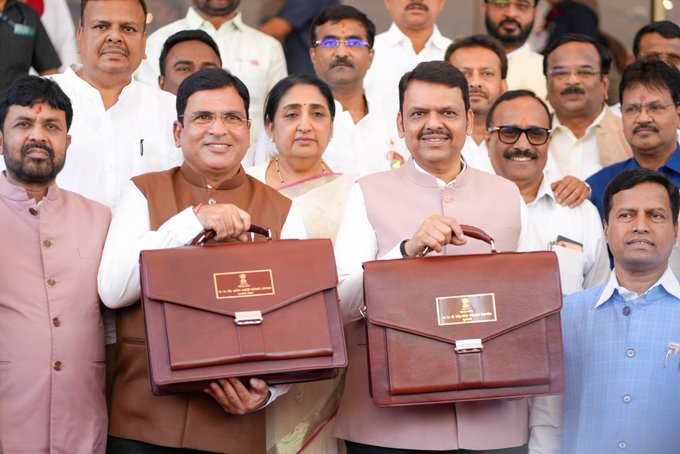
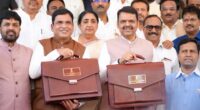
The Maharashtra State Budget 2026, presented by Chief Minister Devendra Fadnavis, has outlined a series of policy initiatives and infrastructure investments that are expected to significantly benefit homebuyers across the state. With a strong focus on affordable housing delivery, metro expansion, improved urban connectivity and digitisation of city services, the budget aims to accelerate urban development while strengthening the housing ecosystem.
One of the most notable announcements for homebuyers is the completion of 3.57 lakh houses under the Pradhan Mantri Awas Yojana (PMAY) in Maharashtra. The government has also proposed rooftop solar incentives for these homes, a move that will reduce long-term electricity costs for residents while encouraging sustainable housing practices.
The budget also emphasises large-scale infrastructure investments, including metro expansion, new highways and major connectivity projects. These initiatives are expected to unlock new real estate growth corridors and improve access to residential markets in Mumbai, Pune, Nashik and Nagpur.
Infrastructure Push to Reshape Housing Markets
Connectivity improvements remain a central pillar of the state’s urban development strategy. Key infrastructure projects such as the Wadala–Gateway of India underground metro line, the airport-to-airport metro link and new east–west road connectors are expected to significantly enhance mobility across Mumbai.
According to Kaushal Agarwal, Chairman of The Guardians Real Estate Advisory, the focus on connectivity will have a direct impact on property markets.
“The Maharashtra Budget’s strong focus on expanding metro corridors, coastal roads and signal-free connectivity reflects a long-term vision to ease Mumbai’s chronic congestion and strengthen intra-city mobility. From a real estate perspective, improved connectivity typically acts as a major catalyst for development, enhancing the attractiveness of several micro-markets and supporting more balanced urban growth across Mumbai.”
Major road infrastructure projects, including the Goregaon–Mulund Link Road, Versova–Bhayander Coastal Road and multiple underground subways, are also expected to reduce travel times and improve access between residential and commercial zones.
Housing Delivery and Sustainability Focus
Industry leaders have welcomed the government’s continued focus on housing delivery under central schemes. The completion of a large number of PMAY homes is expected to strengthen the affordable housing segment while expanding ownership opportunities for middle-income households.
Prashant Sharma, President of NAREDCO Maharashtra, highlighted the significance of the housing push.
“The Maharashtra State Budget 2026 outlines a strong and forward-looking vision for the state’s housing and infrastructure sectors. The announcement on housing under the Pradhan Mantri Awas Yojana, with accelerated completions and rooftop solar subsidies, is particularly encouraging for the residential segment as it will enhance affordability while promoting sustainability.”
The integration of solar infrastructure into housing schemes could also help reduce energy costs for homeowners and align residential development with sustainability goals.
Digitisation to Improve Urban Services
Another key theme in the budget is the digitisation of urban services, which is expected to simplify approvals, improve transparency and enhance citizen services in cities.
Shraddha Kedia-Agarwal, Director at Transcon Developers, noted that these reforms will directly benefit both developers and homebuyers.
“The state budget’s focus on housing completion and digitised urban services directly supports developer and consumer priorities. Enhanced infrastructure from coastal roads to underground traffic solutions will significantly improve liveability.”
Digitised governance systems could streamline property-related services, building approvals and municipal processes, improving the overall ease of doing business in the real estate sector.
Long-Term Urbanisation Vision
The state government has also outlined an ambitious long-term urbanisation strategy. Maharashtra aims to increase its urban population share to around 70% by 2047, supported by large-scale investments in transport networks and urban infrastructure.
Kamlesh Thakur, Co-Founder and Managing Director of Srishti Group, said the budget takes a comprehensive view of urban development.
“The 2026 State budget takes a comprehensive approach to urbanisation and connectivity, with ambitious targets including 70% urban population by 2047, extensive metro expansions, and nearly 6,000 km of expressways.”
He added that improved mobility, housing delivery and digital governance will strengthen Maharashtra’s appeal as a real estate investment destination.
Boost for Housing Demand and Investment
Beyond housing and infrastructure, the budget also aims to strengthen Maharashtra’s position as India’s economic powerhouse. The government has set targets to create more than 50 lakh direct and indirect jobs and attract significant foreign investment, factors that could further support housing demand in major cities.
With improved infrastructure, greater housing supply and digital governance reforms, the Maharashtra Budget 2026 is expected to play a key role in shaping the state’s real estate landscape and improving housing accessibility for buyers.
Also Read: How Budget 2026 Can Revive Affordable Housing in India