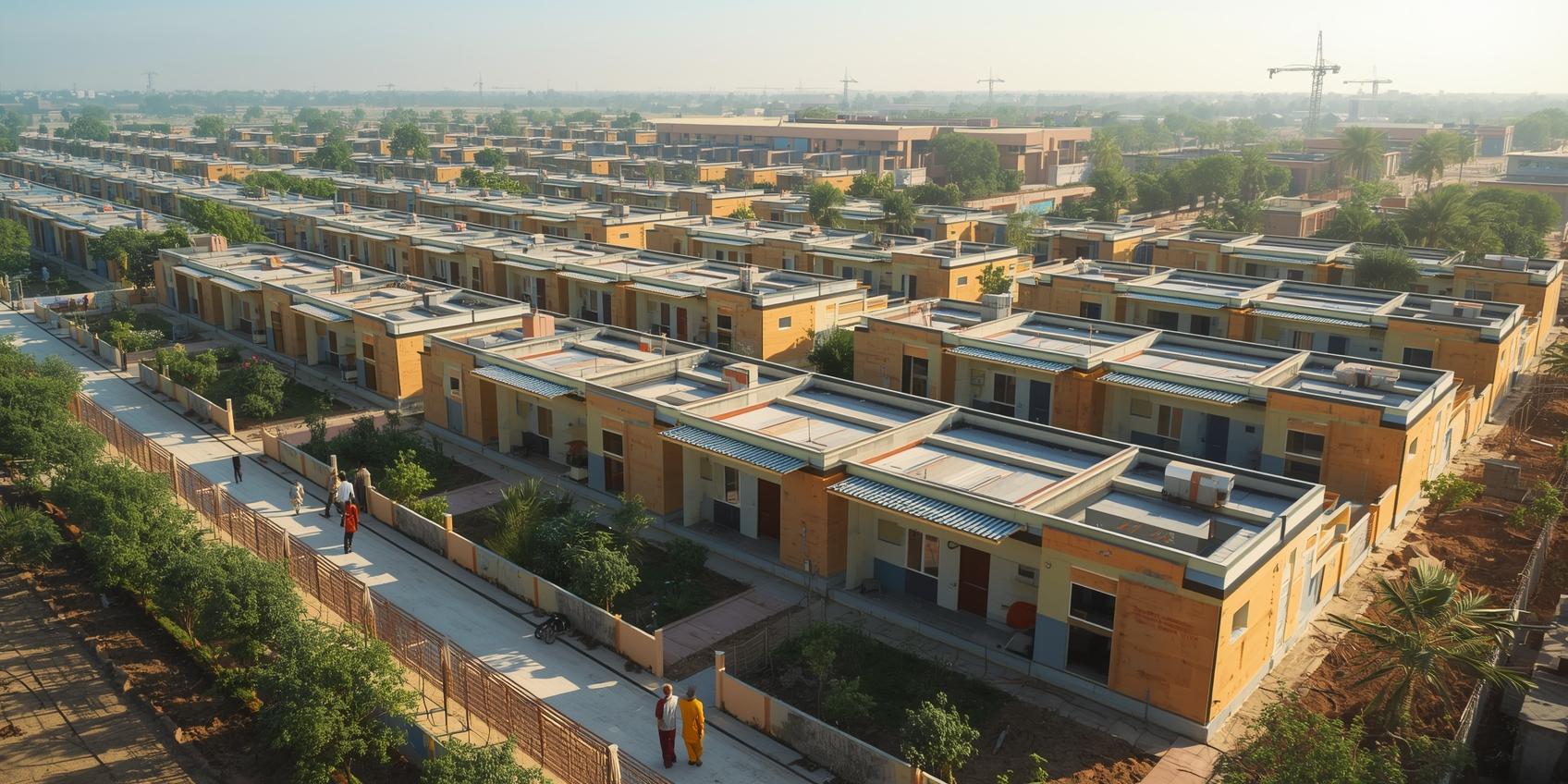

In a major boost for affordable housing supply, the Government of Maharashtra has approved the release of ₹411.04 crore under the Pradhan Mantri Awas Yojana (Urban) (PMAY-U) for projects under the Affordable Housing in Partnership (AHP) component (SLS Code-MH-676).
The funds include ₹246.62 crore as the central share and ₹164.41 crore as the state share, to be distributed for projects categorized under the general component (non-SC/ST). The decision was formalized through a Government Resolution dated 27 February 2026 issued by the state housing department.
Why This GR Is Important
This funding is not merely an administrative step — it signals:
- acceleration of stalled affordable housing projects
- liquidity support for developers and implementing agencies
- increased supply pipeline for EWS/LIG buyers
- execution push before scheme deadlines
The sanction falls within the “Mother Sanction” already approved by the Ministry of Housing and Urban Affairs, which had cleared ₹269.65 crore total central assistance for Maharashtra’s projects under this component.
How the Funds Will Be Distributed
The sanctioned amount will be routed through the SNA-SPARSH digital fund-tracking system and disbursed to implementing agencies after compliance with technical and administrative procedures such as:
- SLS code mapping
- digital signatures
- portal verification
The nodal agency for implementation is the Maharashtra Housing and Area Development Authority (MHADA), which will oversee distribution and ensure utilization strictly for approved projects.
Massive Statewide Housing Pipeline Activated
The approval covers 117 housing projects across Maharashtra, spanning cities including:
- Navi Mumbai
- Pune
- Nagpur
- Solapur
- Nashik
- Thane
- Kolhapur
- Chandrapur
- Raigad
- Satara
The projects collectively include tens of thousands of EWS and LIG homes, with some of the largest allocations going to large-scale housing clusters such as:
- Navi Mumbai multi-sector housing projects with thousands of units
- Pune metropolitan region EWS developments
- Nagpur and Solapur bulk affordable housing clusters
Some individual mega-projects alone received allocations exceeding ₹1,000 crore total project value when combining state and central shares.
Who Benefits the Most
1. EWS Buyers
Most projects funded are targeted at the Economically Weaker Section (EWS) category — the segment facing the biggest housing shortage.
2. First-Time Homebuyers
Increased supply typically stabilizes prices and expands eligibility options under subsidy schemes.
3. Developers in PPP Housing
Many projects operate under public-private partnership models, meaning developers receive funding certainty, reducing financing risk.
Policy Signal: Government Is Accelerating Affordable Housing
The timing of the approval indicates a strategic policy push:
- clearing pending installments
- ensuring projects meet deadlines
- preventing cost escalations
- maintaining construction momentum
Housing analysts often treat fund releases — not announcements — as the real indicator of project execution. A sanctioned and disbursed installment typically means projects are entering or continuing construction phases.
What Buyers Should Decode from This Data
Real estate watchers can interpret this GR as a supply-side signal:
| Indicator | Interpretation |
|---|---|
| Fund release | Projects moving toward execution |
| Large project list | Pipeline expansion |
| Multi-city allocation | Balanced regional development |
| Focus on EWS | Affordability priority |
In practical terms, more funded projects today means more affordable flats entering the market over the next 12–36 months.
Compliance Conditions Attached
The government has instructed all implementing agencies to:
- spend funds only for sanctioned purposes
- follow financial guidelines issued by the finance department
- maintain audit compliance
- adhere to PMAY technical norms
Failure to comply could delay further fund releases.
Bigger Picture: Affordable Housing Supply Cycle
Affordable housing projects usually follow a four-stage cycle:
- Administrative approval
- Fund sanction (current stage)
- Construction execution
- Possession phase
With the sanction now issued, most projects move into stage 2–3, which is where actual supply creation begins.
Also Read: Only Rs 1k stamp duty for EWS and LIG homes under PMAY