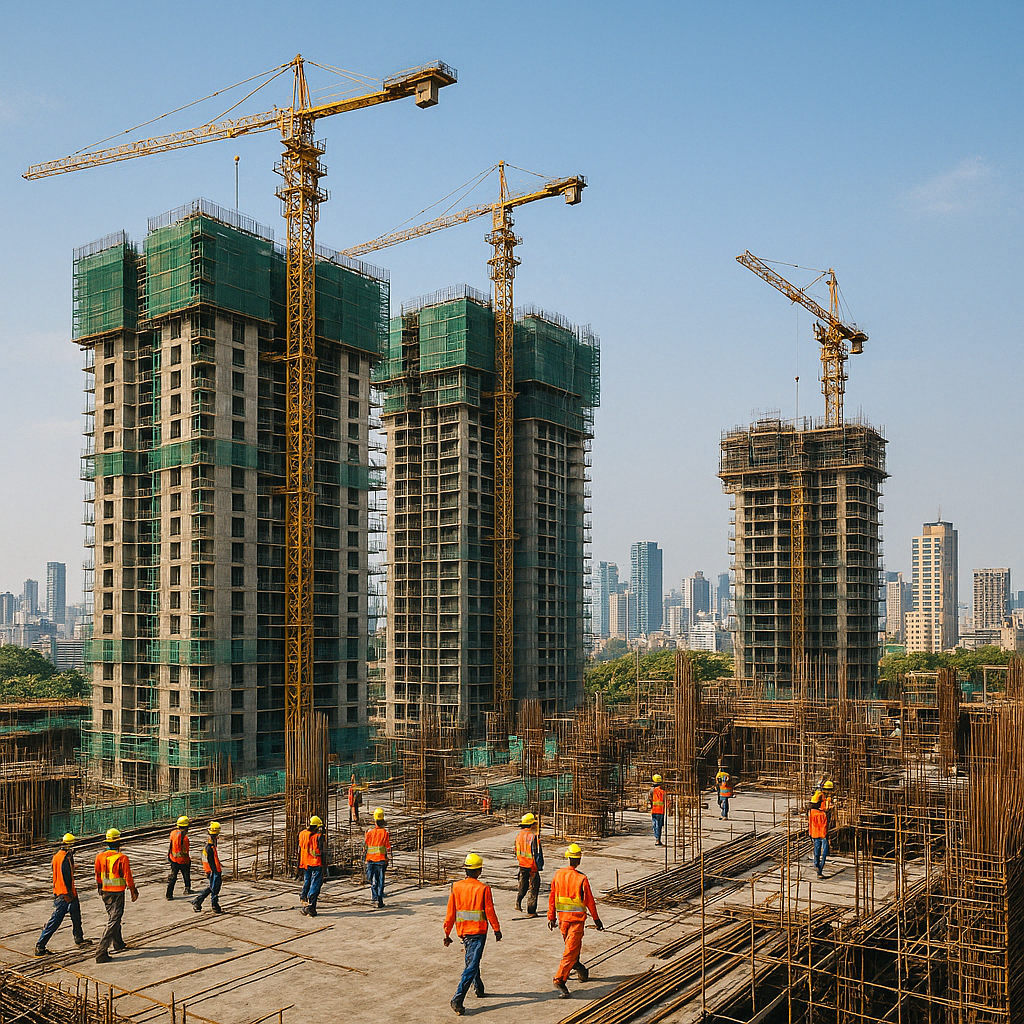

Mumbai’s residential real estate market continues its steady rise, recording a 6% year-on-year (YoY) increasein prices in Q1 2025, according to a real estate research and brokerage firm. Even as overall home sales remained stable with a 5% YoY growth, Mumbai’s consistent price appreciation reflects robust demand, especially for mid to premium housing.
The price increase is part of a broader trend across India’s top residential markets, where Bengaluru and NCR led the way with exceptional YoY price jumps of 16% and 12% respectively, but Mumbai remained significant due to its larger base and consistent sales momentum.
Key Highlights:
| City | Price Growth YoY | Sales Volume Growth YoY | Notable Trends |
|---|---|---|---|
| Mumbai | 6% | +5% | Highest sales volumes (24,930 units) |
| Bengaluru | 16% | -5% | Strong premium housing demand |
| NCR | 12% | -8% | Price rise impacting sales volumes |
| Pune | 6% | +20% | Strong growth in mid-segment housing |
| Chennai | 7% | +10% | Balanced growth across segments |
| Hyderabad | 9% | -1% | Stable sales, rising prices |
| Kolkata | 9% | -2% | Price-led moderation in demand |
| Ahmedabad | 2% | Stable | Limited inventory and moderate growth |
Residential Market Performance Snapshot (Q1 2025)
1. Sales Volumes
- Mumbai registered 24,930 units sold, the highest among all cities, reflecting a 5% YoY increase.
- Pune and Chennai emerged as strong performers with 20% and 10% growth in sales respectively.
- NCR and Bengaluru witnessed dips in sales, attributed to rising prices discouraging middle-segment buyers.
Table: Housing Sales Volumes
| Market | Q1 2025 Sales (Units) | YoY Change |
|---|---|---|
| Mumbai | 24,930 | +5% |
| Pune | 14,231 | +20% |
| Chennai | 4,357 | +10% |
| Hyderabad | 9,459 | -1% |
| NCR | 14,248 | -8% |
| Bengaluru | 12,504 | -5% |
| Ahmedabad | 4,687 | Stable |
| Kolkata | 3,858 | -2% |
2. New Launches
- Mumbai continued to dominate with 25,706 units launched, showing a 2% YoY increase.
- Bengaluru saw a remarkable 26% growth in launches, responding to premium housing demand.
- Overall, new launches outpaced sales, keeping the inventory momentum intact.
Table: New Launches Across Cities
| Market | Q1 2025 Launches (Units) | YoY Change |
|---|---|---|
| Mumbai | 25,706 | +2% |
| Bengaluru | 16,524 | +26% |
| Pune | 16,231 | +22% |
| Chennai | 4,576 | +5% |
| Hyderabad | 10,661 | -4% |
Premiumization of the Housing Market
- The share of homes priced above ₹10 million now constitutes 46% of the total sales (up from 40% in Q1 2024).
- Particularly, the ₹20-50 million segment surged, registering a 28% YoY growth in sales.
- Ultra-luxury segments like ₹200-500 million and above ₹500 million witnessed over 120%-400% growth, although the market remains niche.
Box: Ticket Size Breakdown of Sales
| Ticket Size | Sales YoY % Change |
|---|---|
| <₹5 million | -9% |
| ₹5–10 million | -6% |
| ₹10–20 million | +2% |
| ₹20–50 million | +28% |
| ₹50–100 million | +82% |
| ₹100–200 million | +114% |
| ₹200–500 million | +124% |
| >₹500 million | +483% |
Inventory and Market Health
Despite robust sales, unsold inventory increased by 5% YoY, largely due to the high volume of new project launches.
However, the Quarters-to-Sell (QTS) ratio remains healthy at 5.9 quarters, indicating strong demand absorption.
Box: Inventory and QTS Summary
| Ticket Size | Unsold Inventory YoY Change | QTS |
|---|---|---|
| <₹5 million | -4% | 8.3 |
| ₹5–10 million | -3% | 5.0 |
| ₹10–20 million | +17% | 5.6 |
| ₹20–50 million | +54% | 4.0 |
| >₹200 million | +55%-172% | 7–18 |
Conclusion
Mumbai’s residential market continues to show strength, backed by premiumization and a resilient economy. While rising prices are starting to challenge affordability in some segments, steady demand, particularly in the premium and luxury housing brackets, is ensuring market balance.
With expected interest rate reductions and improved liquidity conditions, the residential markets across India, led by Mumbai, appear well-positioned to sustain their growth momentum through 2025.
Also Read: Mumbai Sees A Decline Of 3% In Home Prices.