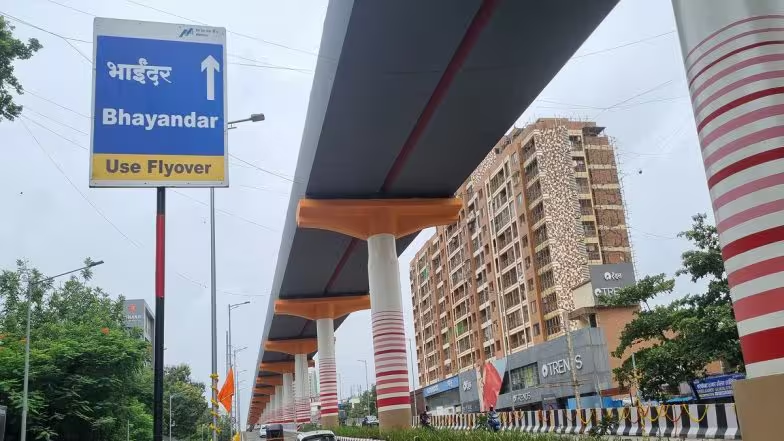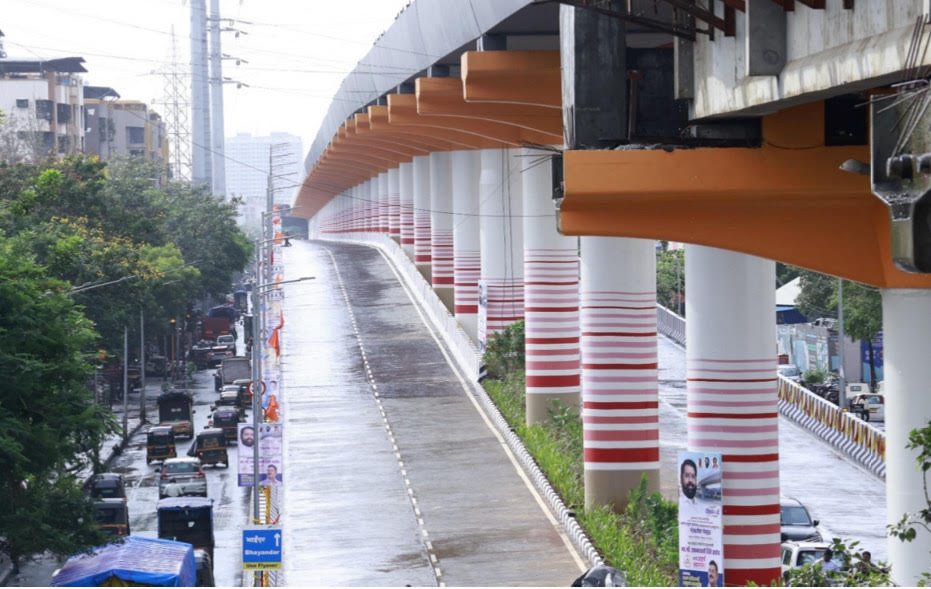

Mumbai has officially unveiled its first double-decker flyover, a groundbreaking infrastructure project that combines an elevated road with an integrated metro line. This ambitious development aims to alleviate traffic congestion and enhance urban mobility in one of the city’s most congested areas. The double-decker flyover with an integrated metro line in Mumbai was constructed by the Mumbai Metropolitan Region Development Authority (MMRDA). This authority is responsible for major infrastructure projects in the Mumbai metropolitan area, overseeing planning, execution, and development to enhance urban infrastructure and connectivity.
Project Overview
Scope and Objectives: The double-decker flyover is designed to address Mumbai’s growing traffic issues and improve public transportation efficiency. The structure includes an upper deck for vehicular traffic and a lower deck dedicated to a metro line, streamlining both road and rail transit in the city.
Components:
- Upper Deck: The upper level of the flyover will facilitate smooth vehicular movement, designed to reduce congestion in heavily trafficked areas.
- Lower Deck: The lower level will accommodate a new metro line, improving connectivity and reducing travel times for commuters using public transportation.
Key Features
Innovative Design: This project features a unique design that integrates both road and rail infrastructure within a single structure. The double-decker configuration aims to optimize space and enhance the efficiency of Mumbai’s transportation network.
Construction Details: The flyover includes modern construction techniques and materials to ensure durability and safety. The integration of the metro line within the flyover is expected to support a seamless transit experience.
Impact on Traffic and Transit:
- Traffic Congestion: The double-decker flyover is expected to alleviate traffic congestion in the surrounding areas by providing an additional elevated route for vehicles.
- Public Transportation: The integrated metro line will enhance connectivity, providing a convenient and efficient travel option for daily commuters and supporting the city’s broader public transit network.
Latest Updates
Date of Unveiling: The project was officially unveiled in September 2024.
Current Status: The double-decker flyover is in the final stages of construction, with completion expected in the coming months. Preliminary work, including structural testing and final adjustments, is ongoing.
Expected Benefits:
- Improved Connectivity: By linking key areas with an integrated transit system, the flyover will significantly reduce travel times and improve accessibility across the city.
- Economic Growth: The new infrastructure is anticipated to support economic development by enhancing transportation efficiency and attracting investment.
Future Plans
Operational Timeline: The double-decker flyover, including the integrated metro line, is projected to become fully operational by early 2025.
Additional Projects: This initiative is part of Mumbai’s broader infrastructure development strategy, which includes other major projects aimed at modernizing the city’s transportation network and improving urban living standards.
Also Read: MMRDA gives 13,000 homes for quarantine purposes
Conclusion: The unveiling of Mumbai’s first double-decker flyover with an integrated metro line marks a significant milestone in the city’s infrastructure development. This innovative project is set to enhance urban mobility, reduce traffic congestion, and support economic growth, reflecting Mumbai’s commitment to modernizing its transportation network.