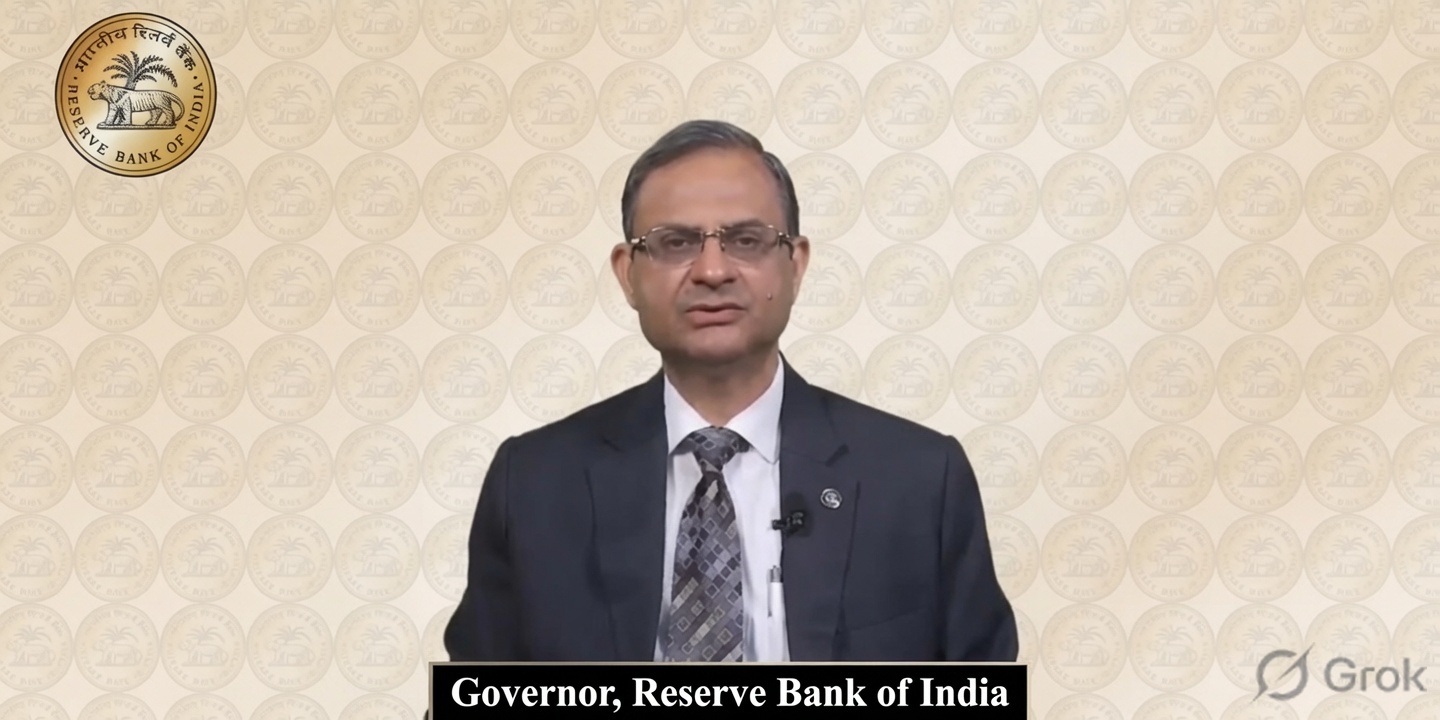

RBI Governor Sanjay Malhotra announced that the Monetary Policy Committee (MPC) met on the 3rd, 4th, and 5th of June and voted unanimously to keep the policy repo rate unchanged at 5.25 per cent. Consequently, the standing deposit facility (SDF) rate remains at 5.00 per cent and the marginal standing facility (MSF) rate and the Bank Rate at 5.50 per cent. The MPC also decided to continue with the neutral stance.
“The committee noted that the global environment has deteriorated since the last policy meeting with the conflict lingering amidst a fragile truce. The adverse implications of the extended disruption in supply chains and elevated energy prices are reflected in the moderation of growth and increase in inflation projections from the April policy,” Governor Malhotra stated.
This decision to maintain the repo rate serves as a critical anchor for India’s residential real estate sector, which continues to witness strong annual growth despite short-term geopolitical shocks. The rate pause provides stability amid rising consumer pressures and volatile construction environments.
Impact on Homebuyers and Home Loans
The repo rate is the interest rate at which the Reserve Bank of India lends short-term funds to commercial banks. When the RBI changes the repo rate, it directly influences the cost of borrowing for banks, which in turn affects the interest rates they charge on loans, including home loans.
With the repo rate unchanged at 5.25%, banks are expected to keep their lending rates, such as those linked to the Marginal Cost of Funds-based Lending Rate (MCLR) or External Benchmark Lending Rate (EBLR), stable in the near term. This means home loan EMIs for buyers will remain predictable and manageable, shielding them from immediate upward pressure on borrowing costs.
For homebuyers, this stability is particularly welcome. In an environment of elevated global oil prices and rising domestic construction costs due to the Middle East conflict, stable financing prevents additional strain on monthly budgets. Potential buyers who had paused their decisions due to uncertainty can now move forward with greater confidence, as borrowing costs are not being hiked.
Real Estate Sector Outlook
The residential real estate sector has delivered mixed but resilient performance. According to Pankaj Kumar, VP – Fundamental Research at Kotak Securities, listed developers reported 16% YoY pre-sales growth in Q4FY26, taking full-year FY26 pre-sales to Rs 1.37 lakh crore (up 17% YoY). While industry sales grew 5% in FY26, this was largely price-led, with volumes declining 3%. Inventory levels remain healthy at 21 months, and developers maintain strong balance sheets. The FY27 launch pipeline of Rs 2 lakh crore supports expectations of continued 17% pre-sales growth.
Anuj Puri, Chairman of Anarock Property Consultants, noted that residential sales in Q1 2026 stood at approximately 1,01,675 units, reflecting a 7% QoQ decline but a healthy 9% YoY growth. Sales value reached INR 1.51 lakh crore. New project launches surged 26% YoY, pushing unsold inventory beyond 6.01 lakh units. “The MPC’s policy consistency is a stabilising buffer. Input costs are rising… but domestic consumer demand is fundamentally resilient,” Puri added.
Dharmendra Raichura, VP & Head of Finance at Ashar Group, said, “RBI’s decision to maintain the repo rate at 5.25% reflects a calibrated approach… Predictable borrowing costs support efficient project planning and timely execution, while buyers continue to benefit from stable lending rates and manageable EMIs.”
Rising geopolitical uncertainty has also paused some Middle Eastern investments in Indian housing, but the stable rate environment helps developers manage higher material costs and supports the sector’s growth story through 2026.
Overall, the RBI’s decision provides much-needed policy stability, enabling homebuyers to benefit from steady home loan rates while the industry absorbs new supply and maintains momentum.
Also Read: Housing sales momentum to continue as RBI holds repo rate