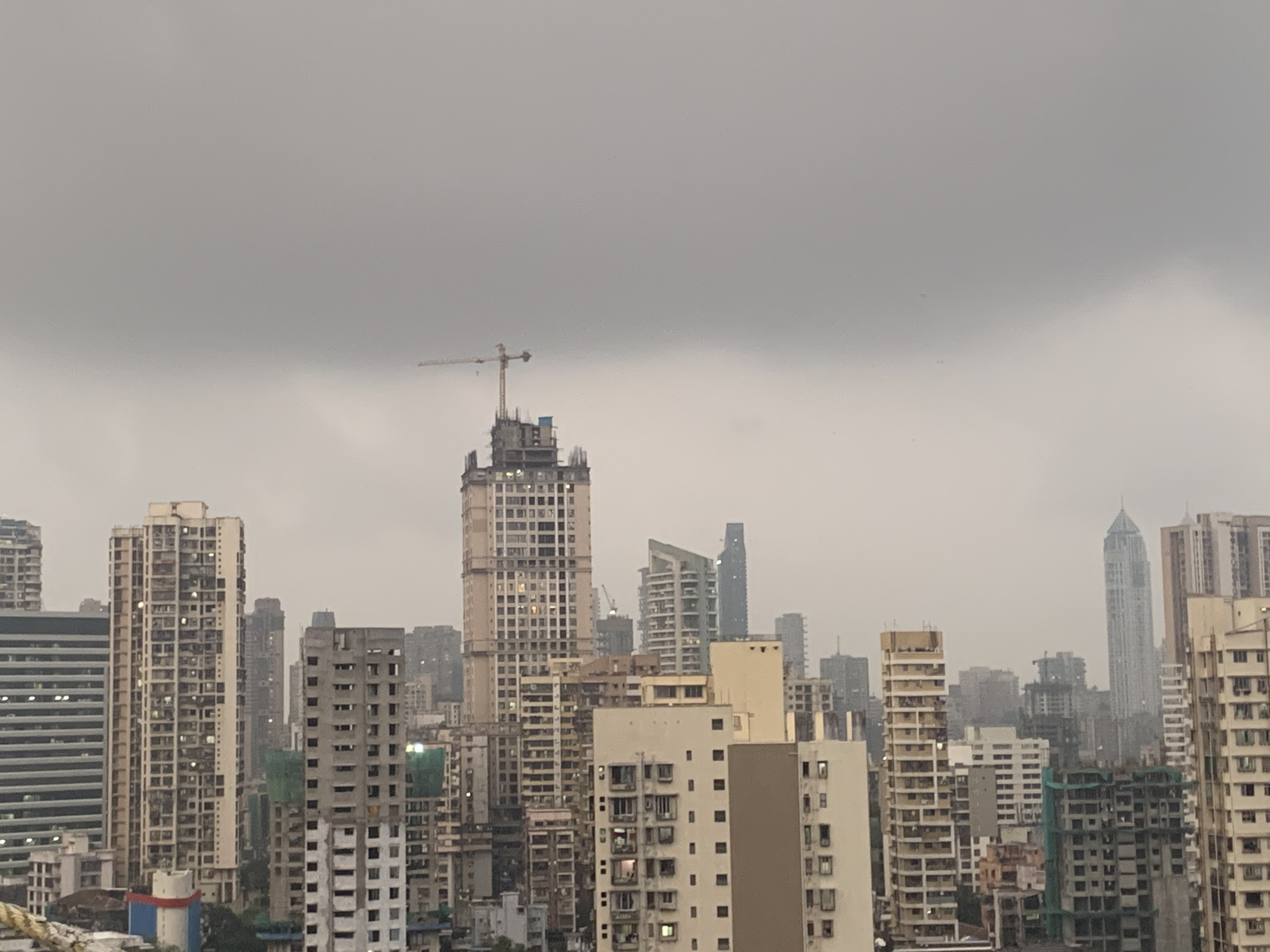

Dalal Street opened Wednesday on a tentative recovery note, and India’s real estate stocks were quick to respond. After Tuesday’s brutal 893-point Sensex crash wiped out a week’s worth of gains, realty stocks made an early comeback on Wednesday morning — but the real question is whether this bounce has legs, or whether it is just the sector catching its breath before the next wave of selling.
A Market Trying to Climb Back From the Edge
Tuesday was brutal across the board. The Sensex tumbled 893 points to close at 76,200.68, and the Nifty50 dropped 278 points to settle at 23,824.10 — decisively below the critical 24,000 level that traders had been defending all week. India VIX spiked sharply, signalling elevated fear across the market. The selloff was triggered by a toxic combination: profit booking after a prolonged rally, weaker-than-expected private sector activity data showing India’s services growth at a 17-month low, and a global tech rout that dragged down heavyweights like HDFC Bank, Infosys, Reliance Industries, and TCS.
Wednesday morning, the mood shifted — cautiously. The Nifty50 was trading at 23,900, up 89.50 points or 0.38% by 10:08 AM, with GIFT Nifty having advanced 13 points to 23,865 in the pre-open session. Domestic institutional investors, who bought ₹680.21 crore worth of shares on Tuesday even as FIIs made a near-negligible net purchase of just ₹17.86 crore, gave the market a floor to bounce from.
For the realty sector, which had been gaining for two consecutive sessions before Tuesday’s broad market meltdown, Wednesday is a test of whether sector-specific momentum can hold even when the macro noise gets louder.
How Realty Stocks Are Trading at Open
The Nifty Realty index had risen 1.51% to 827.45 during Tuesday’s morning session before the afternoon selloff dragged the broader market down sharply. On Wednesday, the sector opened with recovery intent, riding the broader market bounce.
The context is important. The Nifty Realty index had gained 9.04% over three consecutive sessions between June 14 and June 16, powered entirely by the US-Iran interim peace deal and the resultant crude oil collapse. Then it gave back some ground on June 17 when the BMC’s water supply suspension to construction sites rattled Mumbai-heavy developers, and again on June 19 when IT-led selling infected the entire market. Tuesday repeated that pattern.
On Wednesday’s open, DLF — India’s largest listed developer — was attempting to hold its position after closing Monday at ₹627.60, off its 52-week high of ₹868.70 by a steep margin. Godrej Properties, which traded between ₹1,791.40 and ₹1,827 on Tuesday during the morning recovery before reversing, was among the names attempting a bounce. Oberoi Realty, which had gained 2.4% during Tuesday’s morning session, Prestige Estates, which had risen 1.57%, and Lodha Developers, up 1.08%, were all in focus at the open as traders looked for signs that Tuesday’s late-day capitulation was overdone.
Sobha, Anant Raj, Phoenix Mills, Brigade Enterprises, and Aditya Birla Real Estate were also opening with a positive tilt, though the conviction in early buying remained thin.
What Is Working
Crude oil remains the most important tailwind for the sector, and it continues to behave well. Brent crude is trading near $76–78 a barrel — dramatically lower than the $120+ levels seen when the US-Iran conflict closed the Strait of Hormuz. The 60-day peace roadmap agreed by US and Iranian negotiators in Switzerland is now entering its third day, and any forward movement could push crude further down. Every decline in Brent directly reduces construction input costs — cement, steel, logistics — improving developer margins and making real estate a relatively attractive sector within the broader market.
FIIs, having been net sellers of ₹2,79,544 crore year-to-date, have shown flickers of returning interest in recent sessions. On Tuesday, they were barely net buyers at ₹17.86 crore — not a reversal, but a significant pause in the selling pattern that had defined most of CY26. If geopolitical risk continues unwinding and crude stabilises, the case for FII money returning to rate-sensitive sectors like realty strengthens.
The fundamental story for listed developers also holds firm. The top 14 listed real estate companies collectively posted bookings of ₹1.47 lakh crore in FY26, up 20% year-on-year. Sobha led with 30% growth in bookings, while Godrej Properties and Lodha each registered 16% growth. Q1 FY27 is expected to begin on a healthy note, with super-luxury project launches from Oberoi Realty, Godrej Properties, and Sobha in the NCR likely to drive early presales momentum.
What Isn’t Working
The broader market’s stability is the sector’s biggest problem today. The Nifty closed below 23,850 on Tuesday — a level that analysts had flagged as a critical support. The immediate challenge is for the Nifty to reclaim and hold 23,950, with resistance sitting at 24,200. Until the broader index finds its footing, realty stocks will remain hostage to market-level gyrations rather than moving on their own fundamental story.
The Federal Reserve remains a cloud. Tuesday’s selloff was partly driven by stronger US economic data rekindling fears of a rate hike later in 2026. For a sector as sensitive to interest rate expectations as real estate, any Fed hawkishness is a direct headwind — even a distant one — because it influences global capital flows into emerging markets like India.
Wednesday is also the Bank Nifty weekly expiry day, which historically creates sharp intraday volatility in the last hour of trade. That volatility tends to spill across sectors, meaning even a calm morning open for realty stocks can give way to afternoon turbulence depending on how banking options positions are squared off.
India’s eight core industrial sectors grew only 0.5% in May 2026 — the second-lowest level in 21 months — with meaningful expansion limited to electricity, cement, and steel. While cement and steel growth is directly positive for construction economics, the overall slowdown in core sector activity is a cautionary signal about the pace of the broader economic recovery that ultimately underpins residential and commercial real estate demand.
What to Watch Through the Day
The Nifty’s ability to reclaim 23,950 is the first signal to watch. A sustained close above that level would confirm that Tuesday was an expiry-driven overreaction rather than a structural reversal. If the index holds, realty stocks — which have been among the sector’s sharper outperformers in the current June recovery cycle — should track higher.
Watch for any headlines from Switzerland, where US-Iran peace talks are now in day three. A positive signal on the pace of the permanent agreement, or confirmation that Strait of Hormuz traffic is continuing to normalise, will directly push crude lower and give the realty sector an independent tailwind regardless of what the rest of the market does.
Analysts tracking the sector continue to maintain buy calls on DLF with a target of ₹775, Lodha with a target of ₹1,200, Sobha at ₹1,775, Oberoi Realty at ₹1,920, and Brigade Enterprises at ₹920 — all significantly above current market prices, suggesting the Street believes the sector’s CY26 underperformance is a buying opportunity for those with a 12-month view.
Wednesday’s opening is promising. Whether it closes that way depends entirely on how the afternoon treats the broader market.
Also Read: Realty Stocks Open in the Green as Nifty Realty Inches Up; Iran Talks, Crude Ease in Focus