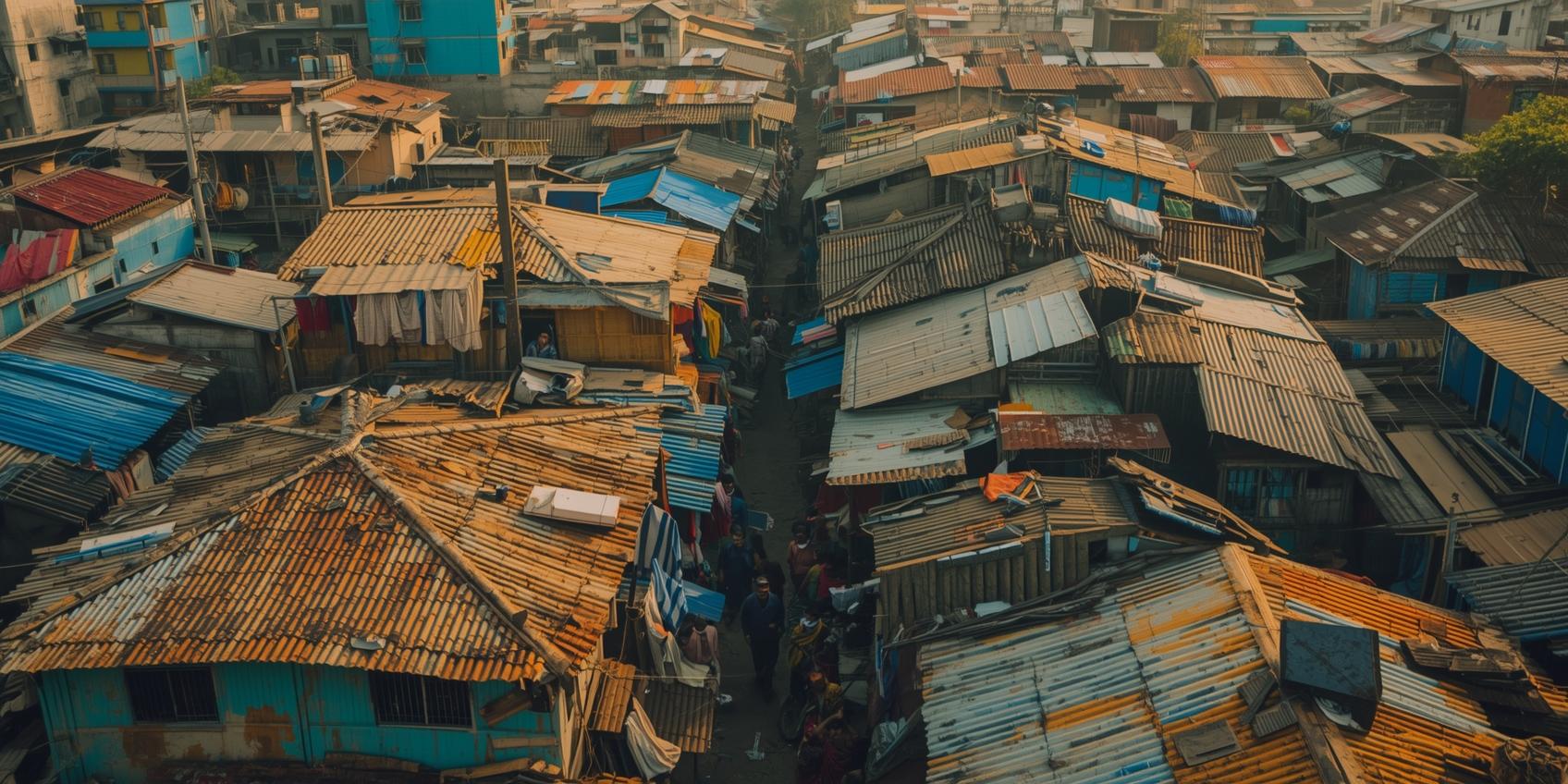

Over half of Mumbai still lives in informal settlements
More than 50% of Mumbai’s population continues to live in slums or unstructured housing — a reality that defines both the city’s urban challenge and its development potential. The Slum Rehabilitation Authority (SRA), established to transform this landscape, has now launched a technology-driven reform agenda aimed at fast-tracking redevelopment projects, improving transparency, and restoring confidence among developers and slum dwellers alike.
According to official estimates, Mumbai has more than 2,000 notified slum clusters spread across nearly 9,000 acres, with over 10 lakh slum structures. The scale and complexity of rehabilitation make this digital transformation a major step toward creating a slum-free Mumbai.
Tech-powered transformation of SRA
Under the leadership of Dr. Mahendra Kalyankar, CEO of SRA, the authority unveiled a series of digital initiatives designed to make project approvals faster, transparent, and data-secure.
Among the highlights:
- A Standardisation Testing and Quality Certification (STQC)-approved multilingual website, accessible in over 25 languages, for easier access to information.
- An integrated online module with multiple access layers for different users — officers, architects, developers, and the general public — ensuring accountability.
- Blockchain technology to store and secure approval records, making tampering nearly impossible.
- Chatbots and digital dashboards to help slum residents and developers track applications in real time.
- A goal to map every slum structure in Mumbai by end-2025, creating a unified digital database.
Dr. Kalyankar said his team is also implementing Auto-DCR (Digital Construction Permissions) and time-bound eviction programs to remove non-cooperative structures within 45 days. “We are driven by one mission — to make Mumbai slum-free through transparency, technology, and teamwork,” he said.
Developer bodies surprised by SRA’s digital strides
The meeting, attended by senior representatives from CREDAI-MCHI, NAREDCO, BDA, and PEATA, began as a request for “ease of doing business” but turned into what several termed “a pleasant surprise.”
Sukhraj Nahar, President, CREDAI-MCHI, said:
“My company had never ventured into slum rehabilitation projects before, largely because of doubts about their viability. But after today’s presentation, I have a completely different perspective. The level of digitisation and the positive, development-oriented approach of SRA have created the right environment for slum redevelopment to succeed.”
Rushi Mehta, Secretary, CREDAI-MCHI, called the data-integration plan “a game changer.”
“By collating Aadhaar, PAN, electoral rolls, and electricity bills under one software, SRA can now generate Annexure-2 approvals in a single click — a process that earlier took 6 to 9 months. Linking Aadhaar to each family’s permanent home ensures only genuine beneficiaries receive homes and prevents multiple claims,” he said.
Rajan Bandelkar, Vice Chairman, NAREDCO, praised the SRA’s proactive approach:
“Under Dr. Mahendra Kalyankar’s leadership, the SRA is setting a new benchmark in governance and efficiency. These advanced digital systems will accelerate project approvals and restore developers’ confidence in slum rehabilitation schemes. With renewed momentum and accountability, Mumbai can truly move toward a slum-free future.”
Abhay Chandak, Vice President, NAREDCO Maharashtra, commended the new SOPs that allow demolition of non-cooperative structures within 45 days.
“In Worli, around 1,000 illegal structures were cleared within a month — actual demolition in just three days. This shows SRA’s renewed determination to create an environment where developers can execute projects without obstruction,” he said.
Vikram Mehta, President, Builders’ Association of India (BDA), said that the reforms also tackle new encroachments:
“It’s equally important to stop new slum constructions as it is to rehabilitate existing ones. The new encroachment-tracking cell uses satellite data to detect and flag new structures for immediate action. That’s a huge leap forward.”
Why these reforms matter
- For slum residents: Faster, more transparent approvals mean quicker movement from unsafe informal settlements to formal homes. Linking data ensures fairness and prevents fraud.
- For developers: The new digital ecosystem cuts paperwork, increases predictability, and reduces risk — encouraging more developers to take up rehabilitation projects.
- For Mumbai: Clearing and rebuilding slum clusters will improve infrastructure, reduce disaster risk, and bring large swathes of urban land into productive use.
Dr. Kalyankar emphasized that the reforms are not just about technology but about trust.
“SRA 2.0 is about speed, transparency, and accountability. We want every slum dweller to feel that their home, dignity, and future are at the heart of what we do,” he said.
Toward a slum-free Mumbai
For years, the SRA has faced criticism over slow progress — only a fraction of approved schemes have reached completion. But with the integration of digital processes, real-time monitoring, and strict timelines, stakeholders believe this could mark a genuine turning point.
The collaboration between SRA and major real-estate bodies signals a shared intent to transform the slum landscape of Mumbai into a more equitable, sustainable, and efficient urban environment. As NAREDCO’s Rajan Bandelkar summed it up — “With this digital leap, we are not just building houses; we are rebuilding trust.”
Also Read: Financial Institutions To Redevelop Stuck SRA projects