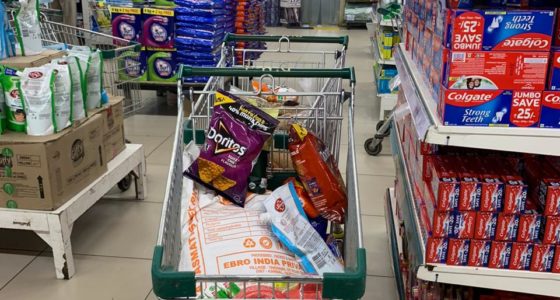

During Jan-September 2022, industrial & warehousing demand witnessed a 9% rise on a YoY basis with a total gross absorption of 17.5 mn sq across the top 5 cities in India.
Demand remained resilient during the third quarter as well, at 6.7 mn sq ft, highest since Q1 2021. Third-party logistics players (3PLs) remain by far the top occupiers of warehousing space, contributing to over half of the total warehousing demand till date. Improved retail market sentiment amidst festive season and higher online spending continue to support warehousing growth and is expected to add to short-term demand addition.
Delhi-NCR led the demand during YTD 2022 at 39% share, followed by Pune at 21% share in total leasing backed by robust demand from 3PL players, Engineering & E-commerce players. Tauru road and Luhari remained the most active micro-markets in Delhi-NCR, while Chakan-Talegaon continued to attract industrial occupiers in Pune.
Trends in Grade A Gross absorption (mn sq ft)
| City | YTD 2022 (mn sq ft) | YTD 2021 (mn sq ft) | YoY Change |
| Bengaluru | 2.3 | 2.2 | 2% |
| Chennai | 2.2 | 3.1 | -31% |
| Delhi NCR | 6.8 | 4.8 | 42% |
| Mumbai | 2.6 | 1.9 | 39% |
| Pune | 3.6 | 4.0 | -11% |
| TOTAL | 17.5 | 16.0 | 9% |
Trends in Grade A Supply (mn sq ft)
| City | YTD 2022 (mn sq ft) | YTD 2021 (mn sq ft) | YoY Change |
| Bengaluru | 1.8 | 1.1 | 64% |
| Chennai | 2.2 | 2.9 | -23% |
| Delhi NCR | 5.8 | 9.8 | -41% |
| Mumbai | 2.5 | 3.4 | -27% |
| Pune | 2.7 | 1.4 | 87% |
| TOTAL | 15.0 | 18.6 | -20% |
“Continued leasing momentum is expected in the warehousing segment with various retail clients in active discussion to consolidate their footprints in large-size mega distribution centres. As far as the macro environment, the unveiling of the National Logistics Policy by the honourable Prime minister is one of the key milestones for this sector and is expected to have a great positive impact on the logistics sector in the medium to long term. Large deals will continue to drive the warehousing market as e-commerce and 3PL players plan remarkable expansion to enhance efficiency”, said Shyam Arumugam, Managing Director, Industrial & Logistics Services, Colliers India.
New supply weakened during YTD2022 at 15 mn sq ft, declining by 20% YoY as developers remained cost cautious waiting for input pricing to reduce further and this leads to delay in project completions. Amidst moderate supply and robust demand for industrial and warehousing facilities, overall vacancy levels lowered by 0.7pp during the quarter. Rents are likely to firm up in the next few quarters across preferred micro markets in key cities owing to strong demand and limited availability of quality supply.
“India’s warehousing sector is gradually picking up pace with massive growth in 3rd party logistics. 3PL players contributed to half of the total warehousing demand during YTD2022 with an average deal size of 1.1 lakh sq ft. About 75% of the leasing by 3rd party logistics was through large sized deals.” says Vimal Nadar, Senior Director, Colliers India.
Also Read: Real Estate PE Investments Log 40% Annual Rise in 1H FY23