
By Aditya Kushwaha, CEO and Director, Axis Ecorp
There are moments when the world undergoes change—sometimes imperceptibly, sometimes with the force of an undeniable reckoning. Real estate is currently experiencing such a transformation. Once considered the unchallenged domain of brick-and-mortar, unchecked expansion driven by a growing population has placed the sector in a precarious position. In 2025, the landscape is shifting.
Sustainable real estate has moved beyond being just a trend—it is now an imperative. Investors recognize it as a way to future-proof their portfolios, developers see it as the next frontier, and homebuyers, particularly those shaped by the climate anxieties of the 21st century, demand it. The goal has been to construct buildings that minimize harm to the environment. However, execution has been far from simple.
India currently stands at the crossroads of rapid urbanization. As a result, it must reimagine its built environment. Under the third-term leadership of Prime Minister Narendra Modi, the country is striving to foster a sense of environmental responsibility. The government has placed sustainability at the core of its urban planning discourse, with the goal of achieving net-zero carbon emissions by 2047. The only way to accomplish this is through policy regulation and a recalibration of what real estate development should look like in the coming decades.
The Anatomy of a Sustainable Building
Understanding the anatomy of a sustainable building is crucial. Several key components contribute to making a structure truly sustainable:
- Energy Efficiency: Integration of solar panels, energy-efficient appliances, and designs that reduce dependency on non-renewable power sources.
- Water Management: Systems that do not simply consume but conserve—such as rainwater harvesting, greywater recycling, and low-flow fixtures.
- Sustainable Materials: Use of bamboo, recycled steel, and non-toxic paints—materials that acknowledge the environmental cost of extraction and production.
- Smart Technology: Buildings that respond to their occupants by adjusting lighting, heating, and cooling through intelligent automation.
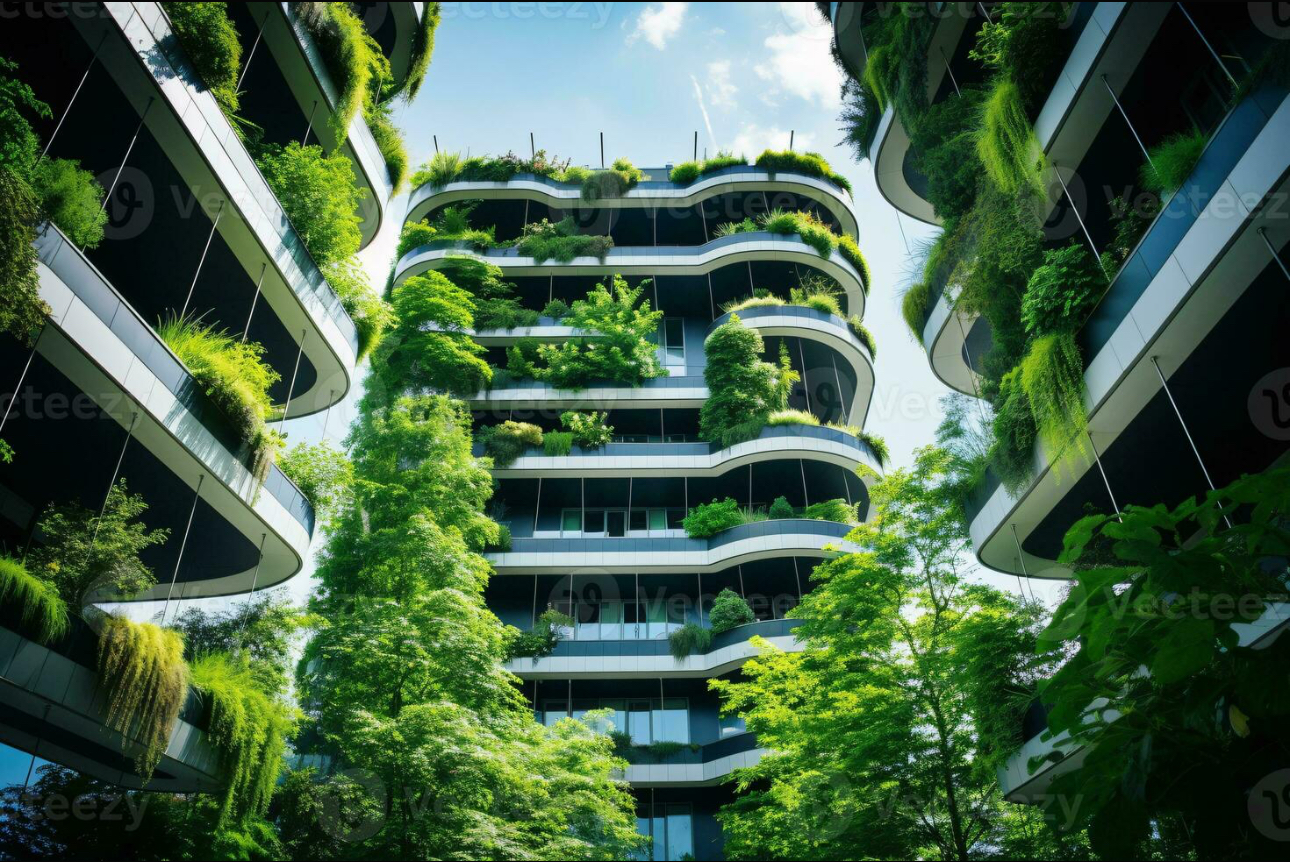
- Green Spaces: Essential pockets of nature woven into concrete sprawls, filtering air, reducing heat, and creating microclimates.
These elements are not just talking points; they are the metrics by which buildings will be assessed—both by regulators and residents.
Policy as the Catalyst
Sustainability is not a spontaneous evolution—it requires intervention. The Indian government has recognized this and responded with initiatives that push the sector toward compliance with a global green agenda. The Energy Conservation Building Code (ECBC) and the Green Rating for Integrated Habitat Assessment (GRIHA) have set benchmarks. The ECBC establishes minimum energy efficiency standards, while GRIHA provides a framework for assessing the environmental impact of buildings.
Economic incentives are even more compelling. Subsidies, tax credits, and grants encourage builders and property owners to adopt green practices. The Pradhan Mantri Awas Yojana (PMAY) Urban initiative has incorporated energy-saving designs into affordable housing developments, ensuring that sustainability is not just a privilege of the few.
However, real progress comes from research and development. Government-backed initiatives are fueling advancements in green construction materials and renewable energy solutions. Progress is not just about mandates—it is about making sustainable choices practical, accessible, and inevitable.
Shaping a Sustainable Tomorrow
This is the moment when the shape of the future begins to crystallize. Where once the only concern was cost per square foot, now the conversation includes carbon footprints, resource conservation, and resilience. Sustainable real estate is not about aesthetics or regulatory compliance—it is about creating structures that justify their existence, not just to investors but to the planet they inhabit.
Also Read: RBI withdraws accommodative policy ends, easy liquidity policy