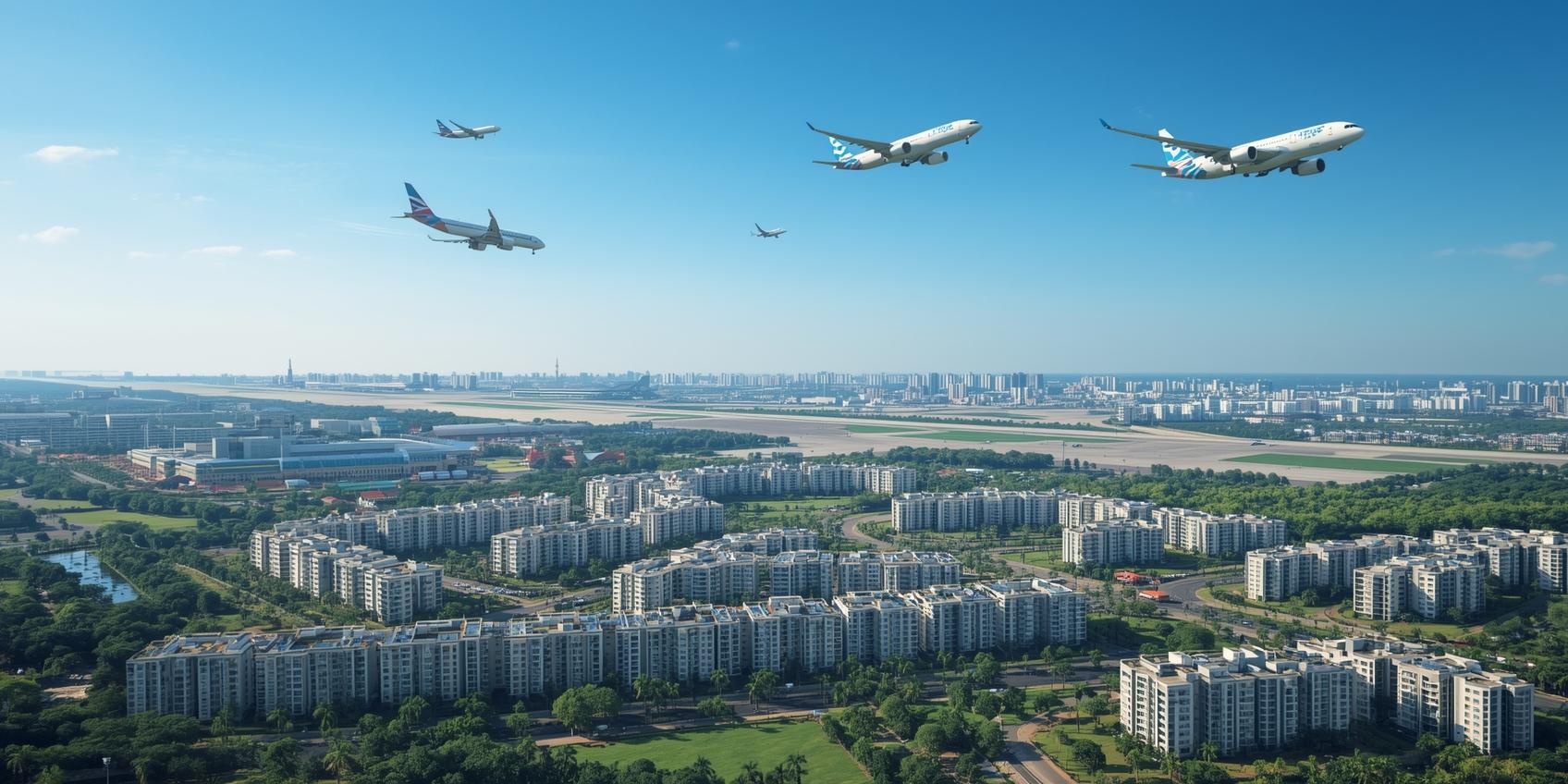

As the Navi Mumbai International Airport (NMIA) gears up for its much-anticipated first phase inauguration today, the region’s real estate market is witnessing a seismic shift. Once a peripheral housing destination, Panvel and its neighbouring nodes have emerged as one of the most promising growth hubs within the Mumbai Metropolitan Region (MMR), thanks to the airport’s catalytic impact on infrastructure and connectivity.
🏙 Airport + Atal Setu = New Growth Frontier
Vimal Nadar, National Director & Head of Research, Colliers India, says:
“The opening of the Navi Mumbai International Airport signifies more than just a milestone in air travel. It marks a pivotal transformation in the region’s real estate landscape, particularly within the residential and commercial sectors. The announcement of this upcoming airport had already triggered a substantial rise in property values across key areas in the vicinity including Uran-Ulwe, Kharghar, Dronagiri, Taloja, and Panvel. This greenfield airport will further accelerate the growth, driving sustained demand and significant price appreciation, presenting lucrative long-term investment opportunities.”
According to Nadar, Navi Mumbai’s positioning as a sub-dollar office market — with lower rentals compared to central Mumbai — combined with enhanced global access, is expected to spur commercial leasing activity. He adds that the proposed Aerocity, which will integrate commercial, residential and recreational spaces, will help create “a new urban ecosystem that blends work and lifestyle.”
The Atal Setu sea bridge, which has dramatically cut travel time between Navi Mumbai and South Mumbai, is another game-changer that places Panvel firmly on the real estate radar of buyers, developers, and investors.
📈 Panvel Outpaces Navi Mumbai in Property Appreciation
The Panvel region has recorded extraordinary price growth, outpacing the rest of Navi Mumbai in both apartments and plotted developments:
| Asset Type | Panvel Region (FY21 → FY25) | Rest of Navi Mumbai (FY21 → FY25) |
|---|---|---|
| Apartments | ₹10,000–12,000 per sq.ft ⬆ 74% growth | ₹19,000–21,000 per sq.ft ⬆ 45% growth |
| Residential Plots | ₹80,000–85,000 per sq.yd ⬆ 93% growth | ₹1,10,000–1,30,000 per sq.yd ⬆ 58% growth |
Deepak Khandelwal, Principal Partner & Chief Sales Officer at Square Yards, observes:
“The Navi Mumbai International Airport stands as a cornerstone of the region’s broader infrastructure push, supported by major upgrades in road, rail, metro, and waterway connectivity. Its imminent operationalisation has already begun to reshape the real estate landscape, particularly across the Panvel region. Localities such as New Panvel, Old Panvel, Kharghar, Ulwe, and Taloja are witnessing a surge in development, with a growing supply of premium residential projects, gated communities, and large integrated townships.”
He adds,
“The market response has been strong, with apartment prices in the Panvel region rising by nearly 74% between FY 2021 and FY 2025, compared to 45% growth across the rest of Navi Mumbai. With the first phase to be inaugurated today and full-scale operations expected soon, the airport is set to drive the next wave of value creation, reinforcing Panvel’s position as one of the most promising growth hubs not only within the Mumbai Metropolitan Region and beyond.”
🏡 What This Means for Homebuyers and Investors
For homebuyers, Panvel has transformed from a “future promise” market to a now-or-never opportunity. The combination of airport-led infrastructure, lower ticket sizes, and premium township launches offers buyers both lifestyle and appreciation potential.
For investors, Panvel offers two distinct advantages:
- Capital appreciation: Strong price momentum already visible pre-airport inauguration.
- Rental yield & commercial play: With Aerocity and new office corridors on the cards, Panvel could evolve into a new residential-cum-business hub — similar to Gurugram post-IGI airport expansion.
Developers, meanwhile, are fast-tracking launches to tap into this demand surge, especially in New Panvel, Kharghar, Taloja, and Ulwe — areas well connected to the upcoming airport and metro lines.
✈️ The Takeaway
The Navi Mumbai International Airport is not just another infrastructure project — it is redefining the real estate geography of MMR. As phase one goes live, Panvel stands at the cusp of its biggest transformation yet, with growth driven by connectivity, infrastructure, and investor confidence.
For those who saw Panvel as “too far” a few years ago, the airport’s inauguration may well be the inflection point.
Also Read: Airport Micro-Markets See Steepest Property Price Surge