
In a move that could significantly speed up building approvals in Mumbai, the Maharashtra government has amended Regulation 19(2A) of the Development Control and Promotion Regulations (DCPR) 2034, easing clearance requirements for high-rise buildings between 120 and 180 metres tall.
Under the new rules, projects on plots measuring 2,000 sq.m or more will no longer require mandatory approval from the High-Rise Committee (HRC) — a key technical body that has historically scrutinised tall building proposals. Instead, these proposals can now be cleared directly by the Municipal Commissioner, provided they meet structural certification norms.
The Urban Development Department issued this notification on 10 October 2025 under Section 37(1AA)(c) of the Maharashtra Regional and Town Planning (MRTP) Act, 1966.
📜 Earlier Rule: HRC Approval Was Mandatory for All 120 m+ Towers
Under the previous regulatory framework:
- Any building taller than 120 m, or with a slenderness ratio of 9 or more, had to be referred to the High-Rise Committee.
- The HRC reviewed structural safety, wind impact, fire safety, planning compliance, and overall feasibility.
- Municipal Commissioners could not approve such towers independently, even for standard high-rise designs that routinely passed HRC scrutiny.
- This process often led to months-long delays, as developers waited for committee meetings, site visits, and clearances.
This blanket requirement applied uniformly across Greater Mumbai, regardless of the plot size or complexity of the structure. Even straightforward mid-height towers were stuck in the same bureaucratic pipeline as supertall buildings above 200 m.
🆕 New Rule: Municipal Commissioner Can Clear 120–180 m Towers on Big Plots
The new notification introduces a clear distinction for mid-height high-rises:
- For buildings between 120 m and 180 m in height
- On plots of 2,000 sq.m or more
👉 Municipal Commissioner is now empowered to grant approval directly, without referring the case to the High-Rise Committee.
However, developers must submit:
- Structural Design and
- Geo-Technical Reports
certified by two independent experts — either experienced structural engineers or professors from IIT Bombay, SPCE (Andheri), or VJTI (Matunga).
Developers may still opt to take HRC’s advice if they want multiple expert opinions, but it’s no longer mandatory.
For plots smaller than 2,000 sq.m, the old rule still applies — HRC clearance remains compulsory. Similarly, for buildings taller than 180 m, HRC scrutiny continues to be mandatory as before.
🏙 Why This Matters: Faster Redevelopment & Real Estate Boost
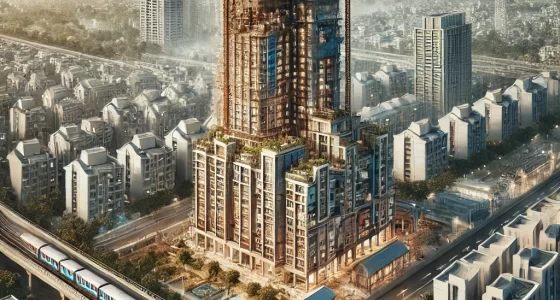
This policy shift is particularly significant for Mumbai’s redevelopment-heavy real estate market, where mid-height towers between 120–180 m are increasingly common.
- 🏗 Faster Clearances: By bypassing HRC for standard mid-height towers, project approvals could be shortened by several months. This helps redevelopment societies, especially in the eastern and western suburbs, where delays often inflate costs and timelines.
- 📝 Decentralised Power: The Municipal Commissioner now has greater authority, reducing bottlenecks at the state level.
- 💰 Cost Savings: Less time spent waiting for approvals = lower holding costs, faster construction starts, and potentially better cash flows for developers.
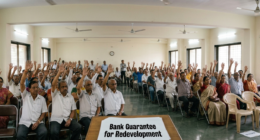
- 🏢 Redevelopment Acceleration: Many cluster and society redevelopment projects fall within this 120–180 m bracket on larger plots. This could unlock stalled or delayed projects.
- 🧱 Predictability: Developers can now plan their projects with greater certainty, knowing approvals are more streamlined for this category.
⚖️ Safeguards Remain Intact
While the rule relaxes HRC approval, it maintains structural safety checks through mandatory expert certification. The amendment is also subject to the final outcome of Writ Petition No. 3186/2019 (Urban Design Research Institute vs State), currently before the Bombay High Court.
🌆 The Bigger Picture
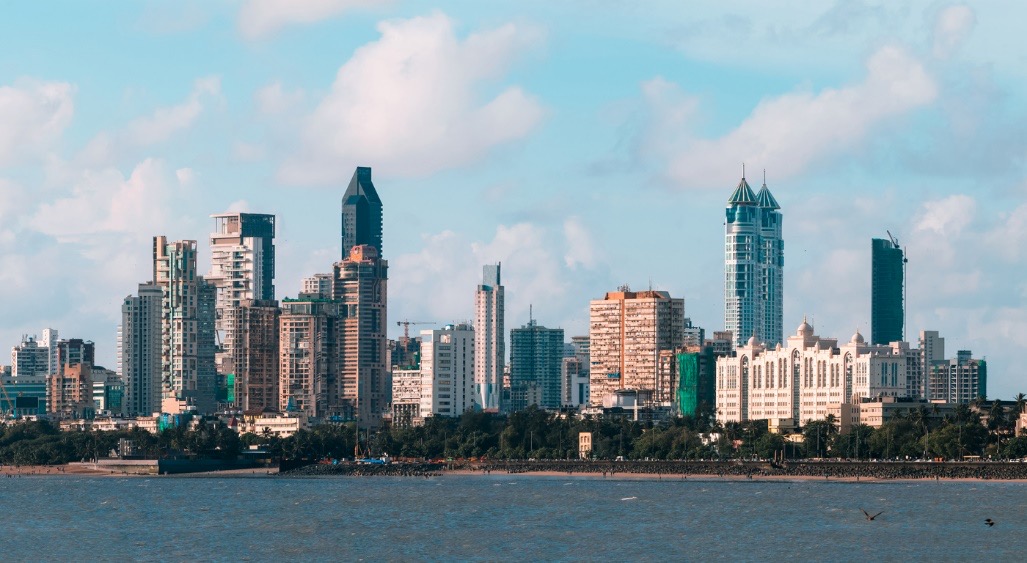
Mumbai’s vertical growth has often been slowed not just by land scarcity, but by lengthy approval procedures. By decentralising authority and focusing HRC’s attention on truly complex and supertall buildings, the government aims to balance speed with safety.
With redevelopment driving the city’s housing supply — especially under DCPR 2034 and cluster schemes — this change could become a turning point for faster urban renewal.
Also Read: Fire in Mumbai Highrise, Builder Says Fire Audit Conducted on Oct 1