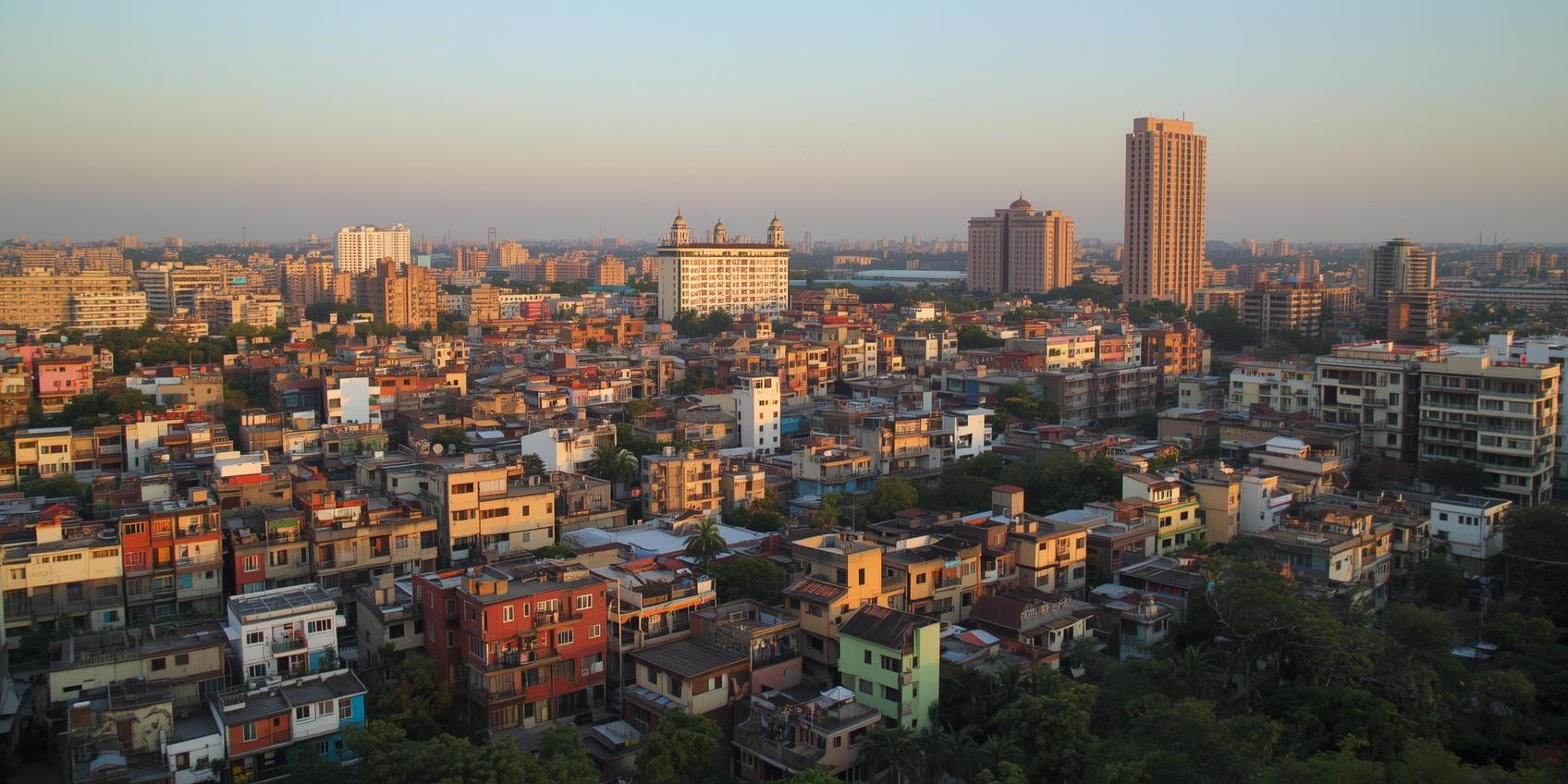

Policy aims to enable taller buildings, integrated planning and faster rehabilitation through cluster-based redevelopment
In a landmark decision that could reshape Mumbai’s skyline, the Maharashtra state cabinet on Tuesday approved a new Slum Cluster Redevelopment Scheme under the Slum Rehabilitation Authority (SRA). The policy allows construction beyond the current 4.0 Floor Space Index (FSI) cap in specific cases — a move expected to enable taller buildings and faster rehabilitation of slum dwellers across the city.
The decision, taken in a meeting chaired by Chief Minister Devendra Fadnavis, targets large slum-dominated land parcels on public, semi-government and private lands, aiming for redevelopment through a single, integrated planning framework.
Clusters of 50+ acres to be taken up under SRA
The scheme focuses on creating large redevelopment clusters, each at least 50 acres of contiguous land, with more than 51% area covered by slums.
The Slum Rehabilitation Authority will serve as the nodal agency, identifying eligible clusters and forwarding them to a High-Level Committee headed by the Additional Chief Secretary (Housing) for scrutiny. Final approval will come from the state government.
Unlike fragmented SRA schemes, this approach seeks to rebuild entire localities with modern infrastructure and integrated civic facilities.
Beyond 4 FSI: Extra development potential for rehabilitation
The most significant element of the scheme is that construction beyond 4.0 FSI will be permitted wherever required to accommodate rehabilitation of slums that cannot be redeveloped on-site, or to house Project Affected Persons (PAPs).
This additional FSI will be treated as an incentive under Regulation 33(10) of the Development Control and Promotion Regulations (DCPR) 2034, and can only be used for rehabilitation purposes, not for commercial exploitation.
This move could significantly increase vertical development in Mumbai, especially in large clusters where additional space is needed to resettle thousands of slum dwellers.
Multiple implementation models: JV, tenders, or single developer
The government has outlined three routes for implementing the scheme:
- Joint Venture (JV) with a government agency,
- Tendering process to appoint a private developer, or
- Direct development by a single developer owning more than 40% of the cluster land, subject to state approval.
This flexibility is intended to speed up redevelopment while maintaining accountability.
Private and central government lands included
The scheme also brings central government lands into its fold, provided relevant agencies grant consent. Many slum pockets in Mumbai sit on such lands, making this a critical inclusion.
For private landowners, the government will offer compensation akin to the Town Planning Scheme (TPS) model — typically 50% of the land value in the form of developed plots with equivalent FSI. If owners decline, land can be acquired under the Land Acquisition, Rehabilitation and Resettlement Act (LARR), 2013, with costs borne by the developer.
CRZ slums to be relocated, land freed for public use and sale
Special provisions have been made for Coastal Regulation Zone (CRZ) I and II areas, where slums will be integrated into the cluster and rehabilitated elsewhere within it.
- CRZ I lands vacated will be used to create mandatory public amenities.
- CRZ II lands vacated will allow developers to build sale components as per regulations.
DCPR synergy: Tenants to get maximum benefits
Buildings within the cluster that are eligible for redevelopment under other DCPR provisions — such as 33(7), 33(5), or 33(9) — will get the higher of the two benefits: either the benefit under 33(10) or that under the applicable regulation.
This ensures that tenants and occupants are not disadvantaged by being part of a cluster scheme.
Integrated urban planning, not piecemeal projects
Mumbai has long suffered from fragmented redevelopment, with small, isolated SRA projects often unable to support adequate infrastructure. This new cluster-based model integrates:
- Slums,
- Old and dilapidated buildings,
- Tenanted structures, and
- Underutilized open plots
into a single urban planning framework. This approach is expected to improve infrastructure delivery, urban design, and living conditions for lakhs of residents.
A potential game changer for Mumbai
Experts believe this policy could accelerate slum rehabilitation and unlock large land parcels, while enabling taller, more efficient buildings that accommodate both rehabilitation and sale components.
By allowing FSI beyond 4, the state has provided a crucial planning lever to make large-scale redevelopment financially viable for developers while ensuring adequate rehabilitation stock for the city’s slum population.