RERA Tribunal Shuts Door on 141 Slum Dwellers: Rehab Homes Outside Its Jurisdiction
In a significant order that draws a sharp line between free-sale homebuyers and slum dwellers, the Maharashtra Real Estate Appellate Tribunal has rejected an intervention application filed by Shivshakti CHS (Proposed), a society representing 141 slum dwellers under a Slum Rehabilitation Authority (SRA) scheme.
The Tribunal held that the rehabilitation component of the project does not come within the purview of the Real Estate (Regulation and Development) Act, 2016. As a result, the society was neither a necessary nor a proper party in the appeal, which concerns only the free-sale component and the rights of commercial allottees.
What the Society Wanted
Shivshakti CHS (Proposed) had moved Misc. Application No. 1638 of 2026 seeking to intervene in Appeal No. AT10/00381 of 2026. The appeal was filed by Blessing Infra Developers LLP, a free-sale flat purchaser who bought four flats and other areas from the erstwhile promoter under registered agreements for sale and paid the entire consideration.
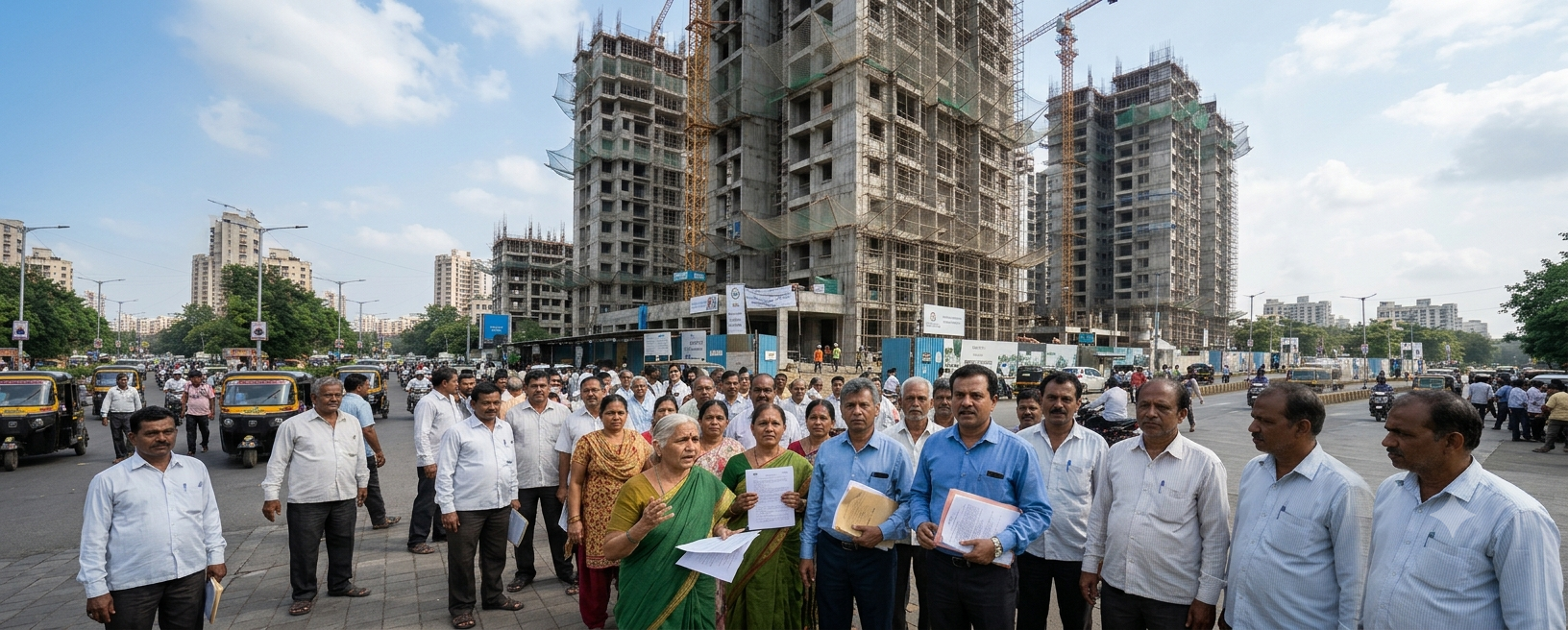
The society argued that it had appointed the original promoter under the SRA scheme. After prolonged delays and non-payment of transit rent, it terminated the promoter and supported the appointment of a new developer under the Government of Maharashtra’s Amnesty Scheme. With work on the site slowing down, the society claimed that any orders in the appeal could further delay the rehabilitation homes of its 141 members and that it must be heard.
What the Tribunal Held
The Tribunal rejected the application. It noted that the core issues in the appeal are limited to two questions relating to the free-sale component:
- Whether the change of promoter (from the SRA-terminated old promoter to the new SRA-appointed promoter) amounts to a transfer of the real estate project under Section 15 of the RERA Act.
- Whether free-sale allottees who executed agreements with the erstwhile promoter can enforce those agreements against the co-promoter and the new promoter.
The Bench observed that these questions “pertain to sale of the flats out of the sale component of the project and does not deal in any manner with the rehabilitation component.” It further held that the rehabilitation component does not come within the purview of the RERA Act, 2016. Issues of timely completion of rehab homes, the society said, lie between the society, the new promoter, and the SRA — not in this RERA appeal.
Why RERA Cannot Hear Rehab or Slum Dwellers
This is not a one-off observation. MahaRERA and the Appellate Tribunal have consistently held that the rehabilitation component of redevelopment and SRA projects falls outside RERA’s jurisdiction.
The legal basis is Section 3(2)(c) of the RERA Act, which exempts the rehabilitation part of a redevelopment project from the requirement of registration if it does not involve marketing, advertising, or selling. Slum dwellers and original society members who receive free or exchange flats under a development agreement or SRA scheme are generally not treated as “allottees” under Section 2(d) of RERA. They do not pay commercial sale consideration under a registered agreement for sale. Their rights flow from the development agreement, the Slums Act, and SRA orders — not from the RERA framework.
Consequently, complaints by rehab beneficiaries about delay in possession, quality of rehab homes, transit rent, or non-delivery of promised free homes are not maintainable before MahaRERA. The Authority has repeatedly dismissed such complaints on the ground of lack of jurisdiction.
What RERA Can Hear
RERA’s jurisdiction is limited to the free-sale / sale component of such projects. This includes:
- Rights of genuine allottees who have purchased flats by paying sale consideration under registered agreements for sale.
- Promoter obligations regarding possession timelines, interest for delay, refunds, and quality of construction in the free-sale portion.
- Issues of project registration, change of promoter under Section 15, designated bank accounts, and compliance with RERA obligations vis-à-vis commercial buyers.
- Complaints by free-sale buyers against promoters (including co-promoters) for non-delivery of possession or other statutory breaches.
In the present case, the appellant is precisely such a free-sale buyer. The Tribunal has kept the appeal focused on that limited controversy and refused to expand it to cover the rehab component.
What Options Do the 141 Slum Dwellers Have?
With RERA closed to them, the primary remedies for the Shivshakti CHS members lie under the Maharashtra Slum Areas (Improvement, Clearance and Redevelopment) Act, 1971. They can approach the SRA for enforcement of the scheme, action against the promoter for delays or non-payment of transit rent, and directions for timely completion of the rehabilitation component. Disputes arising purely from the development agreement or SRA orders may also be taken to the appropriate civil or cooperative court, depending on the nature of the claim.
The Tribunal’s order reinforces a clear jurisdictional divide: free-sale homebuyers can knock on RERA’s door; slum dwellers seeking their free rehab homes must look to the SRA and the Slums Act.
The main appeal on the promoter-change order continues. The intervention application, however, stands rejected.
Also Read: New Builder Takes Over Stalled Andheri SRA Project; RERA Imposes Lien to Protect Homebuyers