📰 Intro:
In a landmark order that could affect thousands of mixed-use housing projects across Maharashtra, the Bombay High Court has ruled that a developer cannot register two separate cooperative housing societies — one for commercial units and another for residential units — unless both are functionally and physically independent.
The Court has also struck down reliance on a 2004 Maharashtra government circular, holding that it has no statutory authority and cannot override the Maharashtra Cooperative Societies Act (MCS Act) or the Maharashtra Ownership Flats Act (MOFA).
⚖️ Case Summary:
Case: Sadguru Universal CHS Ltd. vs. State of Maharashtra & Ors.
Court: Bombay High Court (Civil Appellate Jurisdiction)
Coram: Justice Amit Borkar
Date of Judgment: November 11, 2025
Filed by: Sadguru Universal CHS Ltd., New Panvel (West), Navi Mumbai
Respondents: State of Maharashtra, Registrar of Cooperative Societies, and Sadguru Infra Projects (the builder)
🧱 The Dispute:
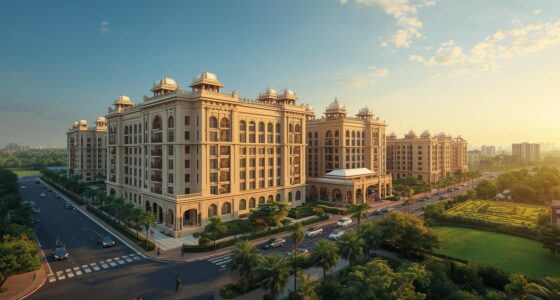
A single building in New Panvel was constructed with 24 commercial units on the ground floor and 88 residential flats above.
The builder, Sadguru Infra Projects, registered two separate societies — one for commercial and another for residential owners.
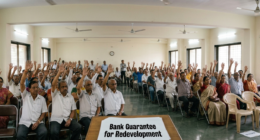
The residential society (petitioner) objected, arguing:
- Only one building plan and one Occupancy Certificate were issued by CIDCO.
- Both residential and commercial owners use common passages, terraces, lifts, firefighting systems, and parking areas.
- Two societies would create conflict and violate MOFA, which mandates one collective society.
📜 Key Findings by the High Court:
1️⃣ Two Societies Not Allowed Without Real Separation
“The mere fact that some units are commercial and some are residential does not give the promoter a right to form two societies.”
- Separate societies are permissible only if there is clear physical and functional separation — e.g., separate entrances, lifts, utilities, firefighting systems, and maintenance mechanisms.
2️⃣ Parameters for Allowing Two Societies
The Court listed mandatory parameters to assess independence:
- Structural Design & Layout
- Separate Entrances and Exits
- Independent Utilities (water, electricity, firefighting)
- Maintenance & Financial Responsibility
Additional parameters include:
- Parking and circulation
- Use pattern (timings and activity interference)
- Legal documents (OC, plan approval)
- Impact on members’ convenience and rights
3️⃣ Govt Circular of 2004 Has No Legal Standing
The Court held that the Government Circular dated 30 July 2004, which allowed separate societies for wings or sections, has no statutory force.
“A circular issued by an administrative department does not become law only because it has been issued by a Government officer.”
It was not issued under the MCS Act and not authenticated under Article 166 of the Constitution, so it cannot override the law or curtail citizens’ rights.
4️⃣ Matter Remanded for Fresh Inquiry
Both the Registrar and Revisional Authority failed to conduct any ground verification.
The Court set aside both orders and directed a fresh factual inquiry within four months to decide if two societies can truly function independently.
🏗️ Impact on Developers and Societies:
- Builders can no longer arbitrarily split one building into separate societies to retain control or reduce obligations.
- Residential and commercial unit owners in mixed-use projects will now gain stronger rights under MOFA.
- The judgment redefines the scope of Section 154B-2(4) of the MCS Act — emphasizing functional, not formal, independence.
💬 Expert Quote (Suggested Style):
“This judgment reinforces that MOFA’s purpose is to protect flat buyers — not builders’ convenience. If a structure functions as one building, the law expects one cooperative body,” said a Mumbai-based housing law expert.
📌 Conclusion:
This ruling could reshape how housing societies are formed in Maharashtra — especially across CIDCO, MMRDA, and municipal layouts where commercial and residential units coexist.
It’s a strong message to developers and authorities: registration can’t be a paper exercise — it must reflect ground realities.