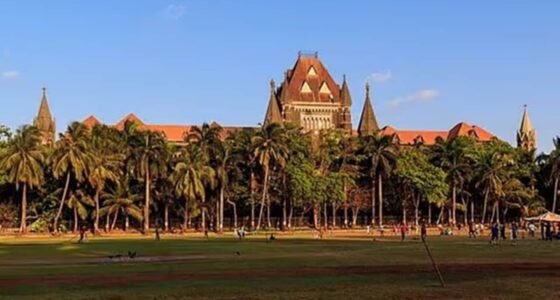
HC Refuses to Condonation 12-Year Delay in Auction Challenge
The Bombay High Court has dismissed two writ petitions filed by Nashik residents challenging the confirmation of auction sale of their mortgaged properties, observing that the petitions were built on “falsehood and suppression of material facts.” Justice Amit Borkar upheld a 2021 order of the Divisional Joint Registrar refusing to condone a 12-year delay in filing a revision application.
The petitioners — Ramrao Tukaram Patil, Manjusha Patil and Sindhubai Patil — had taken two loans by mortgaging land parcels in 2005. When they defaulted, the Nashik District Industrial and Mercantile Cooperative Bank auctioned the properties in August 2009, with sale proceeds appropriated against outstanding dues.
Petitioners Claimed Ignorance of Auction Until 2020
In their plea, the petitioners stated on oath that they learned about the 2009 auction only in November 2020, arguing that delay should therefore be condoned and the sale declared void for alleged non-compliance with Rule 107 of the Cooperative Societies Rules.
However, the court noted that this assertion was “patently false” and contradicted by the petitioners’ own documents.
Letters From 2011 and 2015 Exposed False Claims
The court examined records showing that:
- In September 2011, the petitioners requested account statements from the bank and acknowledged receiving extracts that clearly recorded deposit of auction proceeds by the purchaser.
- In April 2015, petitioner Ramrao Patil wrote to the bank admitting the auction, referring to the sale proceeds and their adjustment.
Justice Borkar held that these documents “leave no doubt” that the petitioners were aware of the auction years earlier. Despite this, they repeated the claim of awareness since 2020 in both the revision and the writ petitions.
Court Strongly Criticises Attempt to Mislead Judiciary
Calling the conduct “deliberate, not inadvertent,” the court observed:
- Writ jurisdiction is based on fairness, honesty and complete disclosure.
- A litigant who makes false statements “loses all credibility” and cannot seek equitable relief.
- Suppressing facts wastes public resources and deprives other litigants waiting for justice.
The court referred to Supreme Court precedents, including Amar Singh v. Union of India, reiterating that judicial proceedings cannot be used to gain advantage through concealment or deception.
₹1 Lakh Costs Imposed for Misuse of Court Time
Justice Borkar noted that the matter consumed 90 minutes of court time, calling it an irresponsible misuse of judicial resources. The bench ordered the petitioners to:
- Pay ₹1 lakh to Maharashtra State Legal Services Authority within four weeks.
- Face recovery as land revenue if they fail to comply.
The court also rejected a request to continue interim protection.
Also Read: Bombay High Court: Borrowers Can’t Force Banks to Settle Defaulted Loans