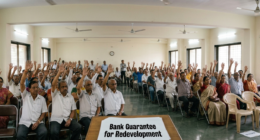

Hundreds of residents staged protests at Sanjay Gandhi National Park (SGNP) in Mumbai against the ongoing drive to remove encroachments from the protected forest area. The demonstrations, which included marches and slogans outside the park entrance, come amid eviction notices issued by the SGNP administration, with action reportedly underway or imminent in various padas (hamlets) within the park.
According to a note issued by the Conservator of Forests and Director of SGNP, the eviction drive is being carried out to comply with longstanding orders from the Bombay High Court dating back to 1997. The court had directed the removal of all encroachments on forest land within SGNP and outlined eligibility criteria for rehabilitation, limiting benefits to those residing in the protected area whose names appeared on the electoral roll as of January 1, 1995.
The note states that under Phase I of the rehabilitation program, over 11,000 eligible families were provided tenements in Chandivali, Powai. However, it claims that approximately 385 families who had already received such rehabilitation benefits have since returned to encroach upon forest land within SGNP. Describing this as a “blatant misuse” of the rehabilitation scheme, the Conservator of Forests and Director emphasized that the High-Powered Committee—appointed by the Bombay High Court and comprising Justice Dilip Bhosale (Retd.), former Chief Secretary Nitin Kareer, former DGP Subodh Kumar Jaiswal, and the SGNP Director as Member Secretary—has ordered the immediate eviction of these individuals as a priority step. The committee’s directive aims to clear the way for rehabilitating remaining eligible families and ensuring full compliance with the court’s orders.
Notices for eviction were reportedly published on January 17, 2026, giving affected persons the opportunity to vacate voluntarily, following detailed inquiries and hearings. The note further asserts that delaying action against these alleged repeat encroachers would continue to deprive genuinely eligible families of their entitled benefits.
The SGNP administration’s note also addresses claims of tribal status among the affected individuals, stating that such arguments are “untenable.” It references the Bombay High Court judgment in Manik Rama Sapte vs. State of Maharashtra, which reportedly held that all original tribal inhabitants of the area were rehabilitated to Palghar in 1977, leaving no original Adivasi population within SGNP. Current residents claiming tribal status, per the note, are governed by the 1997 court order and not entitled to special exemptions.
Protesters’ Claims: On the other hand, the protesting residents, many identifying as tribals, assert that they are indigenous inhabitants with ancestral ties to the land predating the park’s designation. They argue that they are not mere encroachers but have legitimate rights to reside there. Reports indicate that some protesters claim their Forest Rights Act claims remain pending or unresolved, and they view the eviction drive as a violation of their traditional rights and livelihoods. They have accused the authorities of labeling entire villages as encroachments without proper verification and have sought intervention from bodies such as the National Commission for Scheduled Tribes.
The forest department maintains that the drive is court-mandated and necessary for protecting the park’s ecosystem, while urging public support to uphold the rule of law and environmental conservation.
Also Read: Forest department receives a huge Mangrove forest in Navi Mumbai from CIDCO