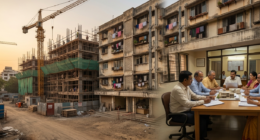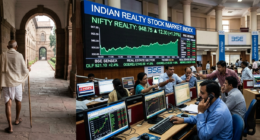

Mumbai’s property market is showing strong signs of revival, with February 2026 recording the highest property registrations among the compared periods, signaling renewed buyer confidence, stable demand, and sustained momentum in housing transactions, according to data from the Inspector General of Registration (IGR) office.
Key Registration Trend
- Feb 2026: 12,885 registrations | ₹1,124 crore revenue
- Jan 2026: 11,218 registrations | ₹1,012 crore revenue
- Feb 2025: 12,066 registrations | ₹935 crore revenue
- Feb 2024: 12,055 registrations | ₹885 crore revenue
- Feb 2023: 9,684 registrations | ₹1,110 crore revenue
Month-on-Month Growth Signals Fresh Momentum
Compared to January 2026, registrations rose from 11,218 to 12,885, marking a 14.86% increase, a significant jump in just one month.
Stamp duty collections also climbed from ₹1,012 crore to ₹1,124 crore, reflecting an 11.07% rise.
Interpretation:
Such a sharp MoM rise usually indicates:
- Buyers who postponed purchases closing deals
- Increased registrations of projects launched earlier
- Seasonal demand post-January financial planning
Year-on-Year Comparison Shows Structural Strength
February 2026 outperformed previous February figures across multiple years:
| Year | Registrations | Change vs 2026 |
|---|---|---|
| 2025 | 12,066 | +6.79% |
| 2024 | 12,055 | +6.89% |
| 2023 | 9,684 | +33.06% |
Revenue Growth Comparison
| Year | Revenue | Change vs 2026 |
|---|---|---|
| 2025 | ₹935 cr | +20.2% |
| 2024 | ₹885 cr | +27.0% |
| 2023 | ₹1,110 cr | +1.26% |
Reading the numbers:
- Registration growth vs 2025 and 2024 is steady (~7%) — indicating consistent demand expansion rather than a speculative spike.
- The massive 33% jump over 2023 shows how far the market has recovered from earlier sluggish phases.
- Revenue growth outpacing registration growth suggests higher ticket-size purchases, meaning buyers are opting for costlier homes or premium projects.
What This Means for Mumbai Real Estate
1. Demand Is Not Just Surviving — It’s Broadening
A rise across multiple comparison periods shows that demand is:
- not seasonal,
- not policy-driven alone,
- and not limited to one buyer segment.
Instead, it indicates stable end-user demand plus investor participation.
2. Price Appreciation Is Likely Continuing
When stamp duty revenue rises faster than registrations, it often means:
- higher property values,
- larger homes being purchased,
- or deals happening in premium micro-markets.
3. Supply Pipeline Is Being Absorbed
Developers benefit when registrations climb because:
- unsold inventory reduces,
- cash flows improve,
- and new project launches become viable.
A 14.86% monthly jump suggests inventory absorption accelerated sharply in February.
4. Market Is Entering a Confidence Cycle
Real estate cycles typically follow a pattern:
Low confidence → Slow sales → Discounts → Stabilization → Rising registrations → Price growth → Launch boom
Mumbai’s latest numbers indicate it has moved into the “rising registrations” phase, which historically precedes:
- price firming
- reduced discounts
- faster sales velocity
How Experts Decode Registration Data
Registration figures are considered one of the most reliable real-time indicators of property demand because they reflect:
- actual transactions (not just bookings),
- finalized payments,
- legal completion of deals.
Unlike launch announcements or booking claims, registrations cannot be inflated easily, making them a true demand barometer.
The Silent Signal Behind February’s Surge
What makes February 2026 notable is not just the growth — it is the quiet consistency:
- No major policy incentive
- No stamp duty cut
- No festival season boost
Yet registrations peaked.
That suggests organic market strength, which is the most sustainable form of growth for a property market.
Conclusion
Mumbai’s real estate sector appears to be steadily healing and strengthening. February 2026’s numbers show:
- strongest registration count among compared periods
- strong month-on-month momentum
- steady year-on-year growth
- rising transaction values
If this trend continues, Mumbai could be entering a new expansion phase marked by stable demand, improving developer confidence, and gradual price appreciation.