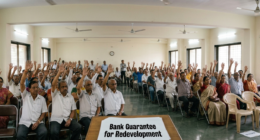

In a ruling that exposes the risky underbelly of Mumbai’s slum redevelopment (SRA) projects, the Maharashtra Real Estate Regulatory Authority (MahaRERA) has allowed a new developer to start afresh on the stalled “Sapphire I” project in Kurla — leaving dozens of original homebuyers who poured in substantial money over a decade ago with little more than a promise of refund from a failed promoter.
The 23-page order dated 24 March 2026 in Regulatory Case No. 437 of 2025 has left many allottees shocked and angry. They had booked flats in what was marketed as “Sai Sapphire I”, paid hefty amounts (one group alone paid ₹16.60 crore for 11 flats), and waited since 2014–2016 for possession that was originally promised by December 2015. Instead of getting their homes, they now face the prospect of chasing refunds from the terminated original developer while the new promoter sells the units to fresh buyers at today’s much higher prices.
Chronological Sequence of Events
- 2014–2016: ITMC Developers Pvt Ltd launches Sapphire I (SRA project on CTS Nos. in Kurla). Allottees book flats and pay substantial consideration. Possession promised by Dec 2015. One allottee (Blessings Infra Developers LLP) pays full ₹16.60 crore for 11 flats.
- 1 August 2017: Project registered with MahaRERA as ongoing project No. P51800006372. Proposed completion: 31 July 2017 (later extended multiple times till 30 Dec 2023).
- 2017–2023: Severe delays. Construction stalls. ITMC stops paying transit rent to slum dwellers. 46 complaints filed by allottees; 34 disposed, 12 still pending. A 21-storey structure is later demolished.
- 13 Feb 2024: Committee under Additional Chief Secretary (Housing) discusses lender’s amnesty proposal.
- 15 March 2024: SRA terminates ITMC under Section 13(2) of the Slum Act and appoints Edelweiss Asset Reconstruction Company (EARC) along with Mahadev Spaceinnovator Pvt Ltd (later renamed Mahadev Realtors Powai Pvt Ltd) as the new developer.
- 1 October 2024: SRA issues Letter of Intent in favour of the new developer.
- 28 November 2025: New promoter files application for fresh RERA registration (REPM1180002502274).
- 15 Dec 2025 & 22 Jan 2026: MahaRERA hears the case. Over 20 allottees, represented by advocates including Sunilraja Nadar and Godfrey Pimenta, strongly object. They argue that their vested rights cannot be wiped out and demand that the new promoter honour old agreements.
- 24 March 2026: MahaRERA passes order allowing fresh registration to the new promoter while keeping the old registration in abeyance.
What the Order Says
MahaRERA held that this was not a voluntary transfer under Section 15 of RERA (which requires 2/3rd allottee consent). Since the old promoter was statutorily terminated by SRA, the new promoter (Mahadev Realtors Powai) is not automatically bound by the old agreements. The Authority recognised the new entity as the promoter and directed it to complete formalities for a fresh RERA registration and open a new project bank account.
For the affected homebuyers, the Authority directed:
- Old registration P51800006372 to be kept in abeyance so they can still file complaints against ITMC.
- A lien on the reimbursement amount that EARC must pay to ITMC (to be valued by a government-approved valuer). This money can be used to satisfy claims of old allottees if ITMC fails to pay.
- ITMC barred from selling any units; old project bank account frozen.
However, the order makes it clear that original allottees have no direct enforceable rights against the new promoter. Their remedies lie only against the now-terminated ITMC Developers.
Allottees had argued that the building was demolished without consent, material facts were suppressed, and principles from Supreme Court and Bombay High Court judgments (including Bikram Chatterji) should protect homebuyers who funded the project. MahaRERA distinguished the facts, noting this was an SRA-driven termination, not a society redevelopment.
The Scary Reality of SRA Projects in Mumbai
This case highlights a recurring danger in Mumbai’s real estate market: buying into an SRA project carries high risk. Homebuyers often pay crores believing they are getting a flat in a redevelopment scheme, only to discover that when the original developer defaults and SRA brings in a new player (usually backed by a lender), their booked units can effectively be resold to others. They are left as unsecured creditors of a failed entity, fighting for refunds that are notoriously difficult to recover in full.
Many affected buyers in Sapphire I had already approached consumer forums and even the NCDRC. Some are retired individuals who invested lifetime savings. The new promoter can now legally market and sell the sale component at current market rates, while old buyers chase money from ITMC.
This order is likely to fuel fresh debate on whether SRA projects need stronger homebuyer protections, similar to calls for a separate RERA-like law for redevelopment schemes.
Also Read: Is A Homebuyer Protected If SRA Terminates Builder?