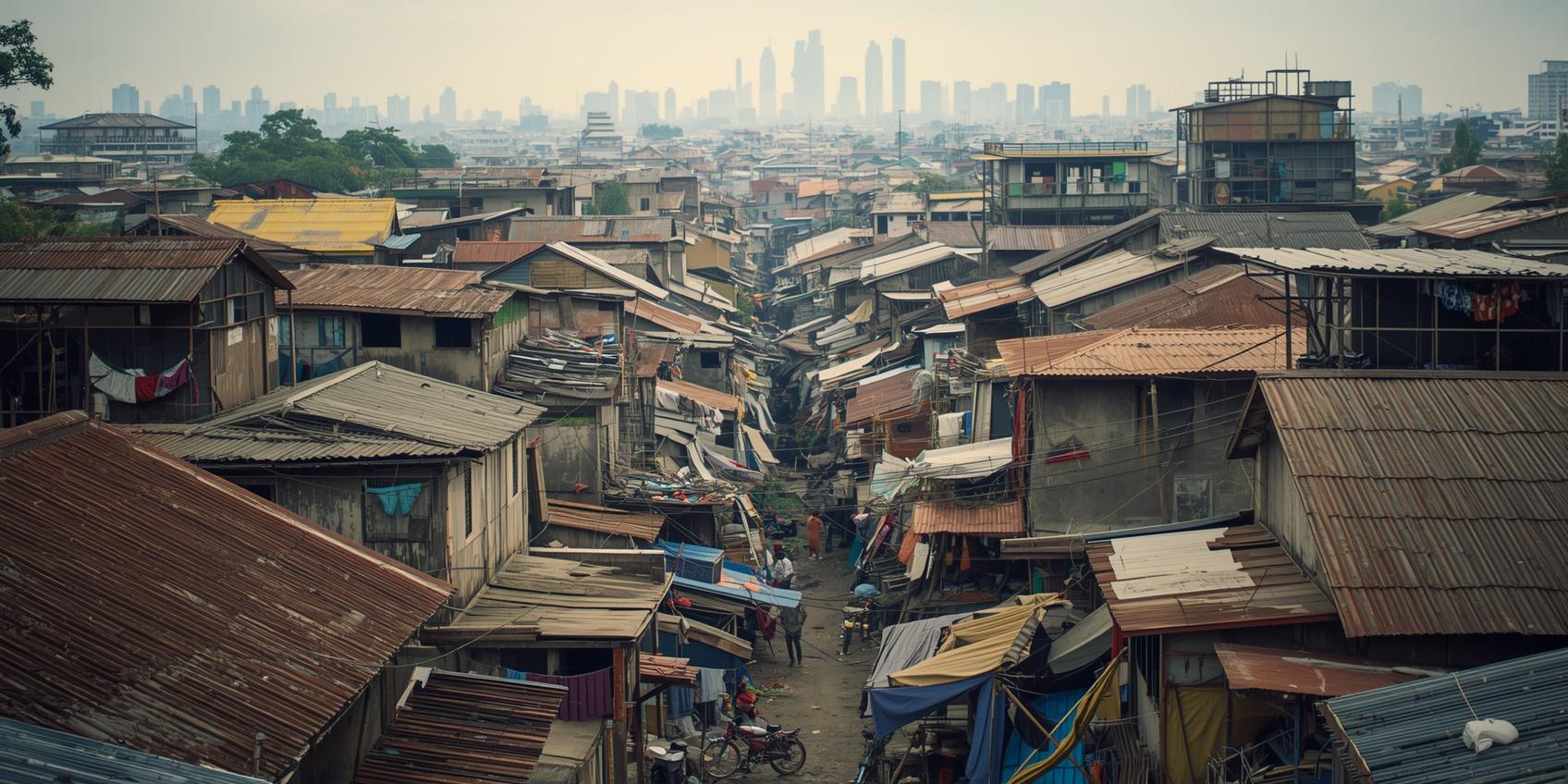

In a significant policy refinement, the Government of Maharashtra has issued a corrigendum to its March 25, 2026 Government Resolution (GR) on the regularisation of residential encroachments. While the original policy offered relief to thousands of families, the latest update makes it clear: not all encroachments will qualify for legalisation.
The revised directive introduces stricter conditions and explicitly excludes land under key housing authorities like MHADA and Slum Rehabilitation Authority (SRA), raising critical questions about eligibility and future housing pathways.
The Original Promise: Relief for Pre-2011 Encroachments
The March 25 GR was seen as a major step toward resolving long-pending housing issues across Maharashtra. It allowed:
- Regularisation of residential encroachments existing on or before January 1, 2011
- Applicability across the state, excluding Mumbai city and suburbs
- Coverage limited strictly to residential use
- Regularisation of land up to 1,500 sq ft
- Free regularisation up to 500 sq ft, with charges beyond that
- Protection from eviction upon application until a decision is made
The move aligned with broader goals of inclusive housing and aimed to bring informal settlements into the legal framework.
The Big Change: MHADA & SRA Lands Excluded
The April 17 corrigendum introduces a crucial restriction:
👉 Encroachments on land under MHADA and Slum Rehabilitation Authority will not be regularised under this policy.
This clarification is significant because:
- These lands are often reserved for planned redevelopment projects
- Allowing regularisation could conflict with ongoing or future housing schemes
- It reinforces the government’s focus on redevelopment over regularisation in urban zones
Exception Clause
If such land cannot be developed under MHADA or SRA schemes due to unavoidable reasons:
- It may be transferred to local authorities
- Used for schemes like affordable housing (e.g., PMAY)
- But only after obtaining No Objection Certificates (NOCs)
Shift Towards Planned Development: Group Housing Push
Another key addition is the introduction of group housing schemes:
- In areas where individual plot allocation is not feasible, authorities can opt for cluster or group housing models
- This is particularly relevant for:
- Large gram panchayats
- Semi-urban clusters
- Densely populated settlements
This signals a shift from plot-based regularisation to planned township-style development.
Governance Change: Who Oversees the Process?
The corrigendum also modifies the composition of review committees:
- If the local MLA is also a minister,
- A nominee appointed by the Revenue Minister will take their place
This aims to streamline decision-making and avoid administrative overlaps.
What This Means for Residents
The updated GR creates a more structured but restrictive framework:
👍 Positive Impact
- Legal security for eligible families living on government land
- Protection from eviction during application review
- Opportunity to transition into formal housing
⚠️ Key Limitations
- No benefit for encroachments on MHADA or SRA land
- Strict eligibility proof required for pre-2011 occupancy
- Commercial encroachments largely excluded
The Larger Policy Signal
The Maharashtra government appears to be walking a tightrope:
- Providing relief to long-settled residents
- While protecting land for planned urban redevelopment
By excluding MHADA and SRA land, the government has clearly indicated that high-value urban land will remain within structured housing and redevelopment frameworks—not ad-hoc regularisation.
Conclusion
The April 17 update reshapes the narrative around encroachment regularisation in Maharashtra. What initially appeared as a broad relief measure is now a targeted policy with clear red lines.
For thousands of residents, the message is clear:
👉 Eligibility matters—and location matters even more.
Also Read: Maharashtra Govt Issues Orders to Regularise Pre-2011 Residential Encroachments on Govt Land