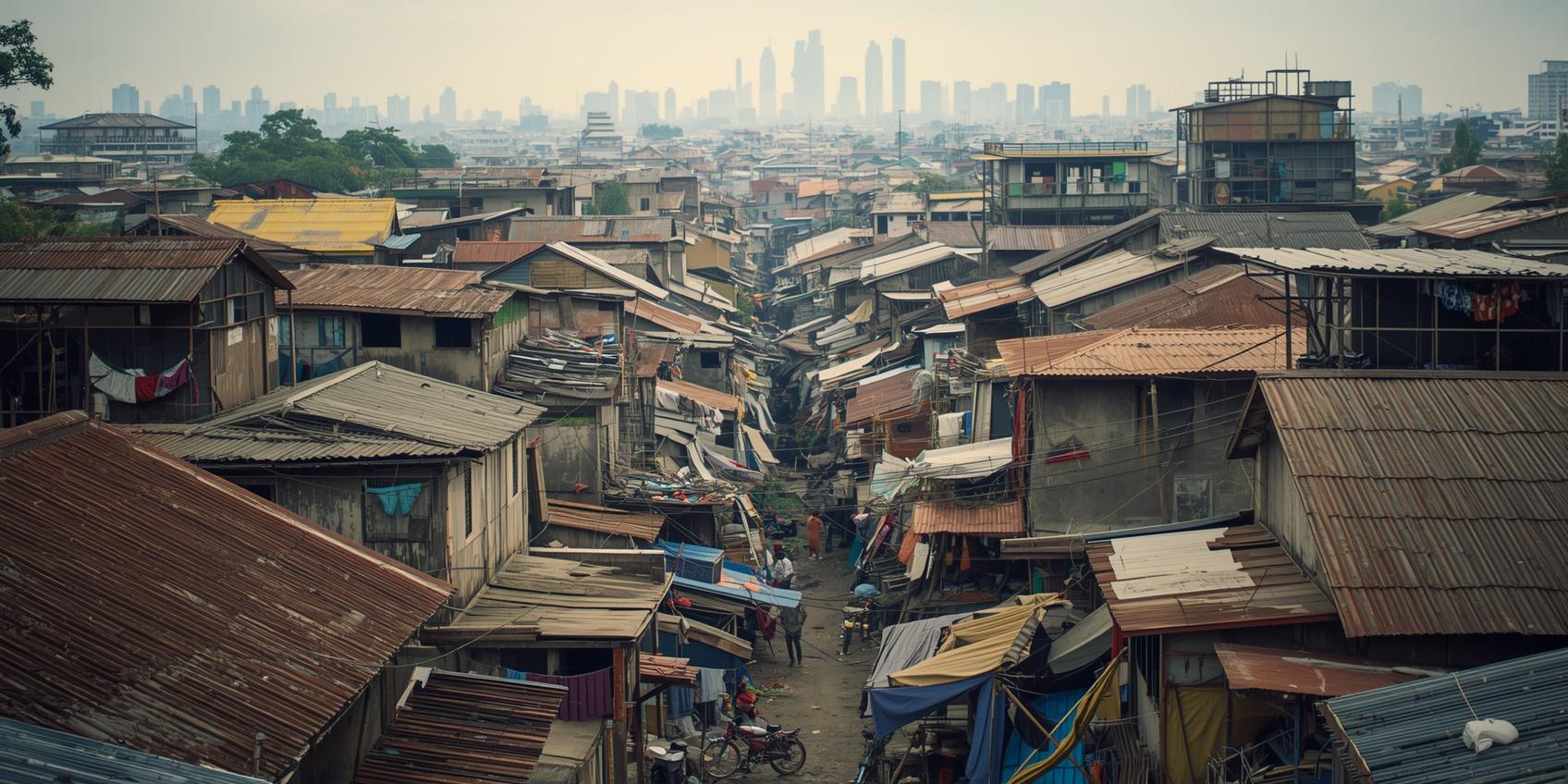

In a significant move aimed at providing housing security to lakhs of poor and needy families, the Maharashtra government has issued a comprehensive Government Resolution (GR) on 25 March 2026 to regularise residential encroachments on government land that existed on or before 1 January 2011.
The GR, numbered Land-2026/Pr.Kr.20/Land-1, issued by the Revenue and Forests Department, consolidates and updates earlier policies. It draws powers from Sections 40 and 51 of the Maharashtra Land Revenue Code, 1966, and related rules. The decision follows approval by the state cabinet on 24 March 2026 and aligns with the state’s “Vikasit Maharashtra 2047” vision, “Housing for All”, and Sustainable Development Goal 11.
Key Provisions of the GR
The policy applies across Maharashtra except Mumbai City and Mumbai Suburban districts. It covers only purely residential encroachments that are still in existence and used solely for self-residence. Commercial encroachments are generally not eligible, though small incidental uses (such as a tiny shop, medical store, flour mill, or clinic for daily family needs within the same structure) may be allowed on exceptional basis as part of the residential unit.
Eligibility Criteria
- Encroachment must have existed on or before 1 January 2011.
- Only Indian citizens are eligible; foreign nationals’ encroachments will be removed immediately, with police intimation.
- One family (husband, wife, and dependent unmarried children) can get only one regularization anywhere in the state. An affidavit is mandatory.
- Proofs required include voter lists, electricity bills, property tax receipts, gram panchayat records, slum notification (if applicable), and satellite images. Continuous one-year proof is also needed.
- The land must be in a zone where residential use is permitted under the Development Plan, Regional Plan, or Unified Development Control and Promotion Regulations (UDCPR).
- Gairan (grazing) land: Direct regularization is restricted as per the Supreme Court’s Jagpal Singh judgment. Eligible landless, SC, and ST families will instead be provided housing under Pradhan Mantri Awas Yojana (PMAY). The land may be transferred to local planning authorities.
- No regularization is allowed on prohibited/sensitive lands such as riverbeds, nalas, forests, CRZ, NDZ, public roads, cemeteries, playgrounds, school/hospital reserved sites, or landslide-prone areas.
- Encroachments on lands belonging to municipal corporations, councils, zilla parishads, or other local bodies are also covered under this policy.
Area Limit and Charges
- Maximum area regularisable: 1,500 sq ft per family.
- Up to 500 sq ft: Completely free for purely residential use.
- 501 to 1,500 sq ft: First 500 sq ft free; additional area charged at 10% of the prevailing market value (as per Annual Statement of Rates/Ready Reckoner).
- If any portion is used commercially: 25% of market value for the commercial part.
- If the total encroachment exceeds 1,500 sq ft, only up to 1,500 sq ft can be regularised; the excess must be demolished, and re-encroachment is prohibited.
The land will be granted as Bhogvataar Class-2 (occupancy rights with restrictions) in the joint names of husband and wife (where applicable). It will be non-transferable for the first 5 years (no sale, lease, or gift). Violation will lead to cancellation and eviction. After 5 years, conversion to Class-1 rights may be possible under normal rules.
Application Process and Timeline
- Last date to submit applications: 31 December 2026.
- Applicants filing by this deadline will receive protection from eviction until a final decision.
- Applications will be accepted by:
- Municipal bodies in urban areas.
- Gram Sevak/Tahsildar in rural areas.
- Process includes document verification, free measurement by the Land Records Department, 15-day public notice for objections, and approval by specially constituted committees (at taluka, district, and review levels involving Collector, urban planning officers, forest, electricity, and other departments).
- Decision on each application must be taken within 90 days.
- Nominal registration fees apply for title documents (₹1,000 up to 1,000 sq ft; ₹2,000 up to 1,500 sq ft).
Implementation Safeguards
- Decentralised committees have been empowered to decide cases without needing fresh government approval.
- Review committees will monitor progress every three months at district (under Guardian Minister) and Vidhan Sabha constituency levels.
- Ineligible or post-deadline encroachments will face eviction under Section 53 of the Land Revenue Code.
- Evicted sites will be handed over to local bodies for public use and protected from re-encroachment.
- Eligible but non-regularisable families (e.g., on prohibited lands) will be assisted under PMAY or provided alternative plots up to 1,000 sq ft.
The government has emphasised strict compliance to prevent misuse, protect public utility lands, and ensure inclusive development while safeguarding government assets.
This GR is expected to benefit thousands of underprivileged families living in informal settlements on government land for decades, bringing them into the formal system with legal security.
The full GR is available on the official Maharashtra government website (www.maharashtra.gov.in) with reference code 202603271339316419.
Also Read: Maharashtra Government Revises Urban Tribal Settlement Improvement Scheme