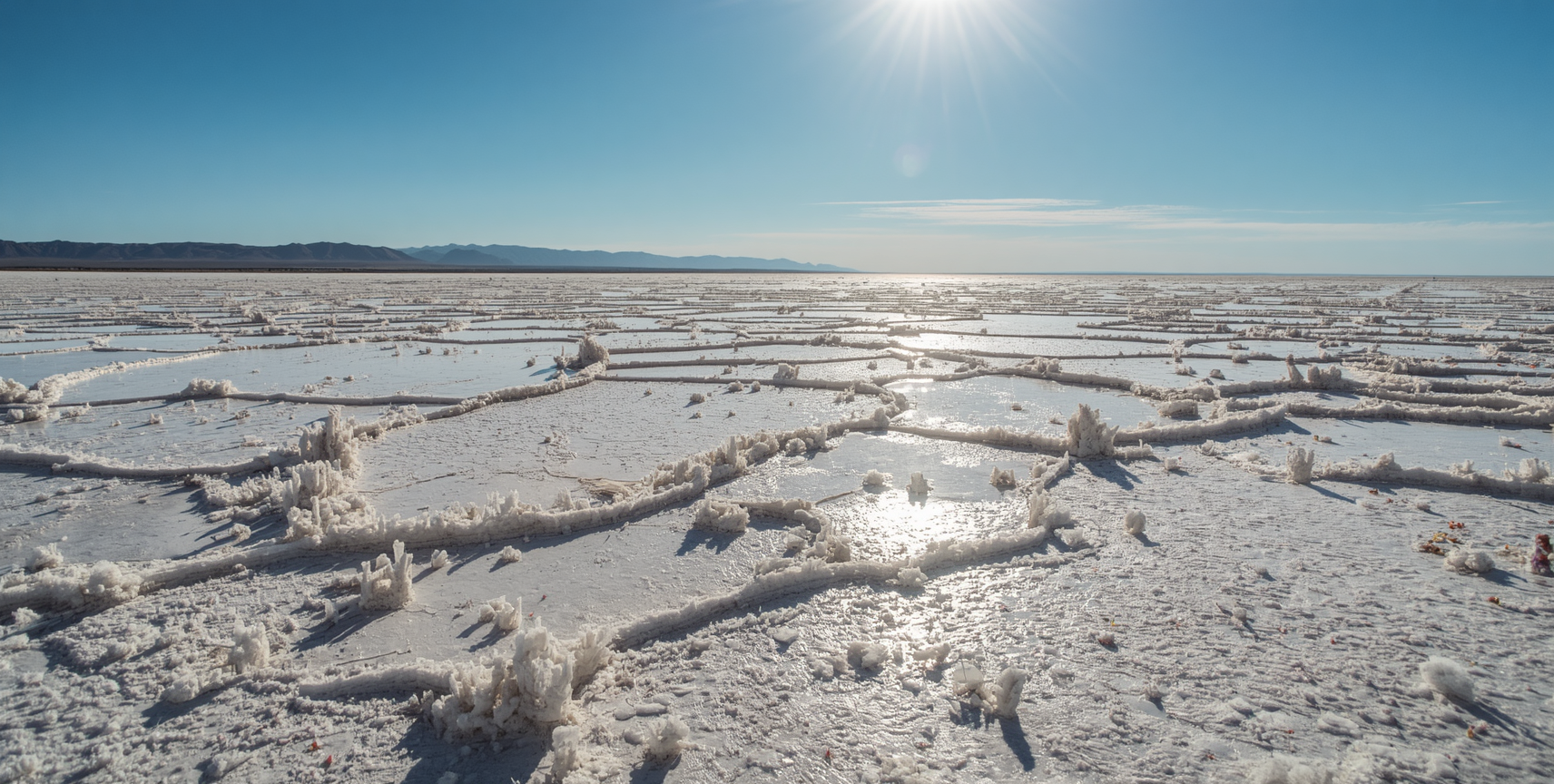

In a significant setback for the Union of India, the Bombay High Court on April 30, 2026 dismissed its First Appeal (No. 1430 of 2019) and upheld the trial court’s decision rejecting the Centre’s claim of ownership over approximately 220-227 acres of salt-pan lands at Mira, Manek and Shapur Salt Works in Bhayander, Thane district.
The Union of India, through the Deputy Salt Commissioner, had filed a Special Civil Suit in 2011 seeking a declaration that it was the owner of the suit lands, an order directing Respondents 1 and 2 to hand over vacant possession, a permanent injunction, and damages. After a detailed trial, the 7th Joint Civil Judge Senior Division, Thane, dismissed the suit in April 2018. The Union then approached the High Court in appeal.
A Division Bench comprising Chief Justice Shree Chandrashekhar and Justice Gautam A. Ankhad delivered a 70-page judgment that meticulously examined the 156-year-old history of the land and delivered a clear verdict: the Union failed to prove its title.
The 1870 Indenture: Not a Lease, but a Grant of Ownership Rights
At the heart of the dispute was an Indenture dated November 7, 1870, under which the Secretary of State for India granted a 999-year estate comprising the villages of Bhayander, Mira and Ghodbunder (totaling around 3,688 acres) to Ramchandra Luxmonjee and his heirs. Respondent No. 1, The Estate Investment Company Pvt. Ltd., acquired these rights through assignments in 1945.
The Union argued that the Indenture was merely a lease and that the government retained ultimate ownership. The High Court rejected this contention outright. Reading the document as a whole, the Bench held that it was an alienation — a comprehensive grant that transferred proprietary rights, including the right to hold, enjoy, assign, mortgage, and recover revenue from occupants. The Grantee became the “superior holder” under the revenue laws prevailing at the time.
The Court traced the consistent legislative framework from the Bombay Survey and Settlement Act, 1865, through the Bombay Land Revenue Code, 1879, to the Maharashtra Land Revenue Code, 1966. In all these statutes, a “superior holder” or “Class-I Occupant” enjoys heritable and transferable rights that amount to ownership in revenue jurisprudence. The limited reservations (mines, minerals, right of re-entry on default of rent) did not detract from the grant’s character.
The 1935 Government of India Act Argument Falls Flat
The Union’s primary legal plank was that “salt” is a Central subject under Entry 47 of List I of the Seventh Schedule to the Government of India Act, 1935. Since the lands were used for salt manufacture, it claimed they vested in the Federal Government under Section 172 of the 1935 Act and continued to vest in the Union after the Constitution came into force under Article 294.
The High Court termed this argument “misconceived”. It clarified that legislative entries demarcate fields of legislation, not ownership of land. Land and land revenue are exclusively State subjects (Entry 21 and 39 of List II). Crucially, the 1938 notification issued under Section 172 listing properties retained for Federal purposes did not include these salt-pan lands. The absence of any such notification was described as “fatal” to the Union’s case.
The Court further noted that the lands were agricultural when the 1870 Indenture was executed. The subsequent grant of salt licences decades later could not retrospectively divest the superior holder of its proprietary rights.
Rule 76 and Salt Licences Do Not Transfer Title
The Union also relied on Rule 76 of the Bombay Land Revenue Rules, 1921, which regulated permission to manufacture salt. It argued that salt-makers had to relinquish occupancy rights in favour of the government. The High Court pointed out that no relinquishment deed was ever executed, no lease was granted by the Revenue Department in favour of the Salt Department, and the Union’s own witness (Assistant Salt Commissioner, PW-1) admitted as much in cross-examination. Moreover, after the Salsette Estates Act, 1951, the lands became alienated villages and Rule 76 ceased to apply in the manner contended by the Union.
Decades of Silence and Admissions by Union’s Witness
The judgment highlighted the Union’s complete silence for over a century. From 1870 until 1983, neither the British Government nor the Union ever asserted ownership. Multiple proceedings under the Bombay Tenancy and Agricultural Lands Act, the Salsette Act, and revenue laws consistently recognised Respondent No. 1 as the landholder/superior holder. The State of Maharashtra accepted these findings and never claimed the land for itself.
Even more damaging was the cross-examination of the Union’s sole witness, PW-1. He admitted that the lands purchased by Respondent No. 2 through 95 sale deeds (1928–1951) were private lands, that the Union never objected to those transactions, and that the Manek-Mira Salt Works stood on privately owned land. The Court observed that while a witness’s admission alone cannot divest title, it severely undermined the credibility of the Union’s claim when viewed alongside the complete absence of supporting documents.
Previous Litigation and Finality of Revenue Orders
The Court recounted the long and chequered litigation history involving the parties, including suits from 1945, 1955, writ petitions, revenue tenancy settlement applications, and Salsette Act proceedings. In 2010, the Additional Commissioner, Konkan Division, passed a detailed order declaring Respondent No. 1 as superior holder and Respondent No. 2 as tenant on the major portion (with ownership on certain small parcels). That order attained finality as the State chose not to challenge it further.
The Union’s challenge to these revenue orders (prayer clause B in the suit) was held to be academic once its claim of title failed.
Final Outcome
The High Court concluded that the Union had not discharged the burden of proving its title. It dismissed the First Appeal in its entirety with no order as to costs. The interim status quo order was also not continued.
In a free-flowing and well-reasoned judgment, Justices Chandrashekhar and Ankhad have reinforced a fundamental principle of property law: the plaintiff must stand on the strength of its own title. The Union of India could not do so.