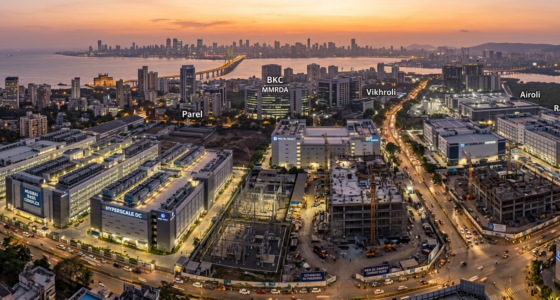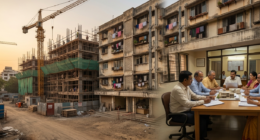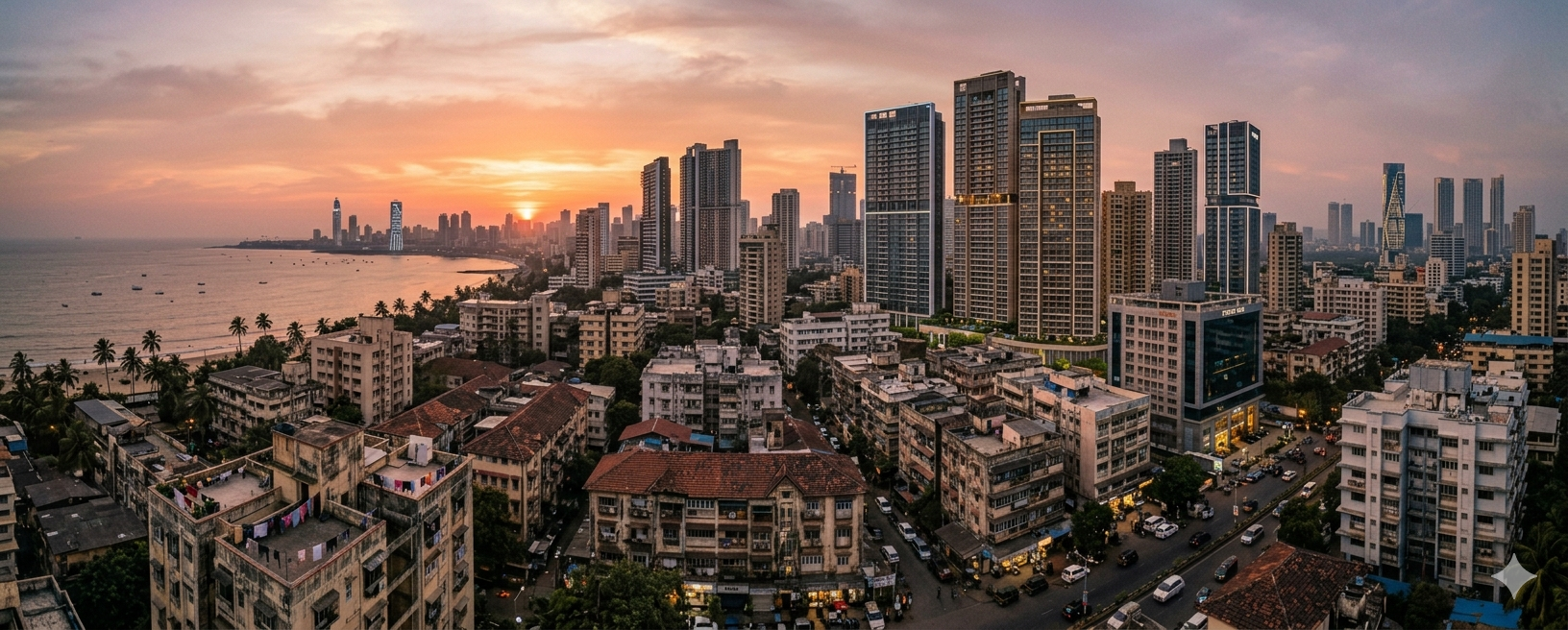

Mumbai’s western suburbs are fast emerging as the epicentre of the city’s redevelopment wave, as ageing housing societies give way to modern high-rises, redefining the urban skyline and transforming long-established neighbourhoods into contemporary residential hubs.
Stretching from Santacruz and Andheri to Goregaon, Kandivali and Dahisar, vast pockets of ageing residential stock are being systematically redeveloped, driven by land scarcity, rising housing demand and major infrastructure upgrades. What was once incremental redevelopment has now evolved into a large-scale urban transformation story.
Industry estimates indicate that over 44,000 new homes worth nearly ₹1.3 lakh crore are expected to be created through redevelopment-led projects in the coming years. Data from Knight Frank India suggests that more than 900 housing societies have signed redevelopment agreements since 2020, with a significant concentration in the western suburban belt.
From Replacement to Reinvention
Developers increasingly view redevelopment as more than a process of rebuilding old structures. It is now seen as a comprehensive exercise in urban restructuring—integrating modern housing, improved infrastructure and community rehabilitation.
“Redevelopment in Mumbai, especially across the western suburbs, is about transforming communities through better housing and stronger infrastructure,” said Rohan Brahmdev Shukla, Director and Chief Civil Officer, DGS Group. “These areas have evolved organically over decades and are now being shaped through structured urban planning.”
This shift reflects a broader transition in the city’s growth model—from outward expansion to inward renewal.
Strong Demand Meets Limited Land
The western suburbs have emerged as one of the most commercially viable redevelopment markets due to a combination of robust end-user demand and negligible land availability.
Projects in established residential areas continue to attract buyers because they offer upgraded homes within well-developed neighbourhood ecosystems, complete with schools, hospitals, transport networks and social infrastructure.
“The redevelopment story is no longer just about replacing old buildings,” said Shraddha Kedia Agarwal, Director, Transcon Developers. “It is about creating integrated communities with better infrastructure, open spaces and long-term livability.”
Slum Rehabilitation Adds Scale
Alongside housing society redevelopment, slum rehabilitation projects (SRA) continue to play a critical role in reshaping suburban clusters.
Over the past three decades, more than 2,500 slum rehabilitation projects have been completed, benefiting nearly 2.83 lakh families and significantly expanding Mumbai’s formal housing stock.
This dual engine—society redevelopment and SRA—has made the western suburbs one of the most active real estate corridors in the country.
Execution Challenges Remain
Despite strong momentum, the redevelopment sector continues to face execution challenges, including:
- Lengthy approval processes
- Regulatory complexities
- Coordination among multiple stakeholders
- Tenant consent and rehabilitation logistics
Industry stakeholders emphasise that faster clearances and streamlined regulations will be critical to sustaining growth.
“Mumbai’s western suburbs have become one of the strongest redevelopment corridors because the underlying demand fundamentals remain extremely robust,” said a spokesperson from Chandak Group. “However, long-term scalability will depend on policy support and execution efficiency.”
A Structural Shift in Urban Growth
Experts note that redevelopment is no longer a cyclical trend but a structural necessity for Mumbai, where land scarcity and ageing infrastructure leave limited room for greenfield expansion.
“Strong redevelopment momentum is being driven by established infrastructure, connectivity and sustained housing demand,” said Dhruman Shah, Promoter, Ariha Group. “It is enabling more efficient land use while improving living standards.”
As Mumbai continues to grapple with rising population density and infrastructure pressures, the western suburbs are leading a new phase of growth—one that focuses on reinventing existing urban spaces rather than expanding outward.
In doing so, redevelopment is not just altering the skyline; it is reshaping how the city evolves—towards a more sustainable, efficient and future-ready urban form.
Also Read: Western Suburbs of Mumbai dominate home sales in 2023