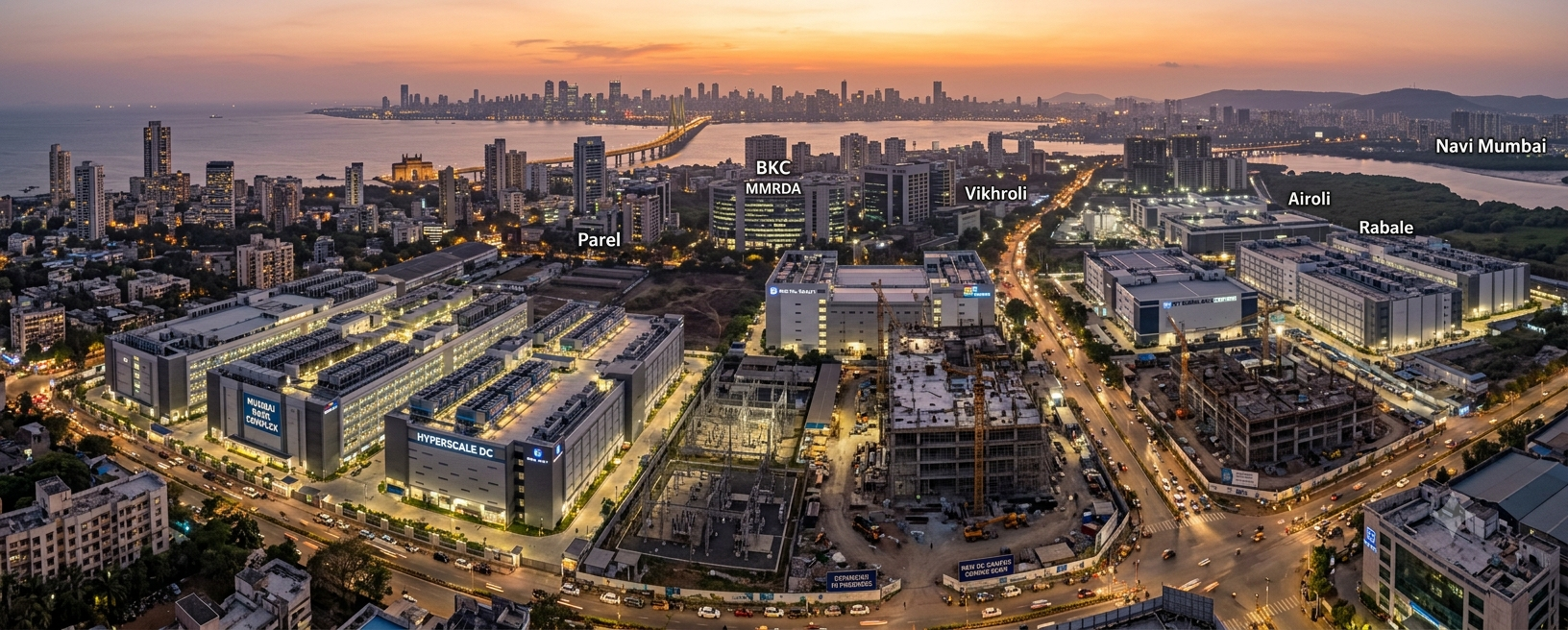

India’s data centre industry is rapidly transforming from a niche technology segment into a major real estate and infrastructure opportunity. According to Anarock Capital’s latest report titled “Data Centre: The Blueprint of The Digital Fortress in India,” the country’s data centre footprint is projected to expand to over 101 million square feet by 2030.
The sector has already grown significantly, rising from just 0.6 million square feet in 2007 to nearly 27 million square feet across 164 data centres by the first half of 2026.
Capacity Set for Threefold Jump
Alongside the physical footprint, installed capacity has also expanded sharply. India’s data centre capacity crossed 1.8 GW as of H1 2026. The development pipeline is expected to take this beyond 6.7 GW within the next four years — representing a more than threefold increase.
This growth is being underpinned by investment commitments of over USD 300 billion, positioning India among the fastest-growing data centre markets globally. By comparison, global data centre capacity stood at over 92 GW in H1 2026 and is projected to reach more than 210 GW by 2030, supported by total investment commitments of around USD 3,000 billion.
Mumbai-MMR Remains the Dominant Hub
Mumbai Metropolitan Region continues to lead India’s data centre market with approximately 50% share. As of H1 2026, MMR hosted 54 operational data centres with an IT capacity of 812 MW.
Other key markets include:
- Chennai: 25 data centres with 298 MW capacity
- Delhi-NCR: 18 centres with 179 MW
- Bengaluru: 18 centres with 137 MW
- Hyderabad: 12 centres with 178 MW
The report notes that expansion beyond traditional hubs is being driven by land and power availability, network connectivity, renewable energy access, and proximity to demand centres.
AI to Drive Majority of Future Demand
Artificial intelligence is emerging as the primary demand driver. Anarock estimates that nearly 70% of data centre demand by 2030 will come from AI workloads. AI applications require significantly higher computing power, storage and energy compared to conventional digital uses, leading to changes in facility design and engineering requirements.
India’s large digital base — with over 950 million internet users in H1 2026 — further supports long-term demand for secure and scalable data infrastructure.
Policy Support and Infrastructure Challenges
The Digital Personal Data Protection Act, 2023 has reinforced the need for robust domestic data infrastructure. Data centres have also been granted infrastructure status, improving access to long-tenure financing at interest rates of around 9.5–10.5% for periods of up to 12 years. A proposed tax holiday until 2047 for eligible global cloud service providers is expected to enhance India’s competitiveness.
However, the report cautions that the next phase of growth will depend heavily on the availability of reliable power, suitable land parcels, high-speed connectivity and renewable energy. These factors will determine where the next generation of capacity can be developed.
Real Estate Implications
Shobhit Agarwal, CEO of Anarock Capital, highlighted that the projected 101 million square feet footprint represents a specialised asset class at the intersection of real estate, technology and infrastructure. Unlike conventional office or industrial developments, data centres require large land parcels, substantial power capacity, advanced cooling systems, robust connectivity and high operational resilience.
As operators scale up, demand is expected to rise for strategically located land, power infrastructure, renewable energy, engineering and construction services, fibre connectivity and specialised cooling solutions. This expansion is likely to influence land-use patterns and commercial real estate dynamics across India’s major digital markets.
Also Read: South India’s Data Centre Market to Witness 65% Capacity Growth by 2030