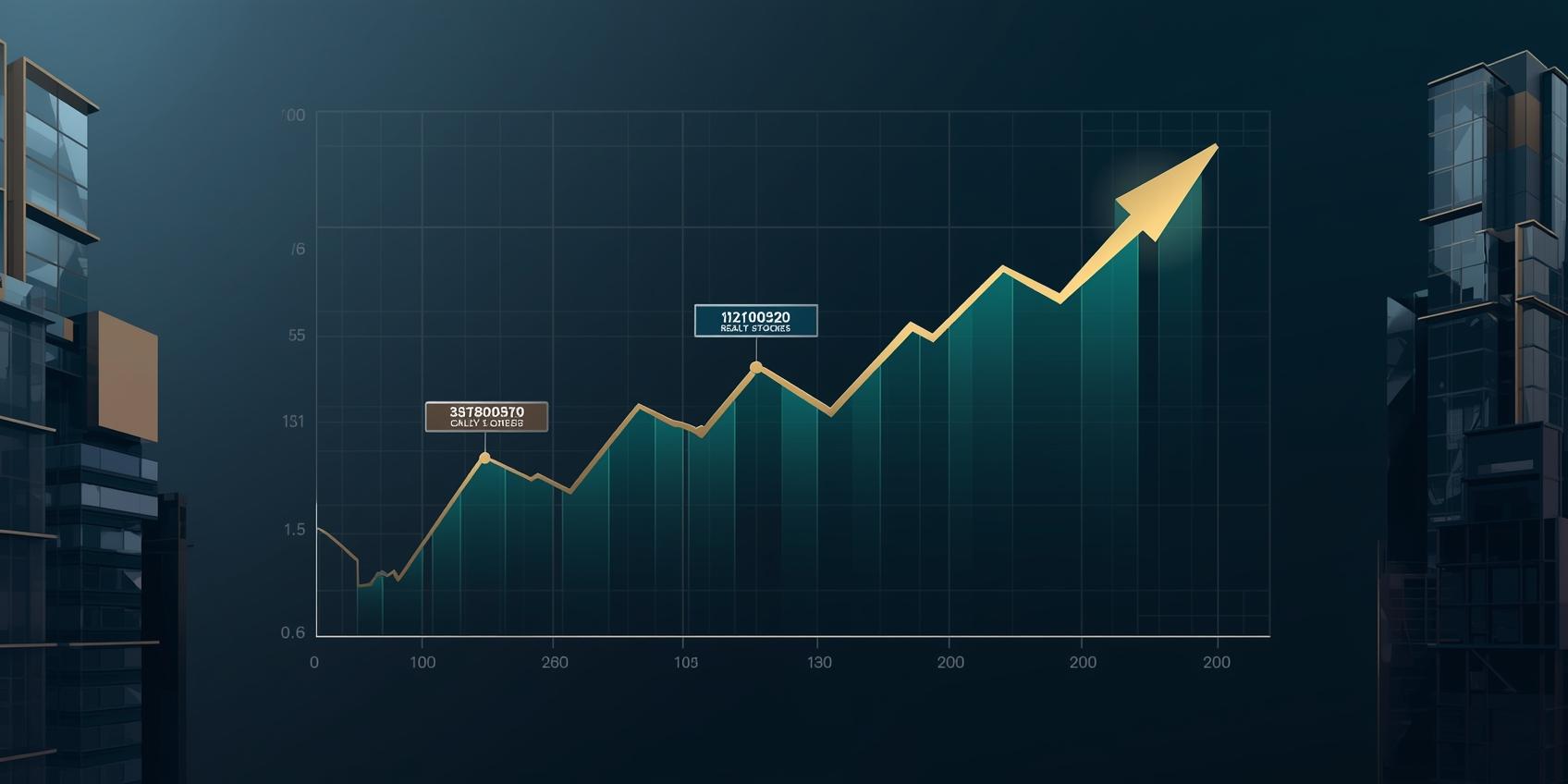

Four sessions. That is how long the Nifty Realty index has been rising — and on Tuesday July 28, that streak is extending with conviction. The index has gained 8.04% over the past four consecutive sessions, powered by a combination of forces that have not aligned this favourably for the sector since the first week of July. Crude oil is easing as West Asia tensions show signs of de-escalation. The US Federal Reserve is now widely expected to cut rates at its next policy meeting after weaker-than-expected jobs data. The Sensex is up 570 points at 78,072 by 12:30 PM. And the Nifty50 is surging 182 points to 24,358 — crossing decisively above the 24,000 mark that had become the battleground of the past two weeks. For the sector that was sitting at a CY26 low of 638.65 in April, navigating a war-induced crude spike to $98.68 in July, and now recovering at 886 with fresh catalysts in play, Tuesday is a session where the direction is clear and the momentum is building.
The Peg: Fed Rate Cut Hopes Have Arrived at the Best Possible Time
The catalyst for Tuesday’s broader market surge is unmistakably American. Weaker-than-expected US jobs data — following June’s shocking 57,000 payroll additions — has reinforced expectations that the Federal Reserve will cut interest rates at its upcoming policy meeting. IT stocks are leading the Nifty50’s advance on hopes of a more accommodative US monetary policy, and global risk appetite has improved sharply. GIFT Nifty had opened 1.17% higher, European markets had closed with strong gains, and the sector rotation from defensives back toward rate-sensitive growth sectors is firmly underway.
For Indian real estate stocks, a Fed rate cut carries a specific and powerful set of implications. A more dovish Fed means lower US Treasury yields, a stronger rupee against the dollar, reduced FII outflow pressure from India, and — most critically — a global signal that the high-interest-rate environment that has weighed on rate-sensitive sectors through 2025 and most of 2026 is finally turning. The last time the Fed cut rates, Indian real estate stocks entered a multi-month bull run. The market is beginning to price in a repeat.
The second catalyst is West Asia. Easing tensions — following what appear to be back-channel communications between Washington and Tehran — drove a sharp decline in crude oil prices last week. The index had fallen to a CY26 low of around 749.65 intraday during the worst of the Iran conflict escalation, and has now recovered to 886.30 — a 18.2% recovery in four sessions. The combination of a easing geopolitical risk and Fed rate cut expectations is the most powerful double-tailwind the sector has seen since the original June 17 peace deal.
How Realty Stocks Are Performing
The Nifty Realty index at 886.30 — up 1.67% at midday on Tuesday — is in the middle of its fourth consecutive positive session. The index has gained 8.04% over that four-session stretch, recovering from the five-session losing streak that had taken it from the 927 level down to the 749–780 range during the worst of the crude oil spike above $98.
Lodha Developers is Tuesday’s standout performer, up 3.25% — its second consecutive session of leading sector gains after a 3.71% advance on Monday July 27. The stock has been the Nifty Realty index’s most actively traded name through this entire CY26 cycle, and its leadership of the current recovery confirms that institutional buying is concentrated in the sector’s presales champion. Lodha’s record Q1 FY27 presales disclosure of ₹5,620 crore — which had provided the fundamental anchor during the July crude oil correction — is now being rewarded as the macro environment improves simultaneously.
Oberoi Realty is up 2.27% on Tuesday, recovering ground after the Three Sixty North Gurugram court restraint order had complicated its trajectory earlier this month. Phoenix Mills has gained 1.92%, DLF has advanced 1.79% — the stock finally showing the kind of conviction buying that its peers had delivered earlier in the recovery — and Aditya Birla Real Estate is up 1.66%. Anant Raj, which had been one of Monday’s standout performers with a 3.08% gain driven by the data centre demerger announcement, has added 1.46% on Tuesday. Godrej Properties is up 1.34%, Brigade Enterprises has gained 0.83%, and Sobha is up 0.66%.
DLF’s 1.79% gain is particularly noteworthy given the stock’s pattern of persistent underperformance through most of July. It had been the index’s most conspicuous laggard through the June-July rally, often gaining 0.01–0.55% on days when its peers surged 2–5%. Tuesday’s 1.79% advance — while not yet spectacular — signals that institutional buyers are returning to the sector’s largest constituent with a degree of conviction that had been absent for weeks.
What Is Working
The Fed rate cut story is the most powerful structural tailwind the sector has received since the original US-Iran peace deal in June. US jobs data continuing to come in weaker than expected — with June’s 57,000 payroll additions the lowest in years — has moved Fed rate cut probability from a distant possibility to a near-certainty for the September meeting. For Indian real estate stocks, that matters in three specific ways.
First, a weaker dollar — which follows from a dovish Fed — strengthens the rupee, reducing India’s crude import bill and improving the RBI’s room for manoeuvre on its own rate decisions. Second, lower US rates reduce the attractiveness of dollar-denominated assets relative to Indian equities, which tends to drive FII flows back toward emerging markets — and Indian real estate has historically been among the first sectors to benefit when FII money returns after a period of sustained outflows. Third, a dovish global rate environment reduces the probability of an RBI rate hike — the scenario that had been most feared by the sector through the July crude oil spike — and increases the probability of a rate cut before the end of FY27.
The West Asia de-escalation, while not confirmed as a formal ceasefire, has materially reduced the fear premium in crude oil. The Nifty option chain for the July 28 expiry shows maximum put OI of 71 lakh contracts at the 24,000 strike — a level the Nifty has now comfortably reclaimed — and maximum call OI of 68.9 lakh contracts at the 25,000 strike, which is the market’s next directional target for the month. A Nifty close above 24,200 today would be technically significant as a confirmation of the recovery’s durability.
The broader market breadth on Tuesday is strong. The BSE 150 MidCap Index shed only 0.05% while the BSE 250 SmallCap Index gained 0.21% — showing that the rally is not purely a large-cap phenomenon. In a market where small and mid-cap indices are holding up even as large-caps advance strongly, realty stocks — which span both segments — benefit from the full spectrum of institutional buying activity.
What Isn’t Working
DLF’s relatively modest 1.79% gain — even on a day when Lodha is up 3.25% — continues to reflect the pattern of underperformance that has characterised the stock through this entire cycle. As the index’s largest constituent at a 19.96% weight, DLF’s inability to match the percentage gains of Lodha, Oberoi Realty, Anant Raj, and Aditya Birla Real Estate means the index is consistently achieving lower returns than its constituent mix would suggest. A genuine sector rerating toward the 52-week high of 1,009.30 will require DLF to lead rather than lag.
Sobha’s 0.66% gain on Tuesday is the weakest performance among the index’s advancing constituents. The stock has been a persistent underperformer through the current recovery — while Lodha leads with 3.25% and Oberoi Realty adds 2.27%, Sobha’s modest 0.66% gain suggests that company-specific concerns may be weighing on the stock independently of the macro tailwinds.
Today is July 28 — the weekly Nifty expiry session. Expiry days carry inherent intraday volatility risks, particularly in the 2:00–3:15 PM window when options sellers square positions near key strikes. The maximum call OI at 25,000 means that any move toward that level through the afternoon will face strong resistance from options writers defending that strike. Traders holding long realty positions into the expiry window should be mindful of potential afternoon volatility.
The West Asia de-escalation narrative, while currently driving positive sentiment, has not yet been confirmed by any formal announcement. The pattern of the past two months — brief diplomatic signals followed by fresh military escalation — means that weekend geopolitical risk remains elevated. Any resumption of US strikes or Iranian retaliation through the coming days could push crude back above $90 and reverse Tuesday’s gains before they can consolidate.
What to Watch Through the Day
The July 28 weekly Nifty expiry is the primary technical event to track. The 24,000 level — where maximum put OI is concentrated — is now below the Nifty’s current trading level of 24,358, meaning it is providing support from below rather than resistance from above. That is a significant shift from the past two weeks, when 24,000 was being contested as a resistance level. The next key level to watch is 24,500 on the Nifty — a clean hold above 24,500 today would set up the market for a test of 25,000, which is the maximum call OI strike and the month’s ultimate directional target.
For the realty sector specifically, watch whether DLF’s 1.79% gain can be sustained and extended through the afternoon session. If DLF closes Tuesday above 1.5%, it would be the stock’s best closing performance in over two weeks — a signal that the stock-specific overhang that had been keeping buyers away is finally lifting.
Watch crude for any sign of renewed escalation. Any Iran or Houthi military headline during Tuesday’s session — ship attack, missile strike, Strait of Hormuz closure threat — would immediately push crude higher and test whether Tuesday’s buyers have conviction or are simply trading momentum.
Any presales update or Q1 FY27 earnings disclosure from Godrej Properties or Prestige Estates — the two major sector names whose quarterly results are most eagerly anticipated after Lodha’s disclosure — would be the week’s most powerful company-specific catalyst. Both stocks are advancing on Tuesday on macro momentum alone; company-specific data would add a durable fundamental dimension to those gains.
Tuesday July 28 is the session where the sector’s recovery from its July crude-shock lows crystallises into something more than a relief rally. Four consecutive sessions of gains, an 8.04% recovery from the lows, Fed rate cut expectations arriving simultaneously with West Asia de-escalation, and a Nifty50 comfortably above 24,000 — the conditions are the best they have been since July 13’s ill-fated peak at 1,009.30. The difference this time is that the macro tailwind is being led by a Fed pivot rather than a fragile peace deal — a more durable foundation for sustained sector recovery.
Also Read: Realty Stocks Open in the Green as Nifty Realty Inches Up; Iran Talks, Crude Ease in Focus