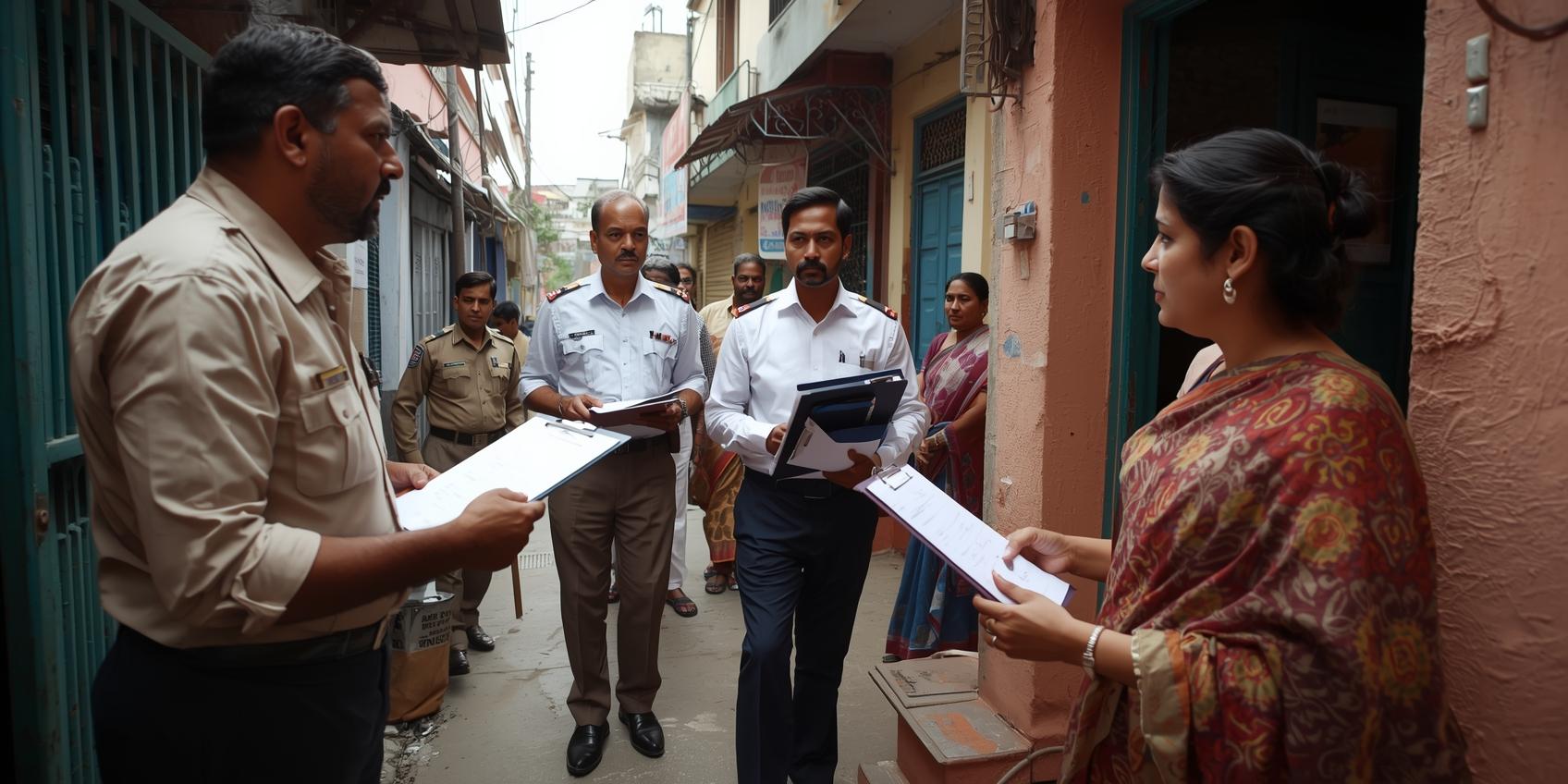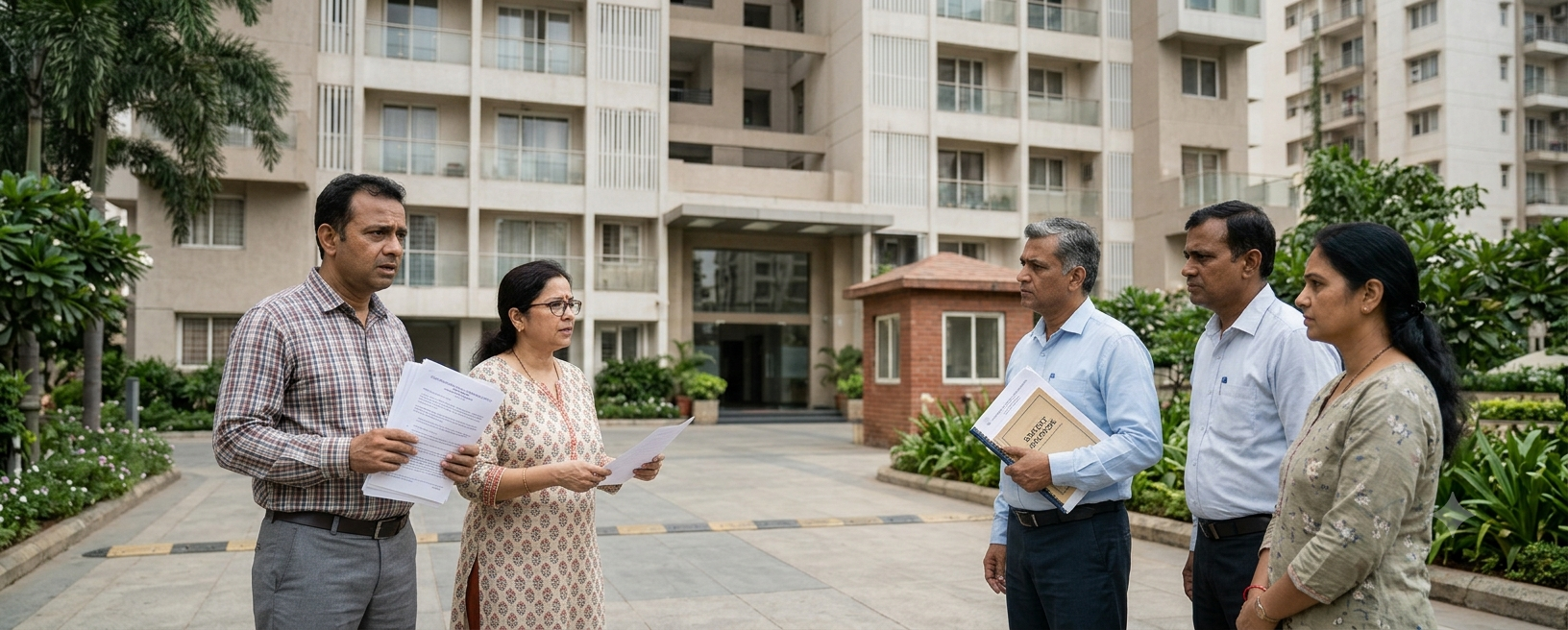
The Maharashtra State Co-operative Appellate Court has upheld a Co-operative Court’s decision allowing two housing society members to pursue multiple grievances in a single legal proceeding, rejecting an objection by three former office-bearers who argued that the claims arose from unrelated incidents. The dispute involves penalties exceeding Rs 5.10 lakh imposed on two flats over alleged political banner displays, as well as allegations of unauthorised construction and misuse of society funds for a security cabin in Goregaon, Mumbai.
The judgment, delivered on October 27, 2026, in Revision Application No. 29 of 2026, clarifies that different causes of action can be combined in one proceeding if doing so does not embarrass, delay or otherwise inconvenience the trial. However, the court has not decided whether the penalties imposed by the society were illegal or whether the former office-bearers were responsible for the alleged unauthorised construction.
What is the dispute about?
The case concerns The Great Eastern Links Co-operative Housing Society Ltd., located at Kanishka The Great Eastern Links, Ram Mandir Road, Goregaon (West), Mumbai.
Two members, Rohan Jayprakash Tiwari and Seema Rohan Tiwari, who own flats C-802 and C-803, approached the Co-operative Court challenging certain actions of the housing society and three individuals who were allegedly involved in decisions taken while serving as its office-bearers.
The members raised two principal grievances.
The first concerned debit notes issued against their flats for allegedly displaying unauthorised political banners on the outer walls of their flats.
The second concerned the construction and subsequent demolition of a security cabin within the society premises, for which the members alleged that society funds had been used.
The members claimed that the actions were part of a pattern of harassment and discrimination against them. They sought to challenge the financial penalties, question the society’s resolution and hold the three individuals accountable for the alleged construction-related expenses.
However, the three individuals objected to these claims being clubbed together in one legal proceeding, arguing that the two incidents were entirely different and should be dealt with separately.
Rs 5.10 lakh in penalties over alleged political banner displays
One of the principal issues in the dispute relates to debit notes issued against flats C-802 and C-803.
According to the original dispute, the society took action over the alleged display of political banners on the outer walls of the flats between May 19, 2022 and April 25, 2024.
The members challenged four debit notes issued by the society.
The debit notes dated October 1, 2022, amounted to Rs 1,28,360 for flat C-802 and Rs 1,26,310 for flat C-803.
Subsequently, two more debit notes dated March 1, 2023, were issued for Rs 1,54,032 against flat C-802 and Rs 1,51,572 against flat C-803.
The combined amount of the four debit notes was Rs 5,10,274.
The members approached the Co-operative Court seeking a declaration that these debit notes were illegal, null and void. They also sought to have the amounts and interest accrued on them set aside.
They further challenged a resolution passed at the society’s Annual General Meeting on October 22, 2023, under which additional maintenance charges were to be levied under Bye-law 169(a).
The members contended that the debit notes could not be treated as valid disciplinary action under the society’s bye-laws without the necessary approval of the General Body.
They also questioned the authority of the three individuals to justify the penalties as decisions taken on behalf of the society.
Importantly, the Appellate Court has not examined the legality of these debit notes on merits. Their validity remains to be decided in the original proceedings.
Security cabin construction and demolition: Members seek recovery of Rs 5.96 lakh
The second grievance concerns a security cabin allegedly constructed within the society premises in January 2024 and subsequently demolished.
The members alleged that the three individuals, who were office-bearers at the relevant time, were responsible for the unauthorised construction.
They further alleged that society funds were utilised for the construction and demolition of the structure, raising questions about the use of members’ money.
In their original dispute, the members sought directions requiring the three individuals to pay Rs 1.76 lakh towards construction and demolition expenses, along with interest at 21% per annum from May 2022.
They also sought Rs 1.50 lakh towards legal and architect expenses, with 21% annual interest from January 2024, and another Rs 2.70 lakh towards the construction cost of the allegedly unauthorised structure, with 21% annual interest from July 2022.
The total principal amount claimed under these three heads was Rs 5.96 lakh.
The members also sought directions requiring the housing society to initiate legal action under its bye-laws against the three individuals for the alleged unauthorised construction within the society premises and on an MMRDA public Development Plan road through the society’s compound wall.
These claims, too, are yet to be adjudicated. The Appellate Court has not determined whether the security cabin was illegal or whether the individuals are liable to reimburse the society.
Why did the three individuals want the disputes separated?
The three individuals approached the Co-operative Court with an application marked Exhibit 10, seeking rejection of the original dispute on the ground of misjoinder of causes of action.
Their argument was that the two grievances had no connection with each other and involved entirely different circumstances.
According to them, the political banner issue concerned the individual conduct of the two members and the disciplinary action taken by the society.
On the other hand, the security cabin issue concerned the administration and governance of the society and allegedly affected all members collectively.
They argued that the two matters involved different transactions, different facts and different periods. There was also no common question of law or fact connecting the two incidents, they contended.
The three individuals further argued that combining the matters would prejudice their defence and create unnecessary complications during the trial.
They therefore sought rejection of the dispute or, alternatively, separation of the two causes of action through separate proceedings.
The members opposed the application, maintaining that the two incidents were connected through their allegations of harassment and discrimination by the society’s office-bearers.
They also argued that the three individuals could not escape responsibility by describing their actions as administrative decisions of the housing society.
March 27, 2026: Co-operative Court rejects the application
The Co-operative Court No. IV, Mumbai, rejected the application filed by the three individuals on March 27, 2026.
The court did not accept their contention that the two causes of action should be separated or that the original dispute should be rejected on the ground of misjoinder.
Aggrieved by this decision, the three individuals approached the Maharashtra State Co-operative Appellate Court by filing Revision Application No. 29 of 2026.
Their principal contention was that the trial court had failed to properly consider the different origins of the two disputes.
They also argued that the trial court should have ordered separate trials or directed the members to choose which cause of action they wanted to pursue in the existing proceedings.
The revision application was presented on June 11, 2026, registered on June 16, 2026, and ultimately decided on October 27, 2026.
What does the law say about combining different causes of action?
The central legal question before the Appellate Court was whether two different causes of action could be combined in one proceeding and under what circumstances a court could order separate trials.
The court examined Order 2 Rules 3 and 6 of the Code of Civil Procedure (CPC).
Order 2 Rule 3 permits a plaintiff to combine several causes of action against the same defendant or the same defendants jointly in one suit.
This means that different grievances do not necessarily have to be pursued through separate legal proceedings merely because they arise from different incidents.
However, Order 2 Rule 6 provides courts with the power to order separate trials where combining causes of action could embarrass or delay the trial or otherwise make the proceedings inconvenient.
The provision gives courts discretion to determine whether the interests of justice would be better served by hearing the claims together or separately.
In this case, the Appellate Court examined whether the three individuals had established that allowing the two grievances to proceed together would actually create such difficulties.
Supreme Court’s Prem Lala Nahata judgment considered
The three individuals relied upon the Supreme Court’s judgment in Prem Lala Nahata and another versus Chandi Prasad Sikaria, reported in (2007) 2 SCC 551.
In that judgment, the Supreme Court explained that courts have wide discretionary powers to regulate proceedings where multiple causes of action or parties are joined.
If such joinder creates difficulties, courts can order separate trials, exclude certain causes of action or direct the plaintiff to elect which claims should proceed.
However, the Supreme Court also clarified that a proceeding involving improperly joined causes of action is not automatically barred by law.
The primary consideration is whether the manner in which the claims are combined affects the convenience and fairness of the trial.
The Appellate Court found that the three individuals had failed to demonstrate how combining the two grievances in the present case would embarrass, delay or otherwise inconvenience the proceedings.
Consequently, the precedent did not support their demand for separation of the claims.
Dhodha House judgment: Different causes of action can be combined
The Appellate Court also referred to the Supreme Court’s judgment in Dhodha House versus S.K. Maingi, reported in (2006) 9 SCC 41.
The judgment explains that Order 2 Rule 3 permits multiple causes of action to be combined in one suit, even when they do not necessarily have a direct connection with each other.
However, the court also clarified that combining causes of action does not automatically confer jurisdiction on a court that otherwise has no authority to decide a particular matter.
Applying these principles, the Appellate Court found that the grievances raised by the members could be heard together.
It observed that the original dispute involved allegations against the society and individuals who had allegedly taken decisions in their capacity as office-bearers.
The court also noted that separating the claims could lead to unnecessary multiplicity of proceedings between the same parties.
Appellate Court finds no reason to interfere with the trial court’s order
After examining the pleadings, arguments and judicial precedents cited by both sides, the Appellate Court concluded that the trial court had exercised its discretion properly.
It observed that the three individuals had not produced sufficient material to establish that combining the two causes of action would prejudice the trial.
The court agreed with the trial court’s view that the relationship between the parties, the nature of the dispute and the reliefs sought did not make separate trials necessary.
It also observed that the parties fell within the categories contemplated under Section 91 of the Maharashtra Co-operative Societies Act and that the subject matter concerned the business and management of the housing society.
Therefore, the Co-operative Court had jurisdiction to hear and decide the dispute.
Finding no illegality or jurisdictional error in the March 27, 2026 order, the Appellate Court declined to interfere.
On October 27, 2026, Member-2 A. S. Wanve rejected Revision Application No. 29 of 2026 with costs.
What does the judgment mean for housing society members?
The judgment offers an important procedural clarification for members dealing with disputes involving housing societies and their office-bearers.
Housing society disputes often involve multiple grievances, including maintenance charges, penalties, decisions taken by managing committees, alleged misuse of common funds and unauthorised construction.
Members may sometimes have to question several decisions taken by the same office-bearers or society authorities.
This judgment indicates that different causes of action can be combined in one proceeding where the legal requirements are satisfied. The mere fact that the incidents are different does not automatically justify separate proceedings.
However, this does not mean that members can combine every grievance into one case without restriction. Courts retain the discretion to order separate trials if the combined proceedings create embarrassment, delay or inconvenience.
For managing committees and office-bearers, the case also highlights that decisions taken in the administration of a society can be questioned before the appropriate forum. Allegations concerning the use of society funds, construction expenses and penalties imposed on members may require judicial examination.
Crucially, the judgment does not declare the Rs 5.10 lakh penalties illegal, nor does it establish that the former office-bearers are liable for the security cabin expenses. Those substantive issues remain to be decided by the Co-operative Court.
The immediate outcome is that the two members can continue pursuing both sets of grievances in the same legal proceeding rather than being forced to litigate them separately.
Also Read: Co-op Court Can’t Blacklist PMC in Redevelopment Dispute, Appellate Court Rules