India has emerged as the world’s second-largest green building market, with more than 20,620 registered projects covering 16.55 billion sq ft, as the country steps up efforts to make its real estate and infrastructure sectors more sustainable. The Indian Green Building Council (IGBC) says its green building movement has reached a significant milestone after 25 years, with its next focus shifting towards Net Zero buildings, climate-resilient cities and sustainable urban development.
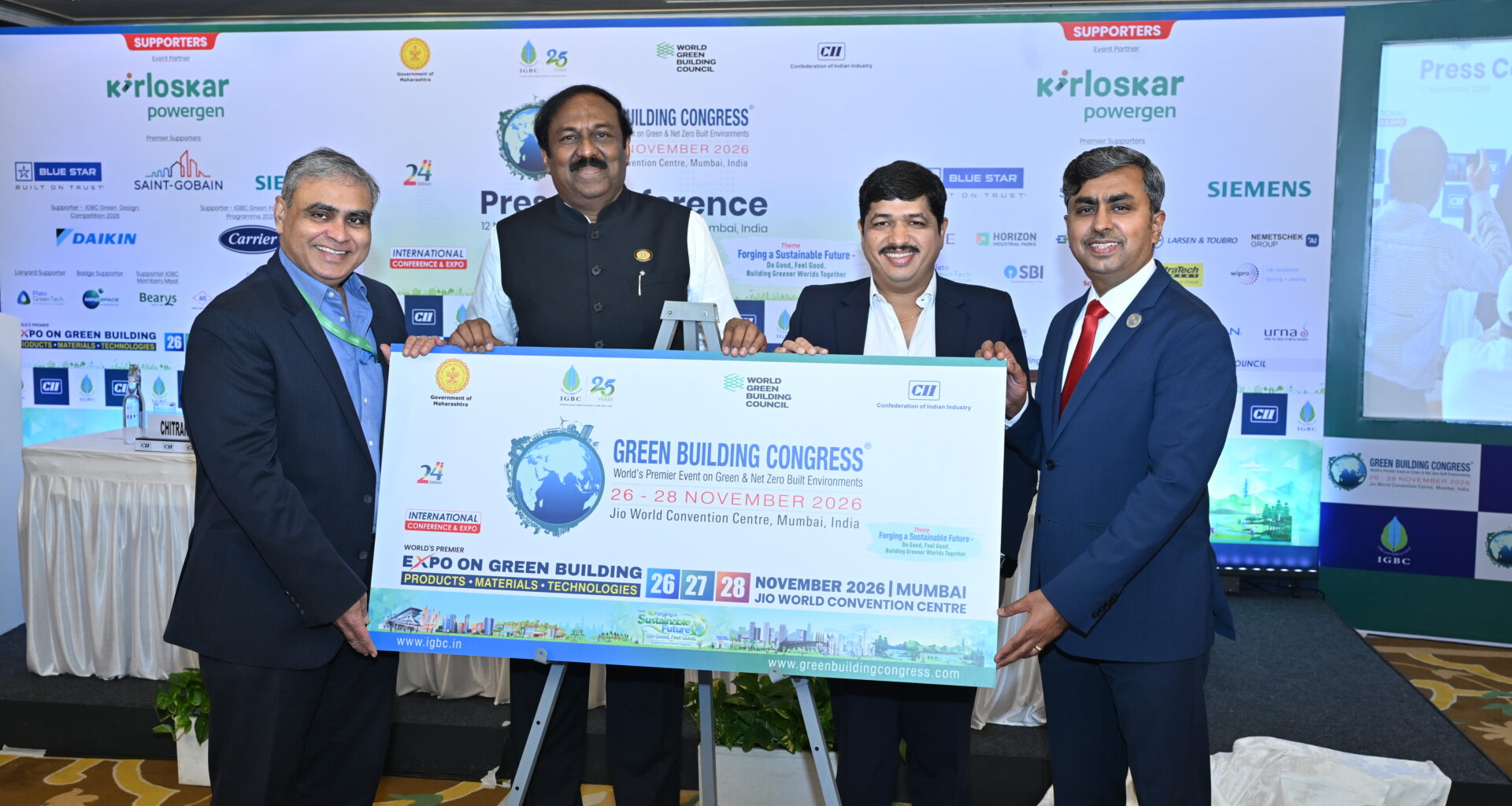
The Confederation of Indian Industry (CII)–IGBC will organise the 24th Green Building Congress 2026 at Mumbai’s Jio World Convention Centre from November 26 to 28. The three-day international event is expected to attract more than 3,000 delegates, 10,000 business visitors, over 150 thought leaders and more than 100 institutional and industry partners.
The development assumes significance for India’s real estate sector, which is witnessing rapid urbanisation, rising housing demand and increasing pressure on energy, water and other natural resources. The challenge now is to ensure that the country’s expanding building stock does not add further pressure on the environment and urban infrastructure.
25 Years of India’s Green Building Movement
Established by CII in 2001, IGBC has played a significant role in promoting sustainable construction across residential, commercial, industrial, institutional and infrastructure projects.
Over the past 25 years, the council has developed 33 Green and Net Zero rating systems covering different categories of buildings and infrastructure. These frameworks are intended to encourage resource efficiency, reduce environmental impact and create healthier indoor environments.
According to IGBC, India currently has more than 20,620 registered green building projects spread across 16.55 billion sq ft, making it the world’s second-largest green building market.
However, the growing number of registered projects is only one part of the sustainability transition. The larger question is how effectively these buildings reduce electricity consumption, conserve water, manage waste and lower carbon emissions throughout their operational life.
IGBC National Chairman C Shekar Reddy said the green building movement had evolved from an emerging concept into a nationwide transformation.
He highlighted that IGBC-rated buildings are estimated to save approximately 64 billion units of electricity and 199 billion litres of water, while avoiding around 53 million tonnes of carbon dioxide emissions annually.
These figures indicate the potential impact of sustainable construction when implemented at scale.
For homebuyers, this transition could also have direct financial implications. Buildings designed to consume less electricity and water can help reduce recurring household expenses. However, the actual savings would depend on the building’s design, technology, maintenance and operational performance.
350 Organisations Commit to Net Zero Buildings
One of the key focus areas of the 2026 Congress will be India’s transition towards Net Zero buildings and climate-resilient cities.
IGBC launched its Mission on Net Zero in 2021, focusing on four major areas:
- Net Zero Energy: Reducing energy consumption and meeting remaining requirements through renewable energy.
- Net Zero Water: Improving water efficiency, conservation, reuse and recycling.
- Net Zero Waste: Minimising waste generation and encouraging recycling and responsible disposal.
- Net Zero Carbon: Reducing carbon emissions associated with buildings and their operations.
According to IGBC, more than 350 organisations in the building sector have committed to achieving Net Zero status for their new and existing buildings.
This is an important development because the sustainability challenge is not limited to buildings that are yet to be constructed. India’s existing building stock also needs substantial improvements in energy efficiency, water management, cooling systems and waste disposal.
The Congress will discuss renewable energy integration, energy-efficient building designs, sustainable construction materials, circular economy practices and lifecycle carbon reduction.
It will also examine how advanced cooling systems and smart energy management can reduce electricity demand.
This is particularly relevant for Indian cities, where rising temperatures and increasing dependence on air conditioning are adding to electricity requirements.
Why Net Zero Buildings Matter for Homebuyers
The transition towards green buildings is not merely an environmental issue. It also has implications for the cost of owning and maintaining a property.
Electricity and water expenses form part of the recurring costs of living in a residential complex. Buildings that incorporate energy-efficient lighting, better ventilation, water recycling, rainwater harvesting and renewable energy systems can potentially reduce these expenses.
However, there is an important distinction between a building being marketed as environmentally friendly and one that actually delivers measurable sustainability benefits.
Homebuyers need to understand whether green features are integrated into the building’s design, whether they are operational and whether the housing society has the resources to maintain them.
For instance, installing a rainwater harvesting system does not automatically guarantee water security. Its effectiveness depends on proper design, maintenance, rainfall patterns and storage capacity.
Similarly, solar installations and energy-efficient equipment need to be maintained to deliver their intended benefits.
As green building practices become more mainstream, the focus will increasingly need to shift from certification at the construction stage to actual performance after occupation.
Green Finance Could Make Sustainable Housing More Affordable
Another major focus of the Green Building Congress 2026 will be the role of financial institutions in accelerating the adoption of sustainable buildings.
Although green buildings can deliver long-term savings through lower electricity and water consumption, the initial investment required for certain technologies and construction practices can be higher.
IGBC believes that access to affordable finance will be important in encouraging developers, businesses and homebuyers to adopt sustainable solutions.
The Congress will explore several financing mechanisms, including:
- Preferential interest rates for certified green building projects.
- Green home loans.
- Green mortgages.
- Green bonds.
- ESG-linked investments.
- Financial incentives for sustainable infrastructure.
The objective is to bridge the gap between the initial cost of adopting green technologies and the long-term savings they can generate.
For the housing market, green home loans and preferential financing could potentially make sustainable homes more attractive to buyers, provided financial institutions translate these proposals into meaningful lending benefits.
The initiative could also create business opportunities for manufacturers of energy-efficient equipment, green construction materials, renewable energy systems, smart building technologies and low-carbon construction solutions.
However, the actual impact on homebuyers will depend on the availability, eligibility criteria and extent of financial benefits offered by lenders.
Mumbai and Maharashtra’s Role in Sustainable Urban Development
The decision to host the Congress in Mumbai highlights Maharashtra’s role in India’s green building movement.
The Government of Maharashtra is a partner in the event and is encouraging stakeholders across government, industry and the wider built-environment ecosystem to adopt sustainable development practices.
For Mumbai, the issue is particularly important.
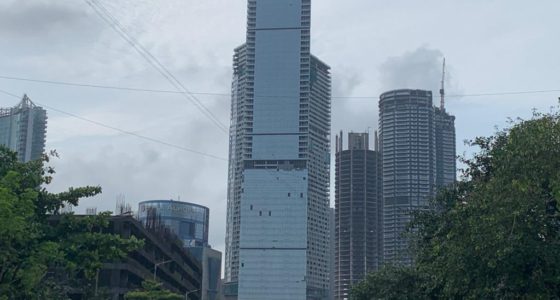
The city is witnessing significant investments in residential and commercial real estate, transport infrastructure and redevelopment projects. At the same time, it faces challenges relating to urban heat, water security, waste management, rising electricity consumption and climate resilience.
The next phase of urban development will therefore need to address sustainability not only in new buildings but also in existing structures and public infrastructure.
This includes retrofitting older buildings, improving the energy performance of metro infrastructure and railway stations, and adopting sustainable practices in healthcare facilities and public buildings.
IGBC Mumbai Chapter Chairman Chitranjan Kaushik said Mumbai and Maharashtra were well positioned to lead India’s transition towards sustainable urban development.
He emphasised that investments in housing, transport and public infrastructure offered an opportunity to incorporate sustainability into development decisions and accelerate the green retrofitting of existing buildings.
IGBC Mumbai Chapter Co-Chair Prashant Khandelwal also highlighted that green buildings could help Mumbai and Maharashtra improve resource efficiency, reduce operating costs and strengthen resilience against climate risks.
AI, Smart Technologies and Advanced Cooling to Shape Future Buildings
Technology is expected to play an increasingly important role in improving building performance.
IGBC Executive Director M Anand said the future of sustainable development would be defined by Net Zero performance, climate resilience and healthier indoor environments.
He highlighted the importance of technologies such as artificial intelligence, Internet of Things-enabled monitoring, smart building management systems, advanced cooling technologies and low-carbon construction materials.
These technologies can help building operators monitor electricity and water consumption, identify inefficiencies and manage resources more effectively.
For example, smart building management systems can regulate lighting, ventilation and air conditioning based on occupancy and actual requirements rather than operating at fixed levels throughout the day.
Similarly, IoT-enabled monitoring can help identify unusual water consumption and potential leakages.
However, the adoption of such technologies will also require investment, technical expertise and regular maintenance. Their effectiveness will ultimately depend on whether developers and building operators use them to improve actual performance rather than simply treating them as additional features.
Green Building Congress 2026 to Bring Together 3,000 Delegates
The three-day Green Building Congress 2026 will feature an international conference and Green Building Expo, bringing together Indian and international companies, policymakers, developers, financial institutions and technology providers.
The programme will include technical sessions, expert discussions, product launches, business-to-business meetings and international knowledge-sharing opportunities.
The event will also host the IGBC Project Awards 2026 and IGBC Leadership Awards 2026 to recognise achievements in sustainable building practices.
Other initiatives will include the IGBC Green Design Competition, Performance Challenge for Green Built Environment, Green Your School Programme and Green Education Conclave.
The Bigger Challenge: Moving Beyond Green Building Certifications
India’s achievement of registering more than 20,620 green building projects across 16.55 billion sq ft demonstrates the scale of the country’s sustainability movement.
But the next phase will require more than increasing the number of registered projects.
The real challenge will be ensuring that sustainability translates into measurable improvements in electricity consumption, water conservation, waste management and carbon emissions.
For India’s real estate sector, this means incorporating green practices into the entire lifecycle of a building, from planning and construction to occupation, maintenance and eventual redevelopment.
It also means making sustainable housing financially accessible rather than allowing green features to remain limited to premium developments.
As the country continues to expand its housing stock and urban infrastructure, the decisions taken today will influence energy demand, household expenses and the environmental sustainability of its cities for decades.
The 24th Green Building Congress, scheduled in Mumbai from November 26 to 28, will seek to bring together the stakeholders required to accelerate this transition.