
In a landmark ruling that underscores the rights of flat buyers in Mumbai’s high-stakes real estate landscape, the Bombay High Court on Tuesday partially granted an injunction to residents of the iconic ‘The Imperial’ skyscrapers, curbing developers’ ambitious expansion plans in a decades-old slum rehabilitation project. Justice Sandeep V. Marne’s 170-page order in Rajkumar Gulati & Ors. vs. S.D. Corporation Private Ltd. & Ors. (Interim Application No. 25478 of 2025) balances urban renewal goals with consumer protections under the Maharashtra Ownership Flats Act (MOFA), 1963, while allowing limited construction to proceed.
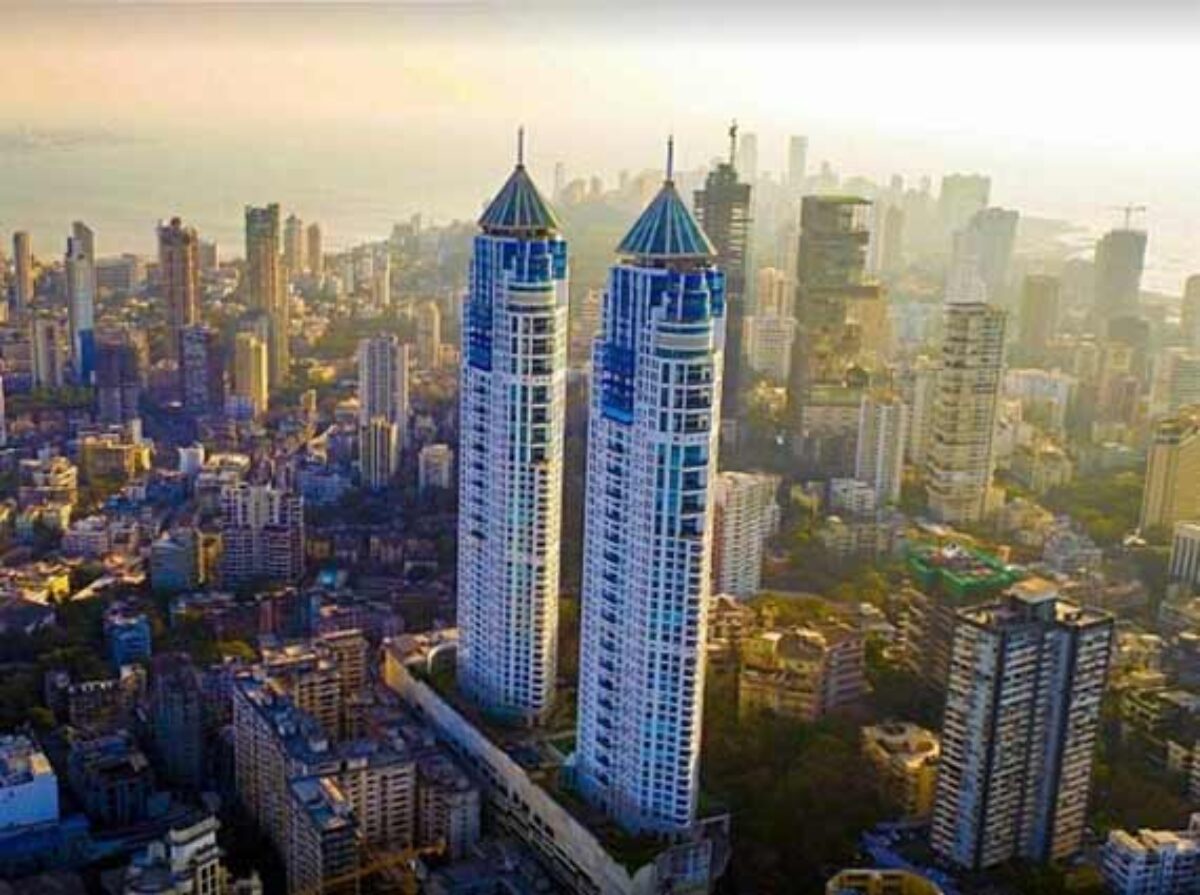
The verdict comes amid escalating tensions between affluent homeowners in South Mumbai’s twin towers – once India’s tallest residential buildings – and developers accused of exploiting regulatory loopholes to balloon the project’s scale. The Imperial, a pair of 60-storey luxury towers completed between 2009 and 2014, stands on a 5.4-hectare plot in Tardeo that was once encroached by slums. What began as a triple-tower vision under a Slum Rehabilitation Scheme (SRS) has morphed into a sprawling complex, prompting 48 flat owners to sue for injunctions against further builds.
The Backstory: From Slum Clearance to Sky-High Profits
The saga traces back to 1989, when the Maharashtra government earmarked part of a police-acquired plot (Cadastral Survey No. 725) for slum rehabilitation, blending social welfare with private incentives. Under Development Control Regulations (DCR) 33(10), developer S.D. Corporation Pvt. Ltd. (Defendant No. 1) was tasked with building free tenements for 3,353 eligible slum dwellers from three societies – Nav Maharashtra Nagar Sahakari Griha Nirman Sanstha Ltd., New Jaiphalwadi CHS Ltd., and Janata Hill CHS Ltd. – in exchange for “free-sale” rights to market luxury flats.
The project kicked off in 1999 with a Letter of Intent (LOI) from the Slum Rehabilitation Authority (SRA). By 2005, an LOI sanctioned a Floor Space Index (FSI) of 2.227, yielding 88,003 sq. mtrs. of saleable built-up area (BUA) across three towers (A, B, and C). Towers A and B – ultra-luxury homes fetching crores – were built using 49,422 sq. mtrs. of this quota, with partial occupancy in 2009 and full in 2014.
Enter the twists: In 2009, S.D. Corporation clubbed the Tardeo scheme with a Wadala project, hiking FSI to 2.996 and sale BUA to 88,003 sq. mtrs. (boosted by shifting rehab obligations to Wadala). A fourth tower, ‘Imperial Edge’ (G+49 floors, 7,145 sq. mtrs. sale BUA), snuck in by 2020 on rehab land, without protest from Tower A/B owners – who now claim it fulfilled the “third tower” disclosure.
Fast-forward to 2024: Leveraging a 2016 notification raising rehab density to 650 tenements/hectare and DCPR 2034’s fungible FSI perks, developers secured a May 2024 LOI for FSI 4.21 – exploding sale BUA to 191,626 sq. mtrs. (including 34,736 sq. mtrs. swapped from Wadala). A July 2024 layout plan greenlit Wings C/C-1 (attached to A/B podiums), a 9-floor ‘Townhouse’ (Wing D), 10 extra flats in A/B towers, podium extensions, and Club House upgrades – totaling over twice the 2009 disclosure.
Residents, via The Imperial Condominium (formed 2012 under Maharashtra Apartment Ownership Act), cried foul. RTI queries revealed the stealth revisions. By November 2024’s AGM, fury boiled over delays in land conveyance (mandated under MOFA Section 11 and Slum Act Section 15A). A April 2025 demand letter went unanswered, leading to the suit filed in 2025, seeking MOFA enforcement, society formation, conveyance, and Rs. 500 crore damages for “prolonged deprivation.”
Developers countered: MOFA inapplicable (citing MHADA land ownership and slum scheme exemptions); impossible disclosures in fluid SRS; and consents via possession letters. They argued primacy of Slum Act rehabilitation over flat-buyer rights.
The Court’s Verdict: Partial Victory for Residents, Guardrails for Growth
Justice Marne’s nuanced order – reserved October 17, pronounced November 11 – dissects MOFA’s interplay with Slum Act, rejecting developers’ “exclusion” pleas while capping excesses.
Key Holdings:
- MOFA Applies Fully: Dismissing MHADA vesting claims (lacking lease proof), the court ruled MOFA binds private developers on MHADA/SRA land, barring absurd loopholes for redevelopments. Slum schemes don’t exempt disclosure rigors under Sections 3/4/7/7A; vesting of unused FSI in societies is inapplicable here.
- Disclosure Frozen at 2009: The July 2009 layout (last to owners) caps “said property” (19,944 sq. mtrs. for Towers A/B/C) at 38,582 sq. mtrs. sale BUA for Tower C – 80% of A/B’s scale. Excess (96,477 sq. mtrs.) must yield TDR or shift to Wadala; no “Imperial Edge” deduction, as it’s outside “said property.”
- No Additions to Existing Towers: Injunction bars podium/refugee alterations without condominium consent (developers pledged compliance). Club House status quo holds; receiver denied.
- Townhouse OK, But Isolated: Wing D buildable outside “said property,” but not attachable to podiums – avoiding Section 7 “addition” violations.
- No Delay Bar: Suit timely post-RTI revelations; Imperial Edge unchallenged as external.
The order rebukes developers for 26-year delays milking FSI hikes (from 2.227 to 4.21), terming it a “bonanza” from self-inflicted limbo. Yet, it nods to SRS ethos: Tower C proceeds (with buyer warnings of suit risks), preserving rehab incentives.
This ruling ripples beyond Tardeo: Mumbai’s 40% slum populace fuels SRS, unlocking prime land for luxury sales. Courts increasingly tether “incentives” to disclosures, potentially reshaping 100+ stalled schemes. As The Imperial’s spires pierce Mumbai’s skyline, Justice Marne’s scalpel ensures growth doesn’t eclipse buyer trust.
Also Read: Bombay High Court Shocker: Builder Can’t Form Two Societies in One Building