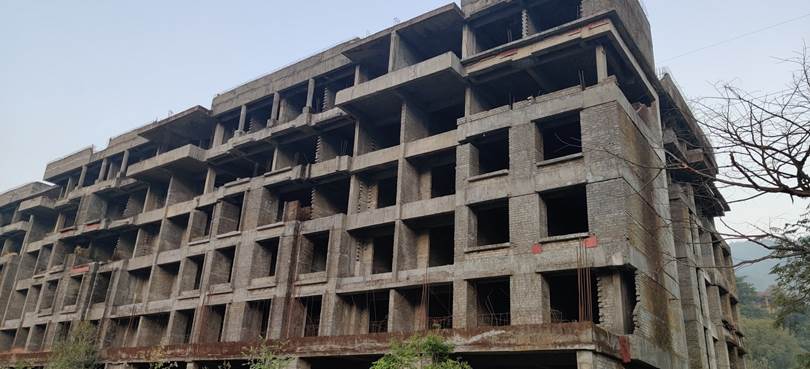
In a scathing indictment of the Municipal Corporation of Greater Mumbai (BMC), the Bombay High Court has struck down demolition notices issued to six long-standing chawl tenants in Mulund (East), holding that the civic body’s action was a “malafide and colourable exercise of power”, apparently undertaken “at the behest of interested parties” when redevelopment of the property was on the anvil.
Allowing six Appeals From Order (Nos. 333 to 338 of 2025), Justice Milind N. Jadhav quashed the statutory notices issued under Section 53 of the Maharashtra Regional and Town Planning Act, 1966, and granted complete protection to the tenants against any coercive action.
Case background: 60-year-old chawl declared ‘unauthorised’ overnight
The dispute concerns Rakhmabai Mhatre Chawl, located at Mithanagar, Mulund (East), where the appellants—each occupying residential rooms measuring between 100 and 200 sq ft—have been residing for decades.
The chawl was constructed by the Mhatre family in the late 1950s, and in 2013, the larger property was sold through a registered conveyance deed to a developer firm. Crucially, the deed explicitly recorded and attorned the tenancy of all existing occupants, including the six appellants, to the new owner.
Despite this, in March 2025, BMC suddenly issued identical demolition notices, branding the tenants’ rooms as “unauthorised constructions”.
Court: Notices vague, mechanical and legally incoherent
The High Court found the notices to be hopelessly vague, observing that they failed to specify:
- what construction was unauthorised,
- when it was allegedly carried out, or
- how it violated sanctioned plans.
The Court noted that the notices were typed, format-based notices, declaring entire residential rooms unauthorised without any inspection, survey, or particulars.
In a sharp observation, the Court said the notices were “completely incongruous”, as they simultaneously:
- alleged total unauthorised construction, and
- asked tenants to apply for regularisation.
“This stand of the Corporation is clearly unsustainable in law,” the Court held.
Decades of official recognition ignored
The tenants placed overwhelming documentary evidence on record, including:
- ration cards from the 1980s,
- electoral rolls from 1983–85,
- electricity and water bills since the 1980s and 1990s,
- property tax assessments collected by BMC for over 40 years.
The Court took serious note of the fact that BMC had assessed and collected property taxes for decades, only to suddenly declare the same structures illegal in 2025.
“This action, issued for the first time in the year 2025 after the Corporation has assessed the said rooms for taxes and collected them for the past four decades, is clearly a colourable exercise of power,” the Court said.
Redevelopment trigger and ‘interested parties’
One of the most damning aspects of the judgment is the Court’s clear linkage between the civic action and redevelopment interests.
Justice Jadhav observed:
“Nothing prevented the Corporation from exercising its rights on the entire Rakhmabai Mhatre Chawl since the year 1958–1959… It is only now that redevelopment is on the anvil and considering the prices of real estate in the city of Mumbai that such impugned action is taken.”
The Court went on to record:
“Prima facie the impugned action seems to be at the behest of interested parties which cannot be ruled out on the face of record.”
Though the Court stopped short of explicitly naming the developer, it left little doubt that the action disproportionately benefited the landlord/developer by attempting to strip chawl tenants of their legal status ahead of redevelopment.
Tenancy formally recognised in registered conveyance
The High Court placed significant reliance on the 2013 registered deed of conveyance, which not only transferred ownership but also attorned tenancy rights of all occupants to the new landlord.
The judgment records:
“Once the tenancy of the tenants has been attorned to the new landlord, the impugned action of the Corporation on the face of record appears to be malafide.”
It further held that chawl tenants cannot be treated differently from tenants residing in the main building on the same property.
“Double standards cannot be applied,” the Court ruled.
Court refuses remand, grants full protection
Departing from routine procedure, the High Court refused to remand the matter back to the trial court, holding that doing so would subject the tenants to “another round of ignominy”.
Calling the facts “strong and overwhelming”, the Court:
- quashed the demolition notices and speaking orders,
- set aside the trial court’s refusal of protection, and
- directed that no coercive action whatsoever be taken against the tenants until final disposal of their suits.
“The structures of the Plaintiffs stand fully protected,” the Court ordered.
Why this judgment matters
This ruling sends a strong message that municipal powers cannot be weaponised to serve private redevelopment agendas, especially at the cost of long-standing tenants.
By branding BMC’s action as malafide, colourable, and apparently driven by interested parties, the Bombay High Court has reaffirmed that administrative authority must act fairly, independently, and in accordance with law—not as an enabler for real estate interests.