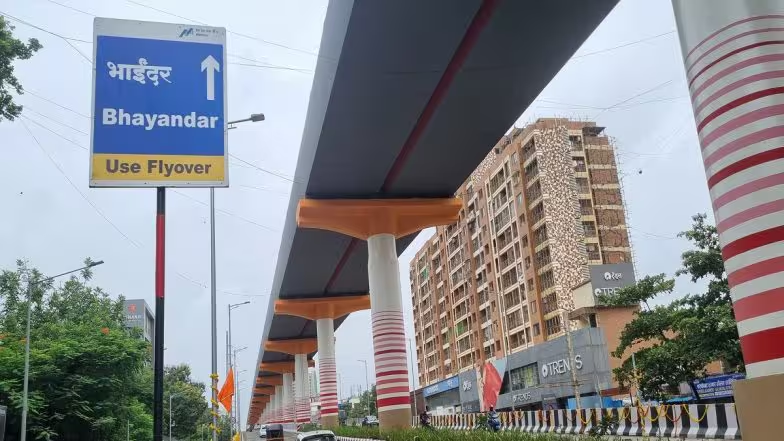

Mumbai, March 8, 2025: The Mumbai Metropolitan Region Development Authority (MMRDA) has inaugurated a double-decker flyover in Mira Bhayander, a major infrastructure project aimed at reducing congestion and improving urban mobility. The flyover, which is part of Metro Line-9, extends from Sai Baba Nagar Metro Station near S.K. Stone Junction to Shivar Garden.
The project was inaugurated by Deputy Chief Minister Eknath Shinde, with Transport Minister Pratap Sarnaik and officials from Maha Metro and the Mira Bhayander Municipal Corporation (MBMC) in attendance. The flyover has been constructed using a shared pier structure, integrating metro and road transport infrastructure on the same pillars for the first time.
Key Features of the Flyover:
- Total length: 850 meters
- Shared piers with Metro Line-9: 21
- Up ramp length: 122.6 meters
- Down ramp length: 153 meters
- Carriageway width: 17 meters, providing 2+2 lanes for smooth traffic movement
Traffic and Connectivity Impact
The flyover is expected to ease congestion at three major traffic bottlenecks—S.K. Stone Junction, Kanakia Junction, and Shivar Garden Junction. It aims to reduce travel time, improve traffic flow, and decrease fuel consumption, contributing to a more sustainable urban transport system.
The project is part of MMRDA’s broader Metro Line-9 initiative, which includes three flyovers designed to improve connectivity:
- Flyover 1 (Pleasant Park to Silver Park Signal) – Operational since August 2024
- Flyover 2 (Inaugurated today)
- Flyover 3 (Expected completion by August 2025)
Engineering and Safety Features
The flyover incorporates several safety and efficiency measures, including:
- Reinforced concrete anti-crash barriers for vehicle protection
- Reflective signage, lane markings, and speed limit indicators for smooth navigation
- An advanced drainage system to prevent water accumulation
- Rumble strips and speed breakers at ramps to regulate vehicle speed
- Light poles at 25-meter intervals to ensure better visibility for night travel
Urban Mobility and Future Plans
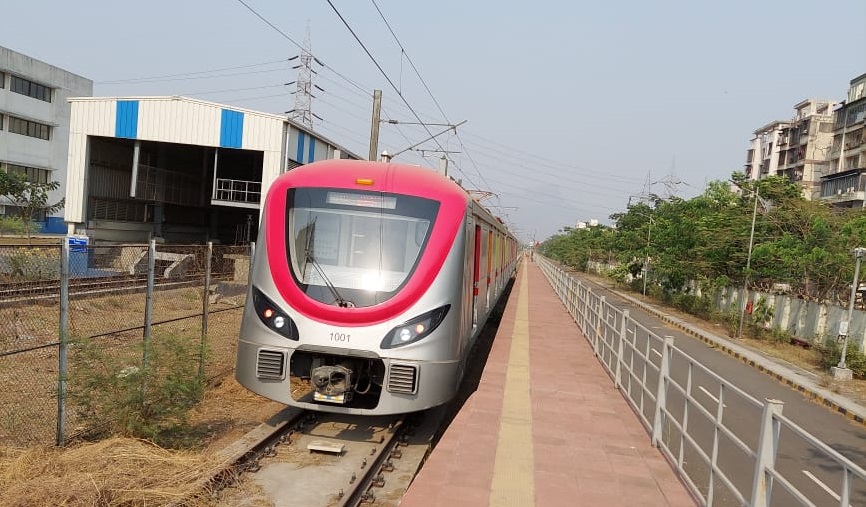
The integration of road and metro infrastructure is expected to enhance connectivity for Mira Bhayander’s growing population. With metro services set to begin on the second deck of the structure, the area is likely to witness further development in urban transport solutions.
Officials from MMRDA emphasized that this project represents a forward-looking approach to infrastructure development, balancing efficiency, sustainability, and advanced engineering. The flyover is expected to serve as a model for similar projects in other rapidly urbanizing areas.
The completion of this double-decker flyover marks a significant milestone in Mumbai’s infrastructure development, addressing long-standing traffic issues while supporting integrated and efficient transport solutions.
Also Read: Delhi infrastructure projects