
By Dr. Vikram Mehta
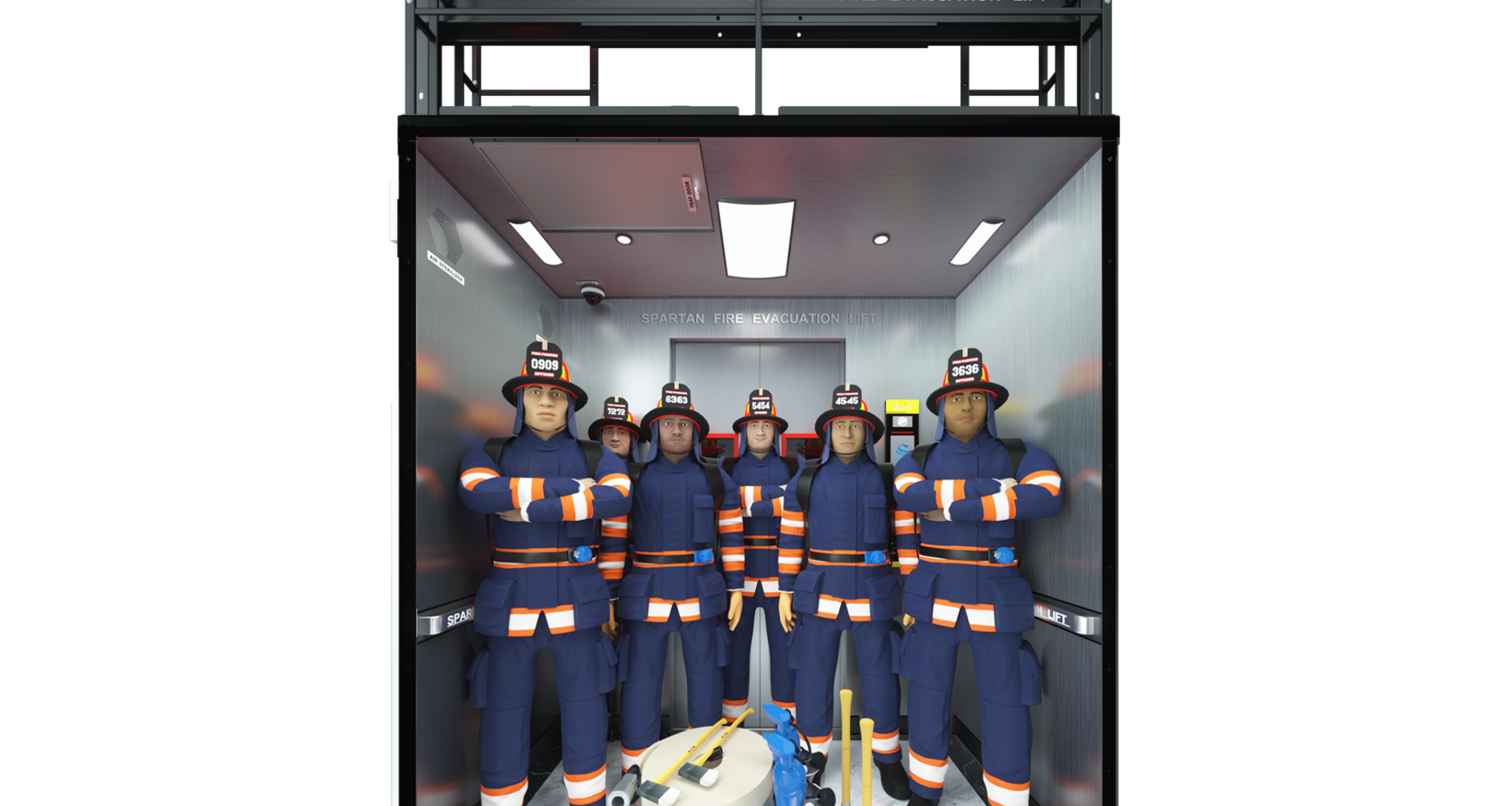
The Indian elevator market is expected at 50,000-55,000 units yearly & an installed base of a quarter of a million. It is valued at about Rs 10,000 crore. It is expected to grow more in the coming years. With increasing demand comes the need for guidelines. While the trend is changing the cityscape and making it more impressive, it also brings with it share challenges, which include the failure of the fire lifts during fire accidents in high-rise buildings. It is evident that during fire accidents, evacuation in multi-storey buildings is the main challenge. To control such situations, the most recent launch in the elevator space was Fire Evacuation Lift. A fire evacuation lift is designed to meet the demands of a rescue mission and complete it in record time.
The fire evacuation lift is called by many names like vertical fire brigade and PPE (public protective equipment). The fire Evacuation Lift is an elevator that reaches higher floors faster, making it convenient for the fire brigade team to douse the fire on time and save people’s lives and assets.
The Fire Evacuation Lift is designed with well-advanced technologies like IoT (Internet of things), so when a fire breaks out in the building, a mass notification will be sent to the building tenants, fire safety system team/security team, lift operator, and the nearest fire brigade office. Also, users and OEMs shall be able to access real-time data like total operating hours, day-wise operating hours, fault history, etc.
It is designed as per fire lift standards; the cabin is made of non-combustible material, and all side-enclosed panels are filled with ceramic wool for a 2 hr. fire rating. A trap door is provided on the roof for the emergency exit, whereas the ordinary fire lifts have no provision for a trap door, and no vision panel is included. Most importantly in such life-threatening situations, a person standing on any floor can communicate with the lift operator because of its two-way communication system. The notable part is the fire evacuation lift has 30 minutes battery backup in case of power failure, unlike other ordinary fire lifts.
The fire Evacuation Lift is designed with well-advanced technologies. It has a two-way communication system, auto-functional fire alarm, auto-functional fire emergency message, customized automatic doors, and is equipped with IoT. The lift has a high-efficiency Gearless traction machine that reduces energy consumption.
Apart from exhibiting efficiency at a high level, the fire evacuation lift can also be customized to match the design of an existing or new high-rise building. In almost 3 minutes Fire Evacuation Lift could evacuate 10-18 people, and ERT could reach the 40th floor in a minute to douse the Fire and save lives and assets. It has a base visual option- a screen on G Floor for firemen to see floor-wise images & also the cabin. Thus, serving in saving Occupants’ Lives, Assets & Assisting Firemen in Timely Fire Fighting & Evacuation; the golden period plan is to install Fire Evacuation Lift as per Maharashtra’s Energy Department circular in every high-rise building.
The builders and developers have to install fire evacuation lifts in new high-rise buildings having heights above 70 meters before we lose more human lives. It was a visionary step and effort taken by the Maharashtra Energy Department and by the Municipal Corporation of Greater Mumbai in planning safer infrastructure.
(Dr. Vikram Mehta, is managing director of Spartan Fire Evacuation Lift), views expressed in this article belong to the author and do not represent the views of SquareFeatIndia
Also Read: PROVISION OF FIRE EVACUATION LIFT TO RESCUE PEOPLE ON TIME DURING FIRE EMERGENCIES