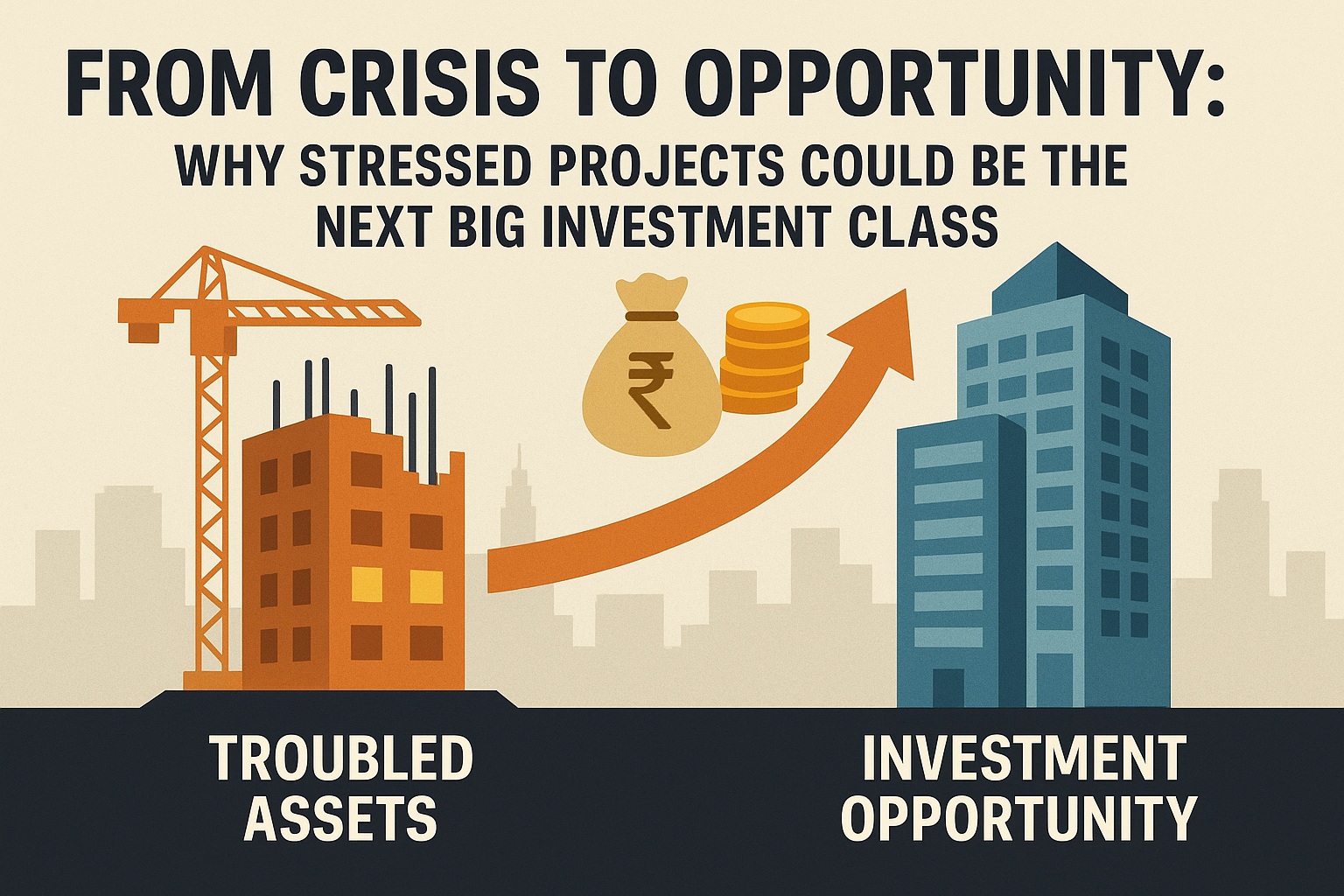

More than 5 lakh housing units remain stalled across India’s major cities — fallout from the NBFC crisis, pandemic delays, and regulatory shifts. But that same distressed inventory is now drawing attention from opportunistic investors looking to capitalize on deep discounts and quick turnarounds.
“Stressed projects today represent not just discounted buys, but a way to re-engineer supply in under-served, overpriced markets. It’s a win-win when execution meets capital,”
— Vikas Jain, CEO, Labdhi Lifestyle
💡 Case in Focus: Labdhi Lifestyle’s BKC EDGE
Labdhi Lifestyle recently acquired a stalled Rajesh LifeSpaces project in Mumbai’s BKC—originally backed by Mirae Asset and JM Financial—and rebranded it as BKC EDGE. With a revenue potential of ₹900 crore, this marks Labdhi’s second successful turnaround in Mumbai.
“With the right capital strategy and execution, distressed projects can become high-performing assets,”
— Jain
🔁 What’s Driving the Shift?
✅ Deep Discounts
Projects are available at 30–60% below market value, offering high upside once completed.
✅ Demand for Completion
Homebuyers today prefer ready or near-ready homes, allowing faster monetization for investors.
✅ SWAMIH Fund
The ₹15,000 crore government-backed SWAMIH Fund has boosted investor confidence in public-private partnerships to revive stalled projects.
✅ Rise of Specialized Capital
Private equity, family offices, and ARCs are setting up distress-focused investment verticals to absorb these assets.
“We believe stressed projects could become the sunrise segment of Indian real estate,”
— Prashant Sharma, President, NAREDCO Maharashtra
📍 MMR: The Epicenter of Turnarounds
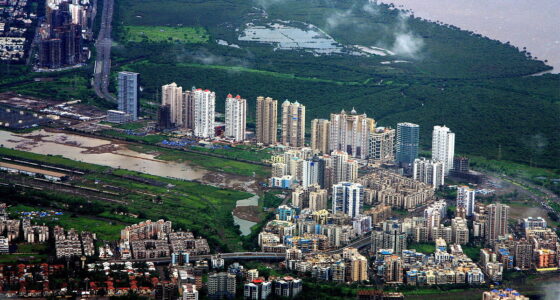
The Mumbai Metropolitan Region (MMR), known for land scarcity and high prices, is at the heart of India’s distressed project wave.
- 70,000+ housing units are stalled across 493 projects, mainly due to new environmental clearance norms.
- These offer a ripe opportunity for design-led redevelopment and capital infusion.
“We’re repackaging distressed projects into viable investment stories. It’s all about building trust between capital and capability,”
— Nihar Jayesh Thakkar, Founder, The Mandate House Pvt. Ltd.
🛠️ Three Pillars for Successful Turnaround
- Legal & Title Clarity
- Market-Fit Redesign
- High-Credibility Delivery Team
“Without execution reliability, no structure—financial or legal—can sustain,”
— Thakkar
⚠️ Risks Remain
| ⚠️ Challenge | ⚠️ Impact |
|---|---|
| Litigation | Disputes among lenders, buyers, or landowners slow down progress. |
| Approval Bottlenecks | Changes in plans require new permits, adding time. |
| Reputational Hurdles | Buyer hesitation around legacy brands unless revived by credible players. |
To address these, many investors are forming SPVs (Special Purpose Vehicles) with developers to enter cleanly and speed up resolutions.
💬 Final Word
“In real estate, timing is everything. And for stressed assets, the time is now,”
— Jain
With the right alignment of policy, capital, and execution, India’s most stalled assets could become its most profitable stories. In a market seeking stable returns, distressed projects are no longer a liability—they are an opportunity in waiting.
Also Read: Regulatory Changes are Reshaping NBFCs in the Real Estate Sector