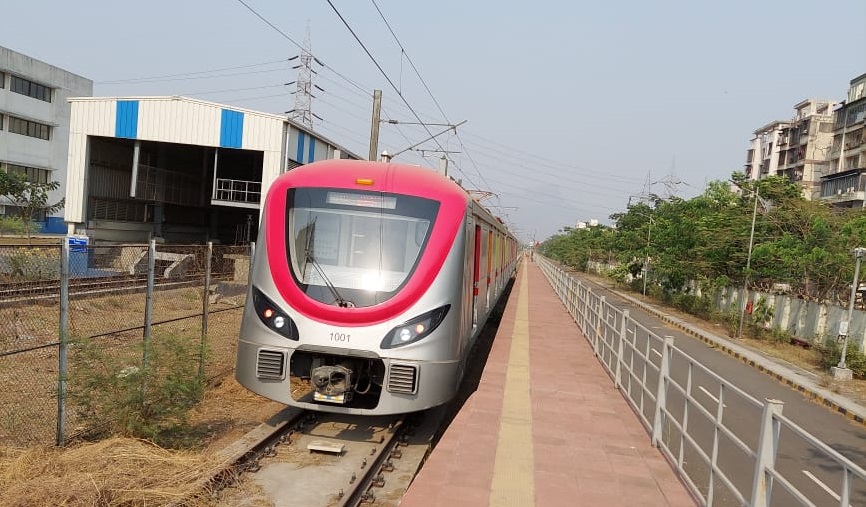
Haryana Chief Minister Nayab Singh Saini announced on Tuesday that the Gurugram Metro Rail Ltd. (GMRL) will begin work on the highly anticipated Gurugram Metro extension project by May 1, 2025. This major infrastructure initiative aims to develop a 29-kilometre metro line over the next four years, transforming the city’s transportation system and enhancing connectivity to key areas including Millennium City Centre, Railway Station, Sector-22, and Cyber City.
The metro extension, which will be constructed at an estimated cost of ₹5,452.72 crore, will be funded jointly by the central and state governments. The central government will contribute ₹869.19 crore, while the Haryana government will provide ₹4,556.53 crore. This significant investment highlights the commitment to enhancing public transport systems in Gurugram, a city that has seen rapid growth in both population and commercial activity.
Real estate experts are already predicting a surge in demand for both residential and commercial properties in areas near the new metro stations. Parvinder Singh, CEO of Trident Realty, called the metro extension a “transformative development” that will drive real estate growth in the region. “As connectivity improves, we expect interest from homebuyers and investors to rise significantly, particularly in areas close to the new metro stations,” he said. Singh also noted that the improved infrastructure will enhance quality of life and offer promising investment opportunities.
The new metro line, which will operate on a standard gauge, is expected to reduce traffic congestion and travel times, making Gurugram an even more attractive location for businesses and residents. The enhanced connectivity is likely to boost real estate demand, particularly for premium office spaces, retail outlets, and mixed-use developments along the metro route.
Ashish Sharma, AVP of Operations at Brahma Group, emphasized that the metro extension would revolutionize connectivity across the city. “This 28.5 km corridor with 27 stations will drastically reduce travel time, making it easier for both residents and businesses to access key hubs like Millennium City Centre, Cyber City, and Sector-22,” he said. Sharma believes the metro will also drive demand for commercial properties, further elevating Gurugram’s status as a global city.
Real estate developers are closely watching the project’s progress, anticipating that proximity to metro stations will result in higher property values. The metro extension is expected to spur new residential and commercial developments, presenting significant investment opportunities in Gurugram’s real estate market.
Manish Jaiswal, Group COO of Eldeco Group, welcomed the announcement, highlighting the metro’s potential to improve accessibility in areas like Sector 80, which is already well-connected to major junctions such as Hero Honda Chowk. “This expansion will not only ease commuting but also unlock immense opportunities for real estate development in surrounding areas,” he said.
The Gurugram Metro extension is set to be a game-changer, offering improved infrastructure that will benefit both residents and businesses. As the project progresses, it is expected to transform Gurugram into a smarter, more connected city, with enhanced quality of life and new economic opportunities.
Also Read: Tulip Infratech resurrects stuck Gurugram project