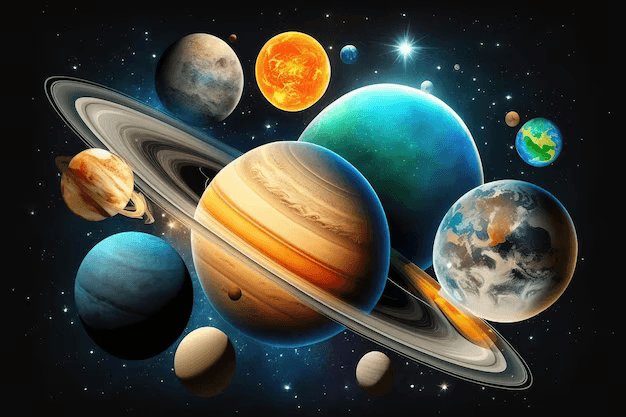

The Navagraha Stotram, composed by the sage Vyasa, is a revered hymn in Hindu tradition dedicated to the nine celestial bodies known as the Navagrahas. These planetary deities—Surya (Sun), Chandra (Moon), Mangal (Mars), Budh (Mercury), Guru (Jupiter), Shukra (Venus), Shani (Saturn), Rahu, and Ketu—govern cosmic energy and have a deep impact on human life.
Chanting the Navagraha Stotram regularly helps align one’s life with positive planetary influences, removes obstacles related to karma, health, wealth, and relationships, and ensures peace and clarity in the household. Each verse is devoted to one graha and offers both praise and a humble appeal for protection and blessings.
Below are the Navagraha Stotram verses, their transliteration, and meaning in English.
🌞 1. Surya (Sun) – Verse
Sanskrit:
जपाकुसुमसङ्काशं काश्यपेयं महाद्युतिम् ।
तमोऽरिं सर्वपापघ्नं प्रणतोऽस्मि दिवाकरम् ॥
Transliteration:
Japaakusuma-sankasham Kaashyapeyam Mahaadyutim
Tamo’arim Sarva-paapaghnam Pranato’smi Divaakaram
Meaning:
I bow to the radiant Sun God, crimson like the hibiscus flower, son of Sage Kashyapa, destroyer of darkness and sins, and the source of immense brilliance.
🌙 2. Chandra (Moon) – Verse
Sanskrit:
दधिशङ्खतुषाराभं क्षीरोदार्णवसम्भवम् ।
नमामि शशिनं सोमं शम्भोर्मुकुटभूषणम् ॥
Transliteration:
Dadhi-shankha-tushaaraabham Ksheerodaarnava-sambhavam
Namaami Shashinam Somam Shambhoh-mukuta-bhushanam
Meaning:
I bow to the Moon God, white like curd, conch, and snow, born from the ocean of milk, and the ornament of Lord Shiva’s crown.
🔴 3. Mangal (Mars) – Verse
Sanskrit:
धरणीगर्भसम्भूतं विद्युत्कान्तिसमप्रभम् ।
कुमारं शक्तिहस्तं च मङ्गलं प्रणमाम्यहम् ॥
Transliteration:
Dharanee-garbha-sambhootam Vidyut-kaanti-samaprabham
Kumaaram Shakti-hastam cha Mangalam Pranamaamyaham
Meaning:
I salute Mars, born of the Earth, glowing like lightning, the youthful commander wielding a spear—bestower of auspiciousness.
🟢 4. Budh (Mercury) – Verse
Sanskrit:
प्रियांगुकलिकाश्यामं रूपेणाप्रतिमं बुधम् ।
सौम्यं सौम्यगुणोपेतं तं बुधं प्रणम्यहम् ॥
Transliteration:
Priyaangukalikaa-shyaamam Roopena-apratimam Budham
Saumyam Saumya-gunopetam Tam Budham Pranamaamyaham
Meaning:
I offer my salutations to Mercury, dark like the bud of Priyangu flowers, unmatched in form, gentle in nature, and full of auspicious qualities.
🟡 5. Guru (Jupiter) – Verse
Sanskrit:
देवानां च ऋषीणां च गुरुं काञ्चनसन्निभम् ।
बुद्धिभूतं त्रिलोकेशं तं नमामि बृहस्पतिम् ॥
Transliteration:
Devaanaam cha Rishinaam cha Gurum Kaanchana-sannibham
Buddhi-bhootam Trilokesham Tam Namaami Brihaspatim
Meaning:
I bow to Jupiter, the preceptor of gods and sages, who shines like gold, embodies wisdom, and rules over the three worlds.
⚪ 6. Shukra (Venus) – Verse
Sanskrit:
हिमकुन्दमृणालाभं दैत्यानां परमं गुरुम् ।
सर्वशास्त्रप्रवक्तारं भार्गवं प्रणमाम्यहम् ॥
Transliteration:
Hima-kunda-mrunaalaabham Daityaanaam Paramam Gurum
Sarva-shaastra-pravaktaaram Bhaargavam Pranamaamyaham
Meaning:
I bow to Venus, the teacher of demons, who shines like snow, jasmine, and the moon, and is the master of all scriptures.
⚫ 7. Shani (Saturn) – Verse
Sanskrit:
नीलाञ्जनसमाभासं रविपुत्रं यमाग्रजम् ।
छायामार्तण्डसम्भूतं तं नमामि शनैश्चरम् ॥
Transliteration:
Neelaanjana-samaabhaasam Ravi-putram Yamaagrajam
Chaayaa-maartanda-sambhootam Tam Namaami Shanaishcharam
Meaning:
I bow to Saturn, son of the Sun and Chhaya, elder brother of Yama, who shines like black collyrium and moves slowly.
🟣 8. Rahu – Verse
Sanskrit:
अर्धकायं महावीर्यं चन्द्रादित्यविमर्दनम् ।
सिंहिकागर्भसंभूतं तं राहुं प्रणमाम्यहम् ॥
Transliteration:
Ardha-kaayam Mahaaveeryam Chandraaditya-vimardanam
Simhikaa-garbha-sambhootam Tam Raahum Pranamaamyaham
Meaning:
I bow to Rahu, born of Simhika, possessing immense power and half a body, who causes eclipses of the Sun and Moon.
⚔️ 9. Ketu – Verse
Sanskrit:
पलाशपुष्पसङ्काशं तारकाग्रहमस्तकम् ।
रौद्रं रौद्रात्मकं घोरं तं केतुं प्रणमाम्यहम् ॥
Transliteration:
Palaasha-pushpa-sankaasham Taarakaagraha-mastakam
Raudram Raudraatmakam Ghoram Tam Ketum Pranamaamyaham
Meaning:
I bow to Ketu, fierce and terrifying, who has a head like a comet and glows red like the palash flower, destroyer of darkness.
🌟 Benefits of Chanting Navagraha Stotram at Home
- Reduces malefic effects of planetary doshas and strengthens the benefic energies.
- Enhances harmony, discipline, and positivity in the household environment.
- Brings mental clarity, prosperity, and success in ventures.
- Especially beneficial during Navagraha Shanti Pujas, planetary transits, or personal hardships.
- Supports spiritual growth, devotion, and karmic cleansing.
This sacred stotram is traditionally recited daily or on Saturdays, during Navagraha pujas, or when experiencing intense planetary phases like Sade Sati, Rahu-Ketu dasha, or Manglik dosha.
Also Read: Unlocking Prosperity at Home: Navagraha Mantras for Peace, Success, and Well-being