
In a stark reminder that even the strongest legal position is worthless without timely action, the Income Tax Appellate Tribunal (ITAT) Mumbai has dismissed five appeals of a 15-member Dadar-based co-operative housing society solely on the ground of “gross negligence and inordinate delay”.
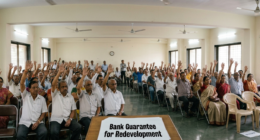
Vissanji A-1 Friends Co-operative Housing Society Ltd, consisting entirely of senior citizens (most aged 68–80+), has been ordered to pay income tax (plus interest) for assessment years 2011-12 to 2015-16 on interest earned from co-operative bank fixed deposits — an income that was fully exempt under the law prevailing at that time.
Ironically, the society was 100% correct on merits.
The Centralised Processing Centre (CPC) Bengaluru had wrongly disallowed the society’s claim of deduction under Section 80P(2)(d) in 143(1) intimations issued between 2013 and 2016 merely because the returns were filed belatedly. The provision that makes timely filing of return mandatory for Chapter VI-A deductions (Section 80AC) was inserted only from AY 2018-19 — it did not apply to the years in question.
Yet, because of inexplicable lethargy:
- The society took no action for 7–8 years after receiving the 143(1) demands.
- First appeals before CIT(Appeals) were filed only in November 2023 — delayed by 2,500+ days.
- Even after CIT(Appeals) dismissed the appeals in June 2024 on limitation grounds, the society waited another 342 days before approaching ITAT.
In two contradictory affidavits, the society’s 75-year-old secretary blamed a former accountant who “never informed us” and “suddenly left in 2023/2024”. The bench, comprising Judicial Member Sandeep Gosain and Accountant Member Girish Agrawal, was unimpressed.
Dismissing all five appeals on 19 November 2025, the ITAT observed:
“The conduct does not inspire confidence… This is nothing but exploiting the process of law… Phrases like ‘liberal approach’ and ‘substantial justice’ cannot be used to revive dead matters after seven years.”
The tribunal refused to condone even the 342-day delay in filing the present appeals, holding that senior citizenship or ignorance of procedure does not constitute “sufficient cause” when the delay is of such magnitude.
A rough estimate shows the total tax + interest liability across the five years is likely to be ₹4–5 lakh — a significant amount for a small 15-flat society whose members are all senior citizens living on pensions and savings.
Tax practitioners have termed the verdict “technically correct but harsh”, pointing out that thousands of small co-operative societies across Maharashtra suffered similar wrongful 143(1) adjustments during that period, but those who acted within time got full relief.
One senior chartered accountant, speaking anonymously, remarked: “On pure law, this society should have won hands down. But tax litigation is not charity — if you sleep over your rights for eight years, no court will wake you up.”
The order once again underlines the Supreme Court’s repeated dictum: “Law of limitation may harshly affect a particular party, but it has to be applied with all its rigour when the statute so mandates.”
Also Read: ₹60 Lakh Plot Bought in 2005 Sold for ₹8 Crore in 2022 – Income Tax Sends ₹1.6 Crore Demand