In a significant order that reinforces accountability in slum redevelopment projects, the Slum Rehabilitation Authority (SRA) has terminated a landowner-developer for failing to make progress on a project even after nearly three years of approval.
The case involves a small but symbolically important slum redevelopment scheme on private land bearing C.S. No. 3/478 at Shirinbai Bandukwala Chawl, Lower Parel (West), Mumbai. The plot, owned by Shri Juzer Nagree, houses 49 slum huts. Nagree, who appointed himself as the developer through the proposed Bright Galaxy SRA CHS (Prop.), received scheme acceptance from SRA on 14th September 2023.
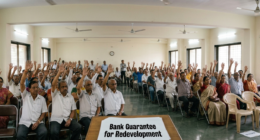
However, despite the passage of almost three years, no further approvals were granted, and no tangible progress was made on the ground. Frustrated by the prolonged delay, the slum dwellers approached the SRA under Section 13(2) of the Maharashtra Slum Areas (Improvement, Clearance & Redevelopment) Act, 1971, seeking his removal.
In his defence, Nagree argued that as the landowner, he enjoys a preferential right to develop the property under the Slum Act and invoked constitutional protections under Article 300A. He blamed administrative delays such as Property Card rectification and pending Annexure-II survey for the slow progress.
Rejecting this argument, SRA Chief Executive Officer Dr. Mahendra Kalyankar observed in the order dated 6th May 2026 that while landowners do enjoy preferential rights in slum redevelopment, “this preferential right is not an absolute or eternal right.” It is conditional upon timely and diligent execution of the rehabilitation scheme.
The order explicitly states:
“Being the owner gives you preferential rights, but not unlimited time.”
The SRA emphasised that the Maharashtra Slum Act is a welfare legislation meant to provide dignified housing to slum dwellers. Allowing schemes to remain on paper for years defeats the very purpose of the Act. The Authority noted that the slum dwellers had lost faith in the current developer and had already resolved to appoint a new, more capable developer — Sunvista Constructions Pvt Ltd (a JP Infra group company).
Key Takeaway from the Order: This judgment sends a strong message to all landowner-developers in Mumbai: Mere ownership does not grant indefinite control over a slum redevelopment project. If the developer fails to move the project forward within a reasonable time, the SRA has the power — and duty — to remove them in the interest of the slum residents.
This is not the first such order, but its clear articulation of the limits of landowner rights makes it an important precedent for stalled SRA projects across the city.
Also Read: 🏗 Builders to Pay Corpus First in SRA Projects Before Selling Homes