
The Government of Maharashtra has issued new safety guidelines directing municipal corporations and special planning authorities across the state to deploy High Rise Fire Fighting Vehicles (HRFFV) to improve fire safety in tall buildings.
The circular, issued by the Urban Development Department Maharashtra on March 12, 2026, mandates that all authorities granting approvals for buildings taller than 70 metres must ensure the availability and use of specialised high-rise firefighting vehicles.
Rising Urbanisation and High-Rise Construction
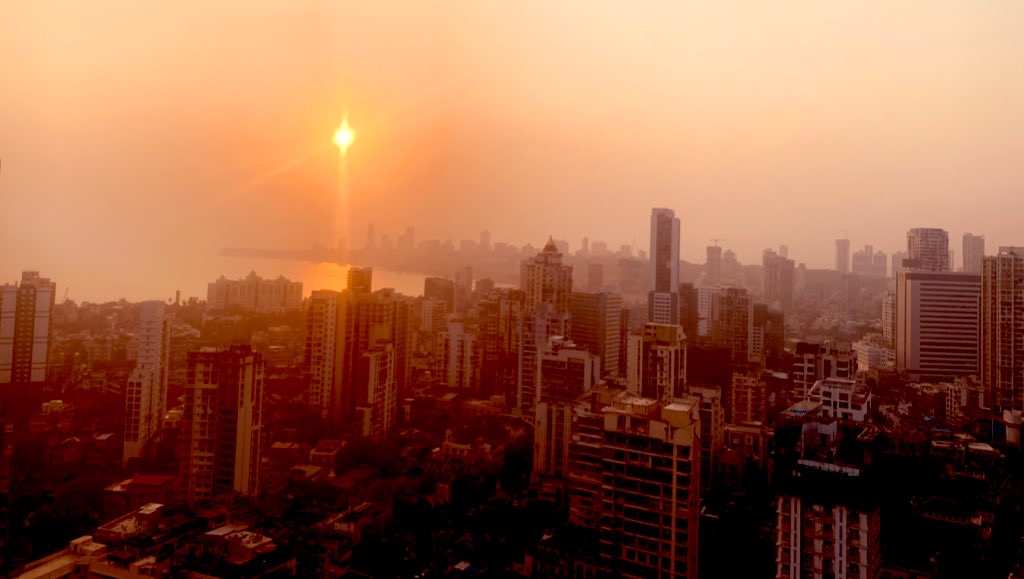
The government noted that rapid urbanisation in Maharashtra has led to the construction of a large number of high-rise buildings, particularly in major cities where many structures exceed 100 metres in height.
However, according to the circular, existing firefighting infrastructure often faces limitations when responding to emergencies in such buildings.
National guidelines recommend a response time of up to five minutes in urban areas and 20 minutes in rural areas for firefighting and rescue operations. In reality, response times in cities frequently exceed these limits due to narrow roads, traffic congestion and access challenges, making emergency response more difficult.
Limitations of Existing Firefighting Systems
The government highlighted that conventional firefighting equipment is often inadequate for very tall buildings.
In many cases:
- Fire engines face difficulty reaching congested urban locations
- Fire pumps installed on fire vehicles are unable to supply water beyond heights of around 100 metres
- Existing firefighting mechanisms within buildings may not function effectively during major incidents
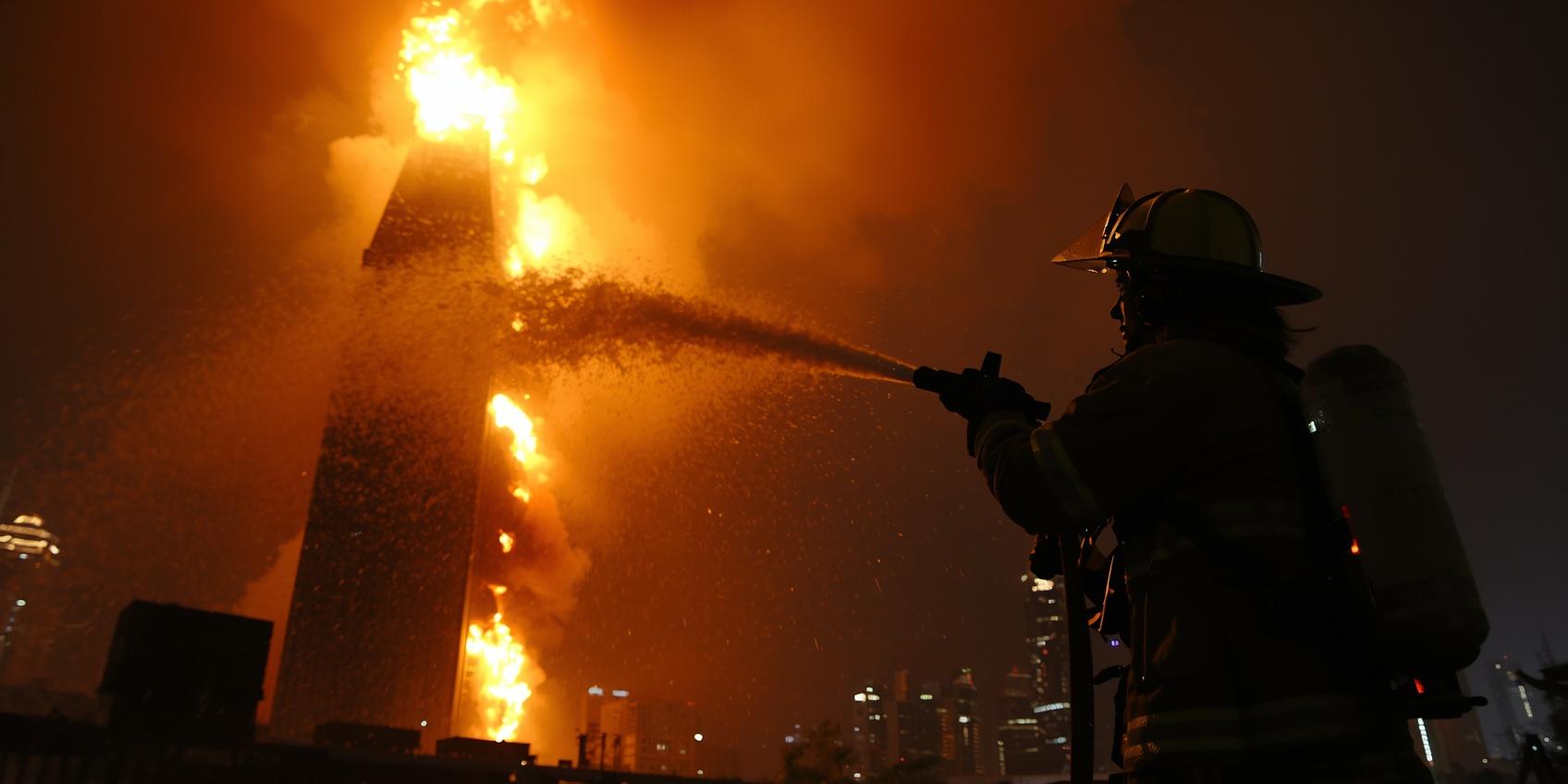
These challenges create significant risks when responding to fires in high-rise and super-tall structures.
Mandatory Use of High-Rise Fire Fighting Vehicles
To address these issues, the state government has directed that municipal corporations and special planning authorities approving buildings taller than 70 metres must deploy High Rise Fire Fighting Vehicles (HRFFV).
These vehicles are specially designed to handle emergencies in tall buildings and typically include:
- Hydraulic platforms or ladders capable of reaching higher floors
- High-capacity firefighting pumps
- Advanced rescue and evacuation equipment
At Least One HRFFV at Every Fire Station
The circular also instructs civic authorities to ensure at least one HRFFV is available at each fire station, strengthening the ability of local fire departments to respond quickly to emergencies in high-rise structures.
Detailed technical specifications for the vehicles have been published by the Maharashtra Fire and Emergency Services Directorate and are available on its official website.
Monitoring and Compliance
The Director of the Maharashtra Fire and Emergency Services Directorate has been asked to monitor implementation and submit reports to the state government regarding compliance by municipal corporations and planning authorities.
The directive forms part of the state government’s broader effort to strengthen fire safety standards in rapidly urbanising cities, where vertical development is becoming increasingly common.
Also Read: FLAMES IN THE CONCRETE JUNGLE: FIRE SAFETY CONCERNS IN MUMBAI