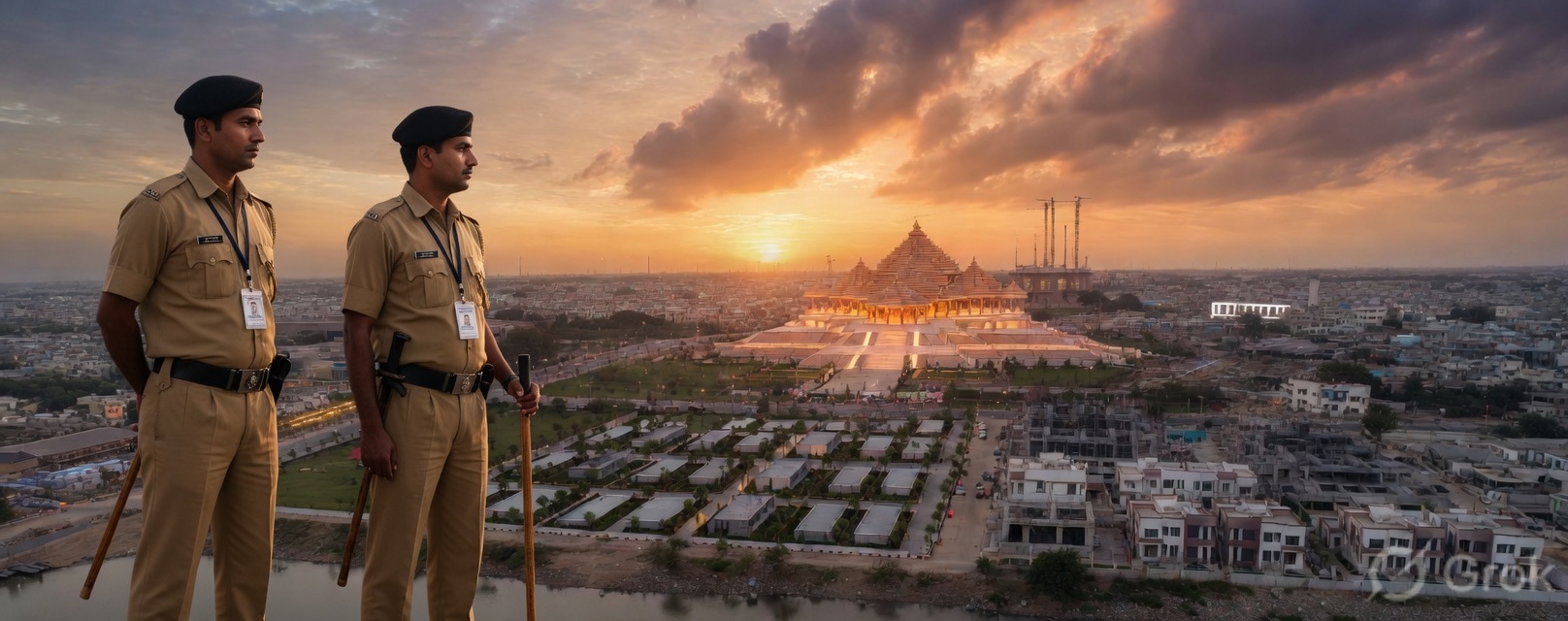

In a significant move aimed at improving job security and streamlining hiring processes, the Maharashtra government has issued a new Government Resolution (GR) dated May 14, 2026, revising the rules for registration of security guards under the state’s Security Guard Boards.
The decision comes under the framework of the Private Security Guards (Regulation of Employment and Welfare) Act, 1981, which governs employment conditions and welfare of security guards across the state.
Key Highlights of the GR
One of the most impactful changes is the removal of the maximum age limit for security guard registration across multiple categories. However, the minimum age of 18 years remains applicable. This move is expected to benefit older guards who were previously excluded due to age restrictions.
Relief for Families: Compassionate Appointments
The GR simplifies the process of providing jobs to family members of deceased security guards:
- First priority is given to the spouse
- If unavailable, then children (son or daughter)
- If neither is eligible, a legal heir can be considered
Importantly, these candidates:
- Must be at least 10th pass
- Are exempt from physical tests
- Only one family member can be appointed
This provision aims to ensure financial stability for families affected by the loss of a breadwinner.
Big Boost for Existing Guards
The GR allows principal employers (companies, societies, establishments) to recommend currently working security guards for registration under the Board. This is crucial in cases where guards were previously employed through private contractors.
Conditions include:
- Minimum 60 days of work proof
- Submission of PF contribution records
- Employer recommendation letter
Notably:
- Guards aged 35 and above are exempt from physical tests
- This ensures continuity of employment for experienced workers
Protection for “Affected” Guards
The new policy also addresses concerns of guards who lose their jobs when establishments transition to the Board system.
Such “affected guards”:
- Will be registered with the Board
- Placed on a waiting list
- Given priority in future job allocations
This provision is designed to prevent sudden unemployment due to regulatory shifts.
Physical Test and Eligibility Criteria
For new applicants (where applicable), a 50-mark physical test has been prescribed, with a minimum passing requirement of 25 marks. The test includes running, pull-ups, and sit-ups, and will be conducted with the involvement of police and sports authorities.
Basic physical standards remain unchanged:
- Height: 162 cm (men), 155 cm (women)
- Weight: 50 kg (men), 45 kg (women)
Applicability to Housing Societies
The GR will directly impact housing societies and establishments that are registered under the Security Guard Board system.
In urban areas like Mumbai, Thane, and Navi Mumbai—where many societies already fall under this system—the changes will influence:
- Hiring practices
- Guard replacement policies
- Compliance requirements
However, societies hiring guards privately or through unregistered agencies may not be immediately affected, though future enforcement could expand coverage.
Retirement Age Fixed
The GR also clarifies that registered security guards can continue working only up to the age of 58, after which employment under the Board will not be permitted.
Conclusion
Overall, the Maharashtra government’s revised framework strikes a balance between regulation and welfare. By removing age barriers, protecting existing jobs, and simplifying compassionate appointments, the GR aims to create a more inclusive and stable employment ecosystem for security guards.
Also Read: Viyaara Realty Hands Over ‘The Nest’ in Taloja, Taps Rising Demand for Smart & Wellness Homes