
Mangroves, often called the “guardians of the coast,” play a crucial role in preventing erosion, supporting biodiversity, and mitigating climate change impacts. In Maharashtra, these ecosystems have faced relentless pressure from urbanization and development. The issue came to a head in a landmark Public Interest Litigation (PIL) filed in the Bombay High Court—Writ Petition Vanashakti vs. State of Maharashtra.
On October 6, 2005, the court issued an interim order emphasizing the need for stringent protection of mangrove areas. This was followed by a comprehensive final order on September 17, 2018, which laid down unequivocal directives to halt encroachments and preserve these vital wetlands. Key provisions from the 2018 order include:
- Immediate cessation of all construction and rubble/garbage dumping in mangrove areas.
- A blanket ban on any construction within 50 meters of mangroves on all sides, irrespective of land ownership.
- Prohibition on issuing development permissions for any mangrove-covered land by authorities across Maharashtra.
These orders underscored the state’s obligation to enforce environmental safeguards, with non-compliance potentially leading to contempt proceedings.
The Spark: Legislative Alert in Monsoon Session 2025
The controversy reignited during the Maharashtra Legislative Council’s Monsoon (Second) Session of 2025. On July 14, 2025, MLC Shri. Bhaskar Jadhav raised Calling Attention Notice No. 2025, spotlighting alleged violations in Majiwade village, Thane taluka. The notice highlighted the destruction of mangroves on several survey numbers—12/1 to 4, 49/1-3, 50/1-4, 51/5, 386/3, 423/1 (Ka, Kha, Ga), 345/3-4-8, and others—where land was illegally filled and handed over to construction firms like M/s Krupa Housing and architects for building projects.
During the ensuing debate in the Legislative Council, prima facie evidence emerged of High Court order violations. Forest Minister’s assurance led to directives for an immediate inquiry, culminating in the government’s decisive action.
Committee Formation: A Multi-Agency Task Force
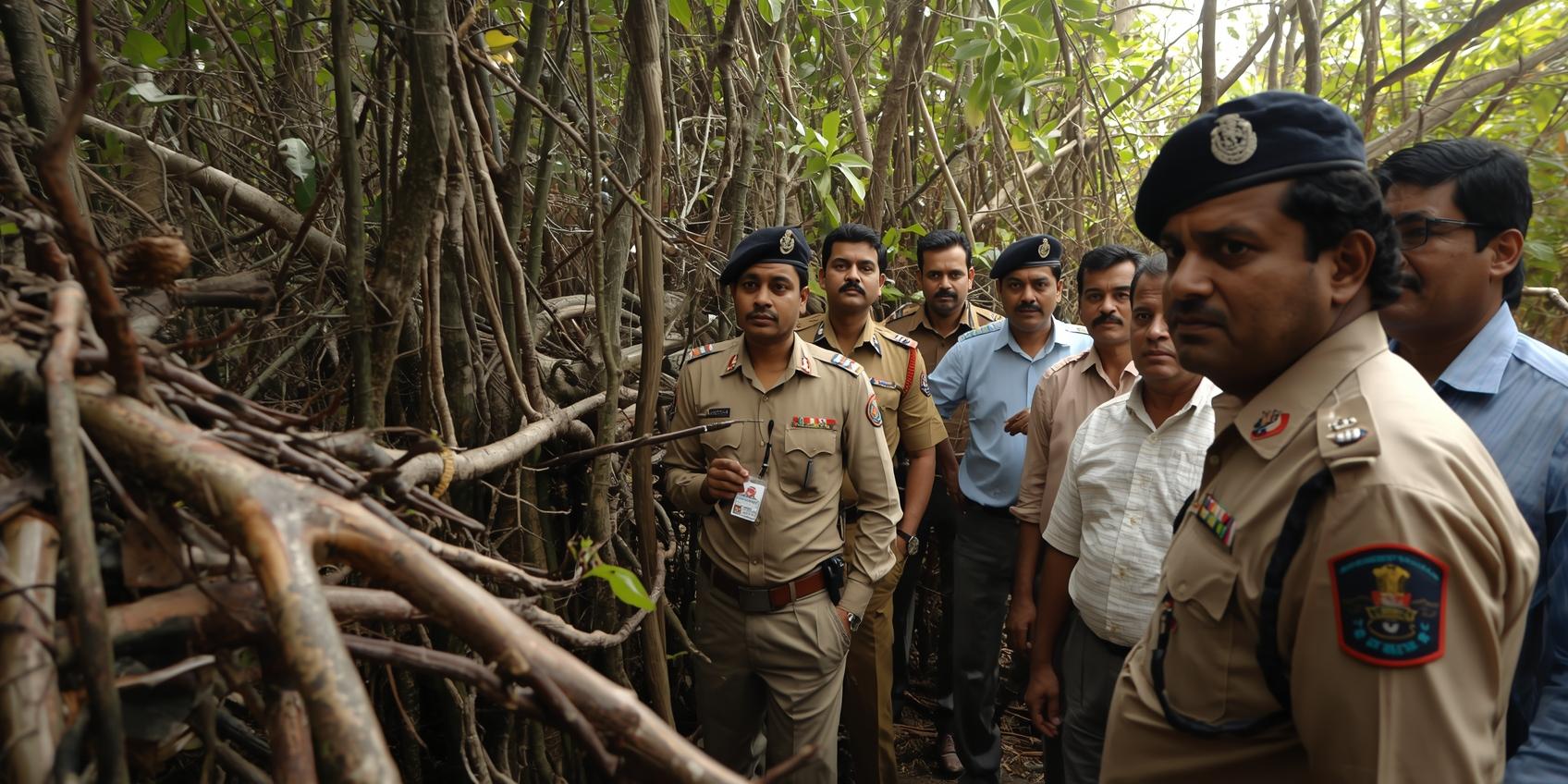
In response to the notice and judicial mandates, the Maharashtra government’s Revenue and Forests Department issued Order on November 4, 2025, from Mantralaya, Mumbai. The order, signed by Principal Chief Conservator of Forests (Headquarters) Dr. Rajivikarun Govalkar under the authority of the Governor of Maharashtra, formally constitutes a probe committee. The panel is chaired by the Divisional Commissioner of Konkan Division and comprises:
| Sr. No. | Name/Designation | Role |
|---|---|---|
| 1 | Divisional Commissioner, Konkan Division | Chairperson |
| 2 | District Collector, Thane | Member |
| 3 | Commissioner, Thane Municipal Corporation | Member |
| 4 | Director and Deputy Secretary, Environment Department, Mantralaya, Mumbai | Member |
| 5 | Additional Principal Chief Conservator of Forests (Mangrove Cell), Mumbai | Member Secretary |
This diverse composition ensures oversight from revenue, urban development, environmental, and forestry perspectives, fostering a thorough and unbiased investigation.
Terms of Reference: Scope and Timeline
The committee’s mandate is clearly defined to address both the immediate violations and systemic lapses:
- Core Investigation: Probe all constructions—completed or ongoing—within the mangrove buffer zone of the specified survey numbers (12, 49, 50, 51, 386, 345, 423/C, 423/D, 423/V) in Majiwade, Thane, that occurred without High Court approval.
- Accountability Measures: Identify and assign responsibility to errant officials or mechanisms that granted permissions despite the court’s ban, uncovering any procedural or oversight failures.
- Reporting Deadline: Submit a comprehensive report with recommendations to the government by the end of December 2025.
The order emphasizes expeditious action to restore ecological integrity and deter future encroachments.
Public Accessibility and Broader Implications
To promote transparency, the full government resolution has been uploaded on the official Maharashtra government portal. Copies have been circulated to key stakeholders, including the Chief Minister’s Additional Chief Secretary, Deputy Chief Ministers’ Private Secretaries, ministers for Revenue, Forests, and Environment, and officials from the Principal Chief Conservator of Forests (Nagpur), Maharashtra Pollution Control Board, and Thane Police.
This probe arrives at a critical juncture for Maharashtra’s coastal management. With Thane’s rapid urbanization threatening biodiversity hotspots, the committee’s findings could set precedents for enforcement, potentially leading to demolitions, fines, or legal actions. Environmental activists hail it as a victory for judicial oversight, while developers urge a balanced approach to housing needs.
As the investigation unfolds, all eyes will be on whether this panel can reclaim the mangroves’ lost ground—or if it signals deeper reforms in the state’s environmental governance.
Also Read: Forest department receives a huge Mangrove forest in Navi Mumbai from CIDCO