Homebuyers and property registrants in Maharashtra are staring at a major financial hammer as Chief Minister Devendra Fadnavis proposed a sharp increase in penalties for insufficient stamp duty on agreements and registrations. The fine could surge up to ₹1 lakh – a massive jump from the current ₹5,000 – potentially turning small valuation errors into costly nightmares for middle-class families buying homes or flats.
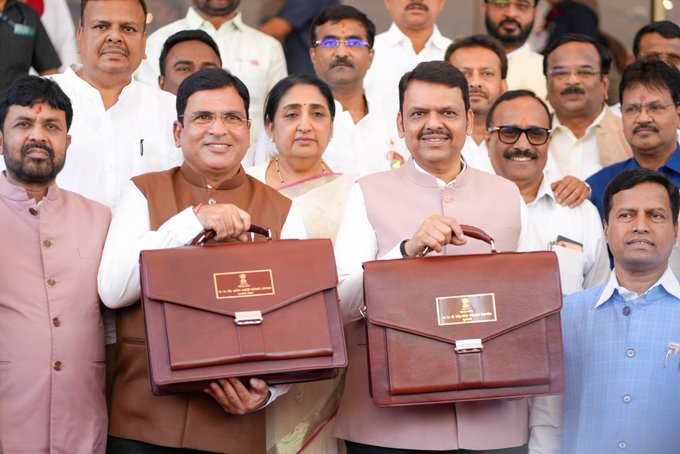
The proposal appears in Part II of the 2026-27 Budget speech delivered in the Legislative Assembly on March 6, 2026. It seeks to restructure penal provisions under Sections 59, 60, 63A, and 68A of the Maharashtra Stamp Act, 1958, which criminalize various forms of stamp duty non-compliance, especially in property transactions like sale deeds, agreements for sale, or conveyances.
Key sections explained and their impact on homebuyers:
- Section 59 — The main provision punishing any person who, with intent to evade duty, executes or signs an instrument not duly stamped. This directly hits under-stamped property documents. Conviction can lead to rigorous imprisonment (typically not less than 1 month and up to 6 months) and a fine.
- Section 60 — Penalizes making false declarations on clearance lists or related statements, which could apply if misleading info is used to reduce stamp duty in certain commercial or financial-linked property deals.
- Section 63A — Makes non-remittance of stamp duty within the prescribed time a criminal offence, affecting delays in paying due duty during registrations or transfers.
- Section 68A — Criminalizes obstructing or preventing stamp/revenue officers from performing duties like inspection or enforcement, potentially ensnaring parties resisting scrutiny over suspected under-stamping.
Under the current law, these sections provide for rigorous imprisonment and a penalty (fine) upon conviction, with the fine component often starting from ₹5,000.
The CM’s exact verbatim words from the speech: “The penal provisions under Sections 59, 60, 63A and 68A of the Maharashtra Stamp Act, provide for rigorous imprisonment and penalty upon conviction if an instrument is executed with insufficient stamp duty. It is proposed to revise the amount of penalty from rupees five thousand up to rupees one lakh. With this revision the incidence of execution of instruments with insufficient stamp duty can be brought under control.”
This proposed revision boosts the penalty range dramatically to a maximum of ₹1 lakh, while the speech retains reference to rigorous imprisonment for such offences. For homebuyers registering properties in high-value areas like Mumbai, Pune, or Thane, even unintentional under-valuation (common to cut costs) could trigger prosecution, court proceedings, potential jail time, and hefty fines – on top of paying the deficit duty plus interest/penalties under other sections (e.g., 2% per month on deficits).
Real estate experts fear this could discourage timely registrations, push more deals into informal channels, or burden genuine buyers with legal hassles over minor discrepancies. The government positions it as a tool to curb widespread evasion in property transactions and boost revenue compliance.
If enacted (likely through a finance bill or Stamp Act amendment), the change could soon make every property agreement a high-risk affair. Homebuyers are urged to use certified valuers, verify circle rates carefully, and ensure full stamp duty payment to steer clear of severe financial and legal consequences.
Also Read: Maharashtra Govt Considers Stamp Duty Concessions