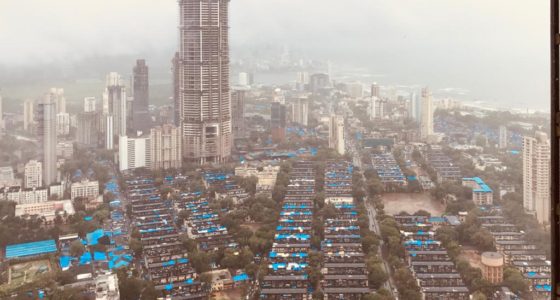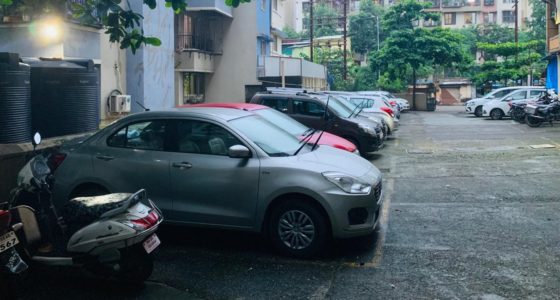

In a stern message to cooperative housing societies across the city, the Bombay High Court has ruled that private societies cannot indefinitely block or encroach on public Development Plan (DP) roads, even if they’ve been using them as internal access for decades. The landmark judgment delivered on December 15 by Justice Milind N. Jadhav orders the immediate removal of obstructions—a main entrance gate, security cabin, and tin-sheet fencing—erected by three Kalpita Enclave societies in Andheri East, paving the way for a vital connector road to finally open.
The court quashed a City Civil Court order that had protected these structures, describing the societies’ prolonged litigation as “sheer abuse of due process of law,” “dishonest conduct,” and “compulsive litigation.” Justice Jadhav emphasized that public interest must prevail over private claims, especially in a congested metropolis like Mumbai where such roads are essential for easing traffic and pedestrian movement.
The Long-Standing Dispute
The DP road in question is a planned east-west link connecting Sahar Road to Sai Mandir Road via Jeevan Vikas Marg in Andheri East. The land was legally conveyed to the Brihanmumbai Municipal Corporation (BMC) in 1984 through an agreement and deed, with the property card confirming BMC ownership ever since.
The Kalpita Enclave societies, developed in the 1970s-80s, had fully utilized the Floor Space Index (FSI) benefits from this road land during construction. Despite this, they enclosed and blocked the stretch passing through their layout, treating it as private internal access.
An adjoining slum plot, recently redeveloped under a Slum Rehabilitation Authority (SRA) scheme by Panom Developers LLP, completed its portion of the road (with an average width of 10.84 meters—sufficient for vehicles) and handed it over to BMC.
A 2023 High Court order had temporarily allowed the societies to retain their gate, cabin, and fencing until the adjoining road was ready, after which they were to remove them within two weeks of BMC’s notice. The societies, however, resisted, insisting on a uniform 13.4-meter width throughout the entire stretch—a condition not mentioned in the original order.
Public Interest Over Private Convenience
Justice Jadhav rejected this demand outright, noting that the societies have “no right whatsoever” to dictate terms to the planning authority. “The connector feeder road… is the need and necessity of the hour for the benefit of pedestrians as well as vehicular traffic to ease congestion in the area,” he observed.
Nearby societies (including Shiv Siddhi Vinayak CHS and others representing hundreds of families) and the SRA developer intervened, highlighting how the road’s opening would benefit thousands of residents by reducing travel time and bottlenecks.
The judge refused to stay the order for any appeal, stating that “in the cross fire of the lis between the parties… the public at large is the loser.” He directed the societies to remove the structures within one week, failing which BMC can demolish them with police assistance and open the road immediately.
Costs were imposed on the three societies—initially ₹1 lakh each, reduced to ₹25,000 each on request—to be paid to court libraries.
A Precedent for Mumbai’s Urban Woes
This ruling sends a clear signal: Housing societies cannot use courts to perpetuate encroachments on public infrastructure. With Mumbai grappling with chronic traffic and delayed DP road implementations, the judgment prioritizes commuter relief and reinforces that planned roads must serve the public, not private interests.
Local residents and commuters have welcomed the decision, with many hoping it accelerates similar stalled projects across the city.
Also Read: Top 5 Bollywood Real Estate Deals of 2019